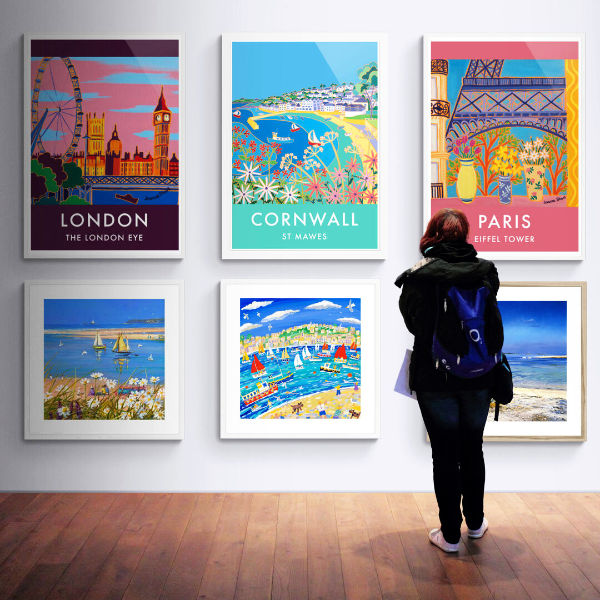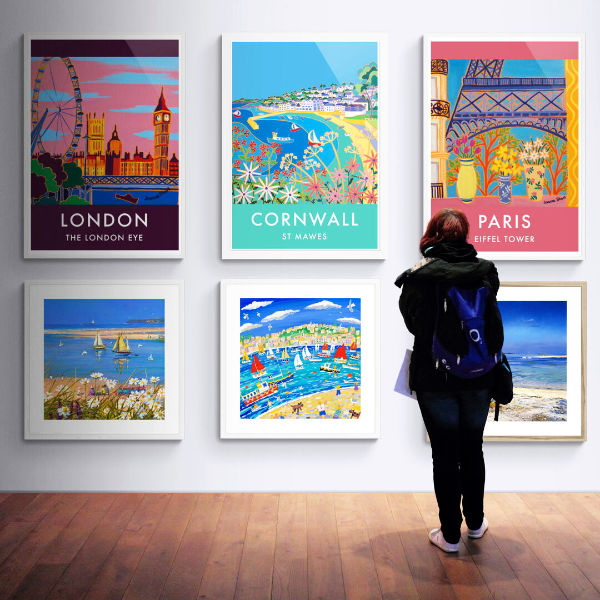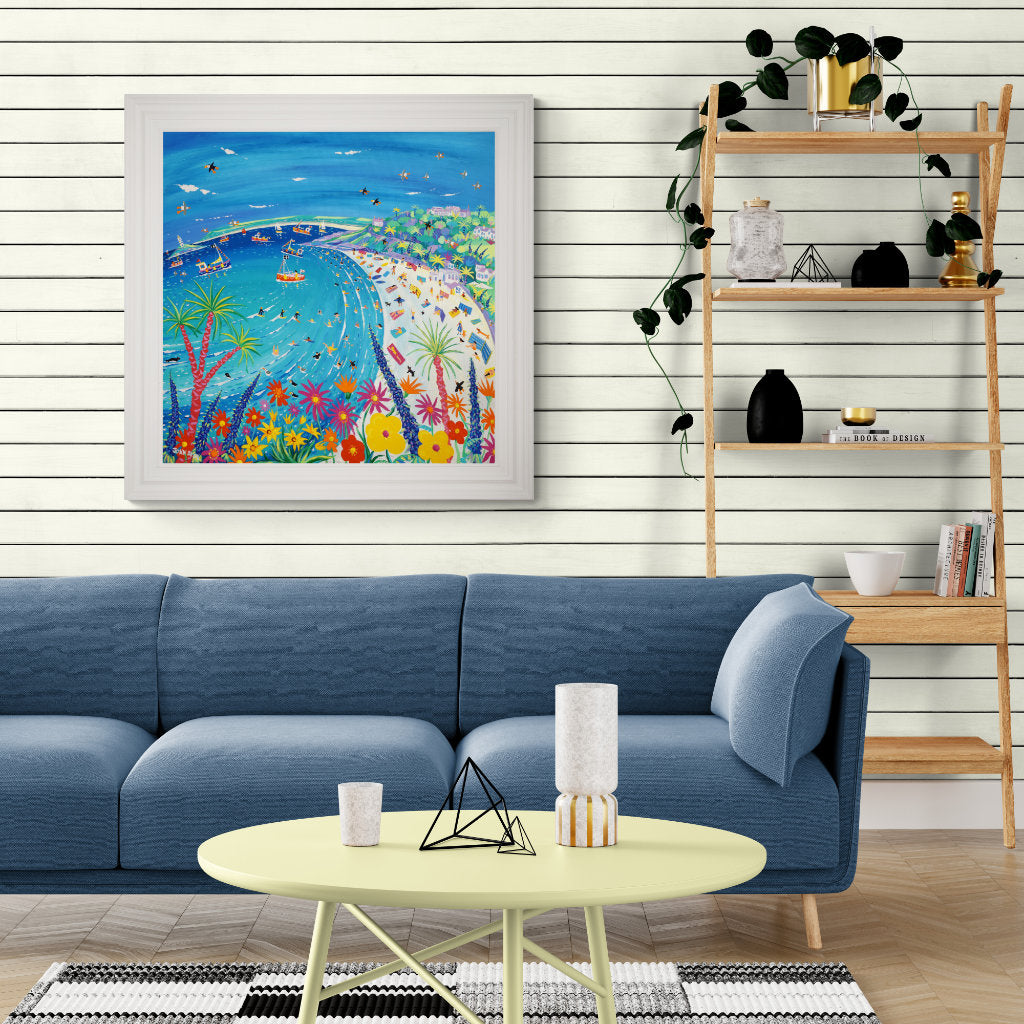




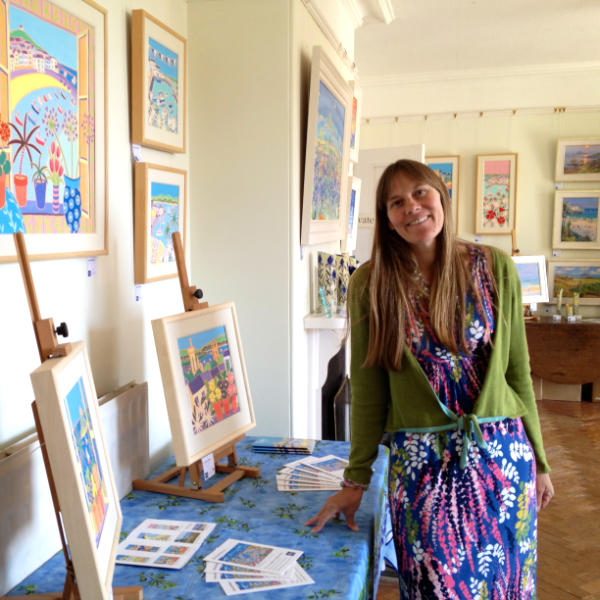
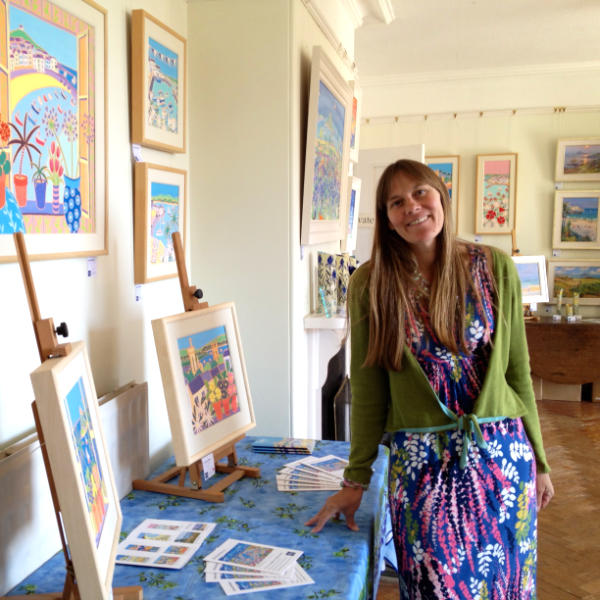
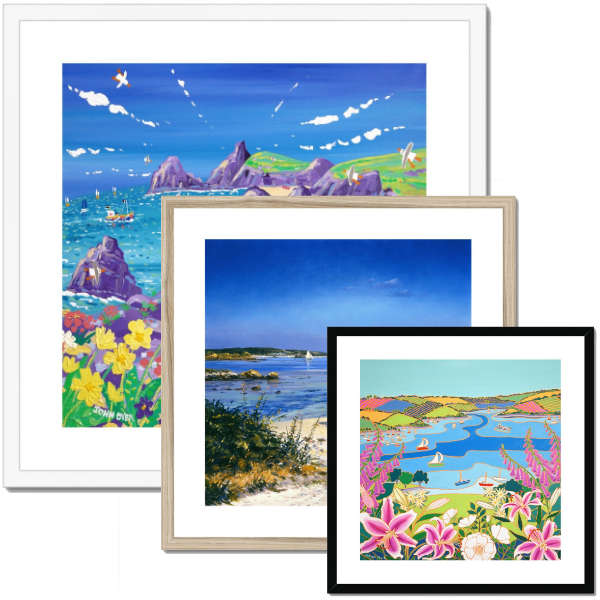
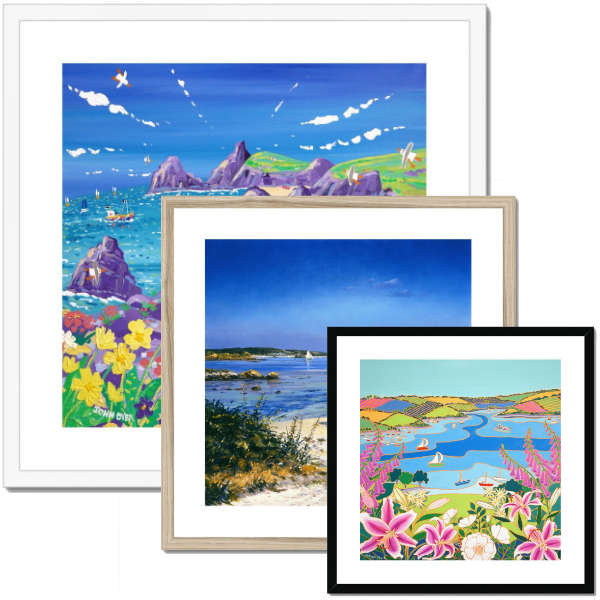
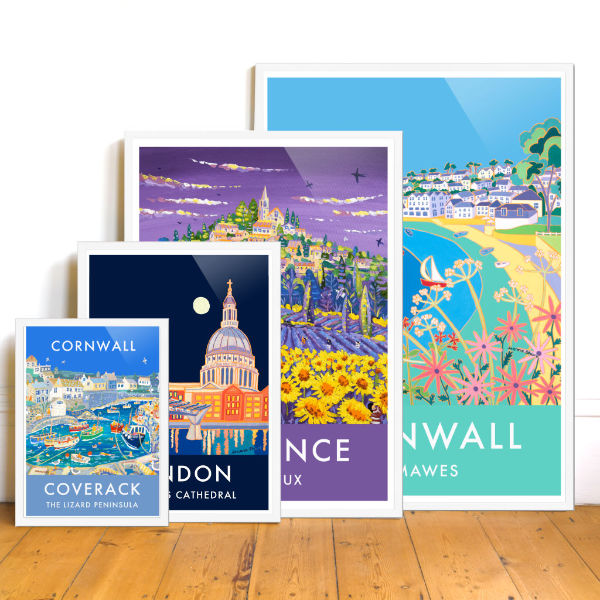

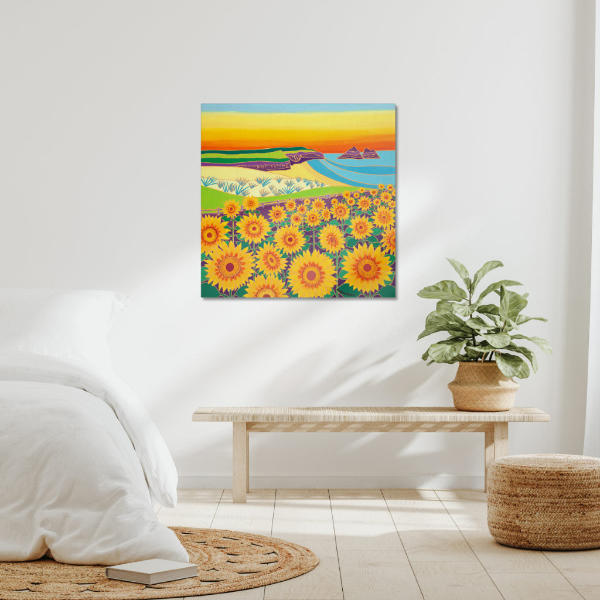
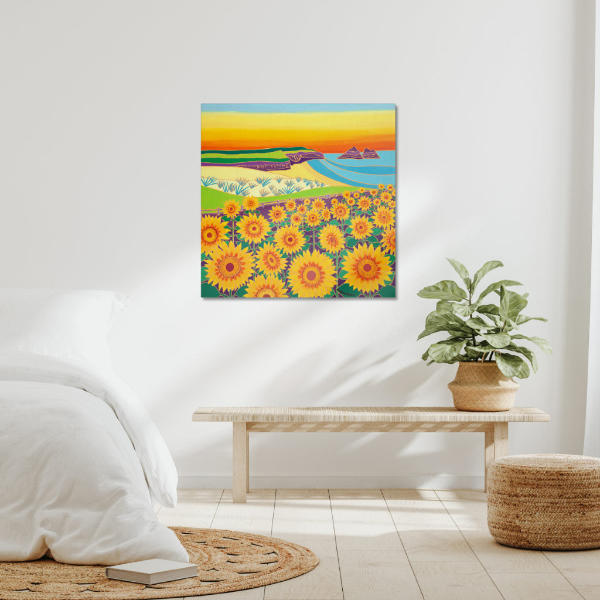
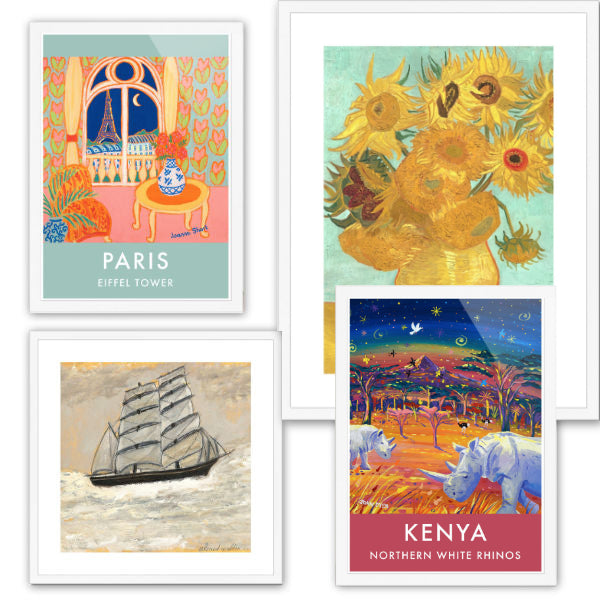









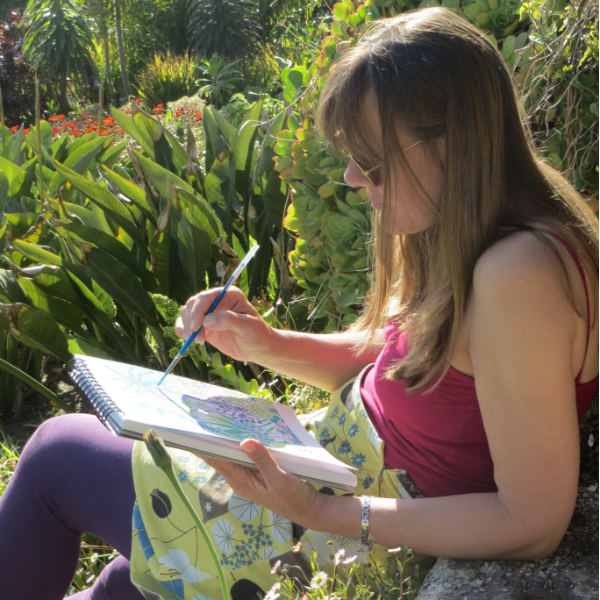
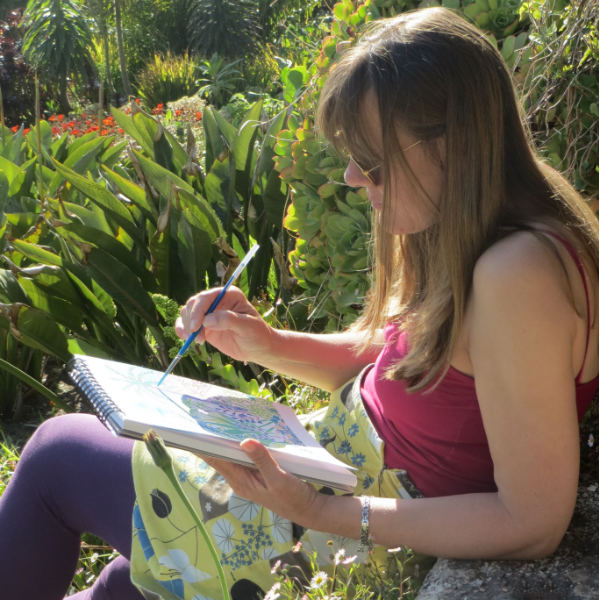






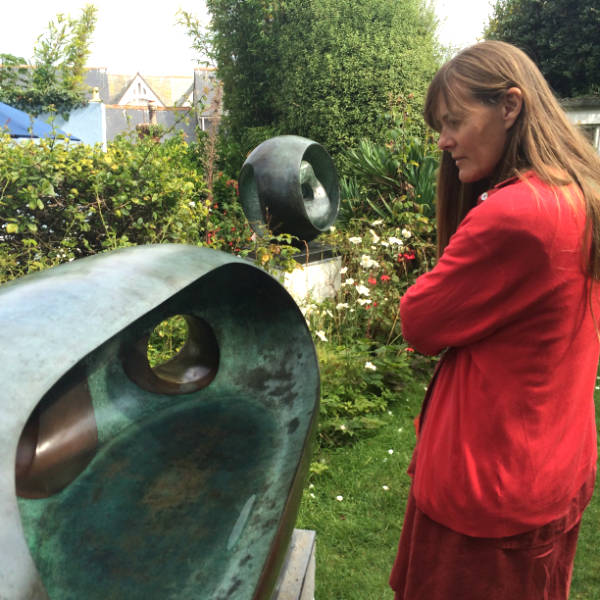
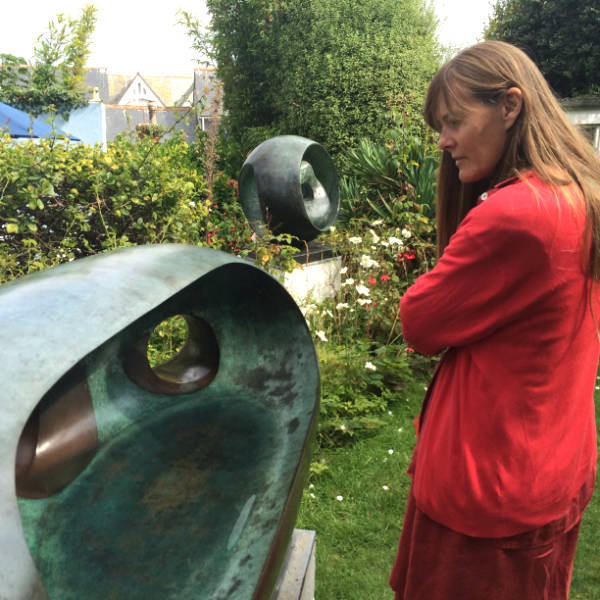


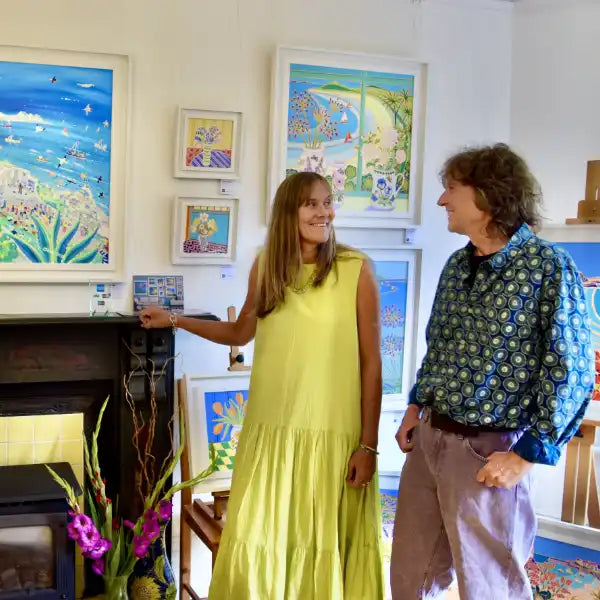

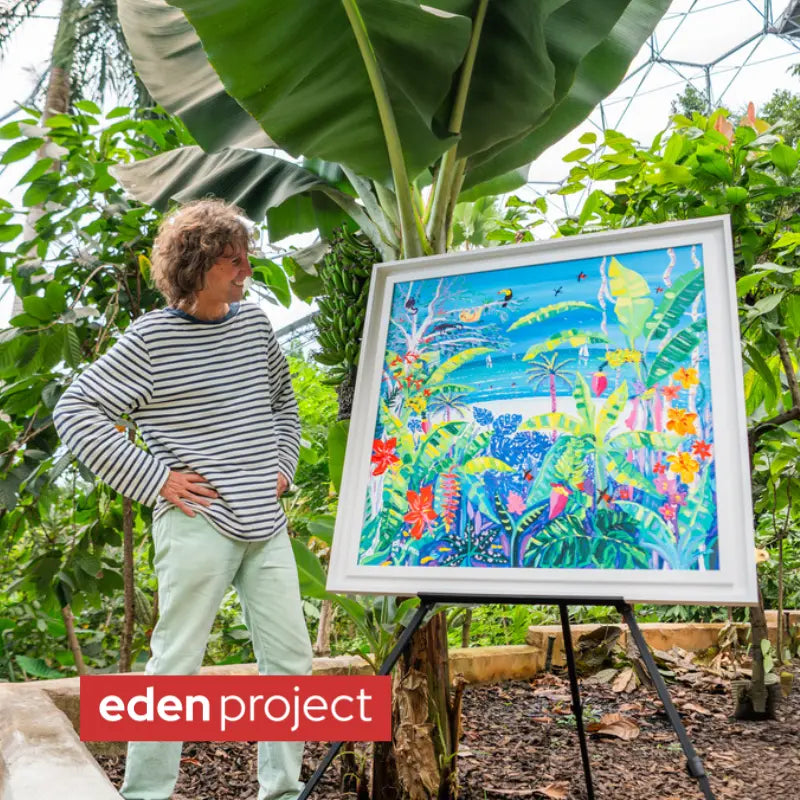

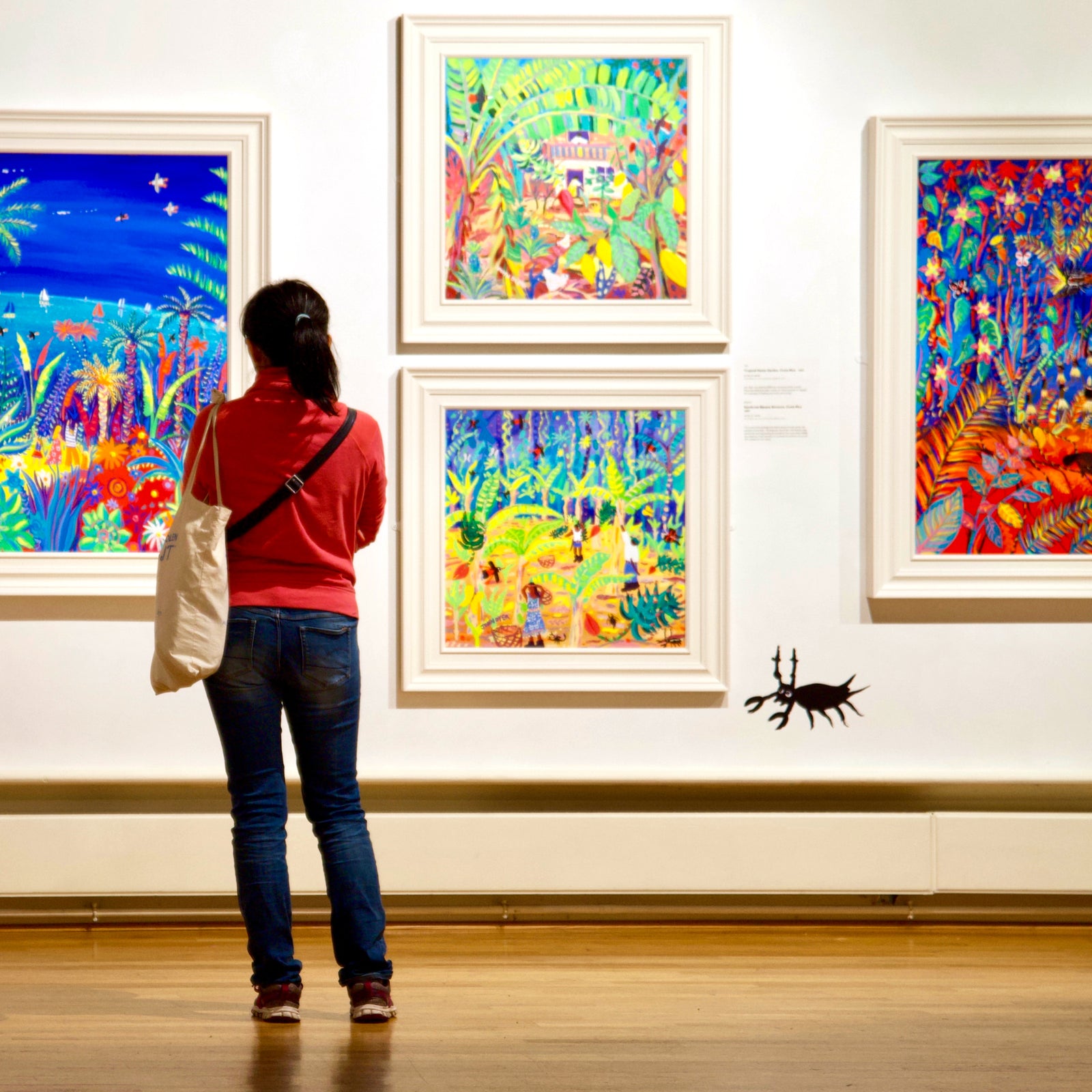
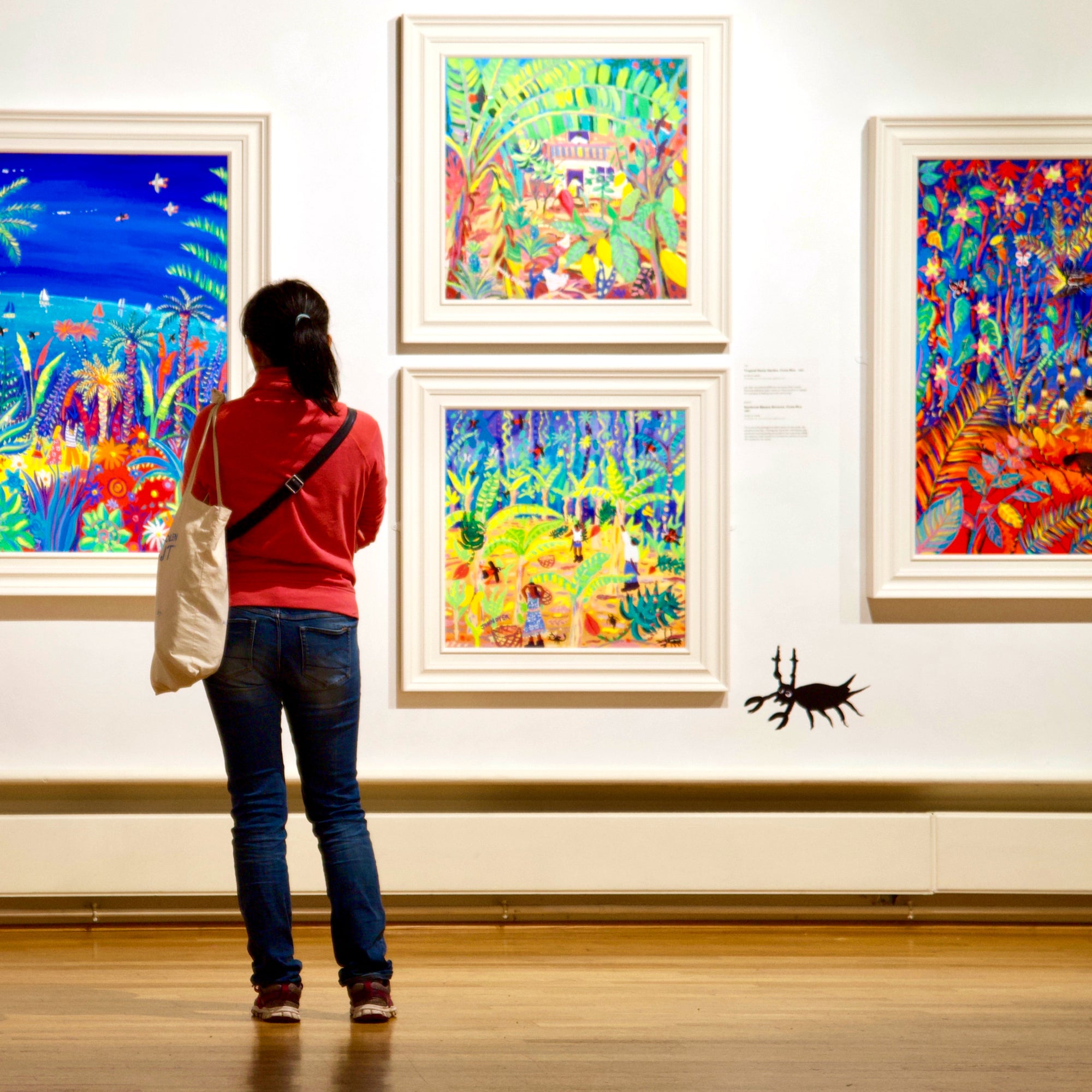
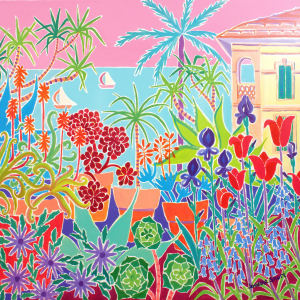



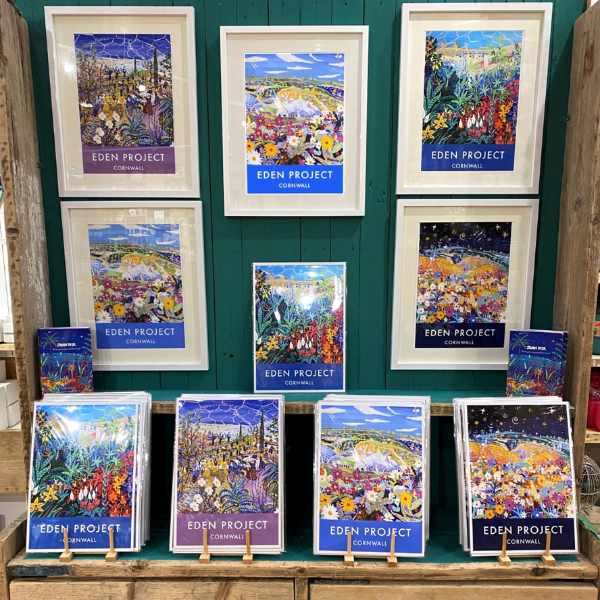


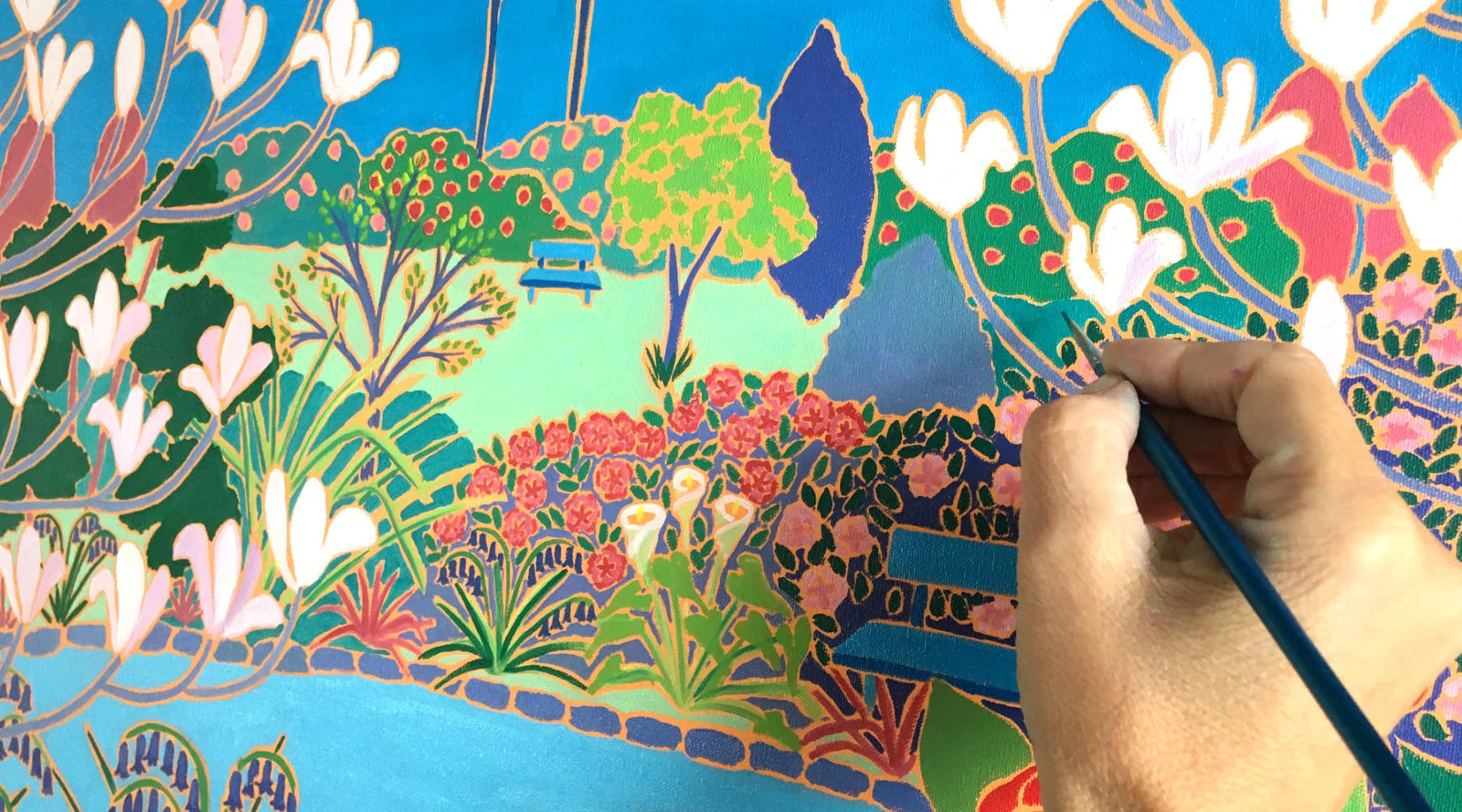

Above: Joanne Short's Trewidden Garden, Penzance, Cornwall, available as an art poster print.
To choose flower wall art, begin with the picture's colour and composition, then find the size and presentation that work in your room. A closely observed bouquet has a different presence from a garden view or flowers framing the Cornish coast. Here we help you make those choices, using paintings and prints you can explore in the gallery.
You will find the full choice when you browse our flower paintings and prints. This guide takes you through subject, colour, scale, framing and arrangement, so that you can decide what you want before making a shortlist.
Choose a subject you want to look at every day
A bouquet draws you towards the shapes of petals, the curve of stems and the relationship between flowers and their vase. A garden painting opens the view out, letting your eye move through plants towards trees, buildings or the distance. Think about whether you want the intimacy of a still life or the sense of space in a garden view.

Maria van Oosterwijck's arrangement, featured here, rewards a close look at its stems, petals and the spaces between them. A fine art print brings that composition into your home, giving you time to discover the smaller details as you return to the picture.

Van Gogh's 'Irises' offers a livelier rhythm: repeated stems and flower heads carry the eye across the picture. When choosing floral art, the way the whole composition moves can be just as compelling as the bloom itself. Compare a full bouquet with a garden scene and notice which holds your attention.
For more about the artists behind these different approaches, our guide to famous flower painters and their styles takes a closer look at their painting. Our guide to famous flower paintings through history follows the subject's development across periods and styles.
Decide between an original painting and a fine art print
Choosing between a painting and a print is partly about the experience you want to own. An original gives you the painted surface itself; a print offers another way to enjoy an image, with different edition and presentation choices across the range.
- Original paintings: choose an original for its one-off painted surface, brushwork and scale. The medium and complete dimensions help you imagine how the painting will look and feel in the room.
- Signed limited editions: a fixed print run and the artist's signature give these editions their particular appeal. The edition details identify the number in the run and how the print is signed.
- Unframed open editions: choose from the available print sizes and enjoy the freedom to select your own mount and frame. The textured fine art paper is part of their character.
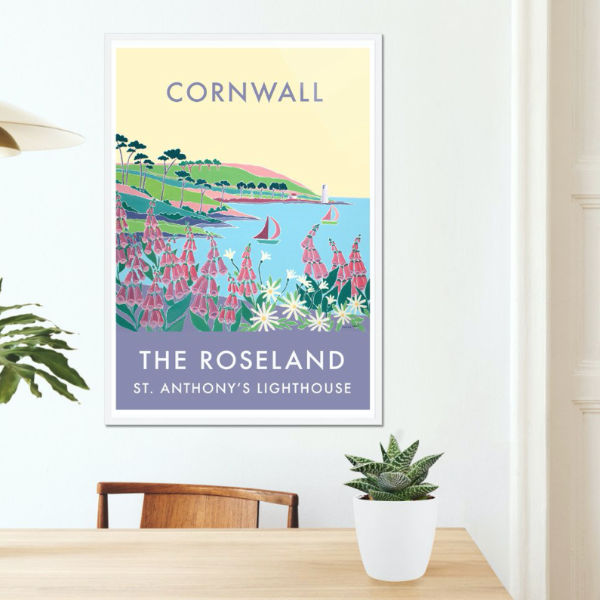
- Framed open editions and art posters: these have a smooth matt finish. A framed print gives you the presentation as part of the purchase; an art poster brings the image into a different format within our fine art print range.
If you would like to know more about how the prints are made and looked after, our fine art print quality and care guide explains the materials and care in one place.

Joanne Short's signed limited edition 'An Explosion of Colour, Tresco Abbey Garden' shows why image and paper measurements are worth understanding. The paper is 43.2 × 55.9cm, while the square printed image is 38.9 × 38.9cm. The larger paper gives your framer room to work with the presentation; plan for that full sheet and your chosen mount, rather than just the image.
Choose colour by looking at the whole picture
Look beyond the main flower colour. A painting's background, leaves, vase and sky can be just as important in a room. You might pick up a green from the leaves or a blue from the distance and repeat it quietly elsewhere. The picture can belong to the room without matching every cushion or wall.

Joanne Short's 'View through the Magnolias, St Michael's Mount' combines flowers with a recognisable Cornish view. It is a rewarding direction if you love the coast as well as gardens: the flowers bring you into the foreground, while the Mount gives the picture its sense of place.

Jan Davidsz de Heem's 'Vase of Flowers' offers the more concentrated experience of a bouquet and its surrounding background. A historical picture can sit beautifully in a contemporary room; its colour, shapes and proportions are more useful starting points than a rule about matching periods.
Work out the size before ordering
Plan with the finished framed size. A picture above a sofa is seen across the room, while one beside a desk may be enjoyed at close range. A paper template lets you test that difference before ordering.
- Measure the wall area and note the furniture, shelves, switches and doors around it.
- Work from the complete outer frame size. If you are arranging framing yourself, allow for the mount and frame as well as the paper or canvas.
- Cut a paper template to that size and place it on the wall. Look from the doorway and your usual seat. For a gallery wall, test the whole arrangement, including the gaps between pictures.
Portrait, landscape and square formats give you different rhythms on a wall. Leave enough space around the picture for its shape to read clearly, and consider how you move through the room. A thoughtful fit matters more than filling every centimetre.

Joanne Short's 'Dinghies on the Beach, Helford Passage' is a useful scale example: the painting measures 100 × 100cm, while its framed size is 120 × 120cm. That extra width changes the space it needs on the wall. Use the artwork and frame measurements together when planning a larger picture.
Choose a frame that serves the artwork
A light frame can sit quietly against a pale wall; a darker frame gives the picture a more defined edge. A mount adds breathing space around a print and becomes part of the finished composition. Begin with the colours and lines in the artwork, then choose a presentation that lets you enjoy them.

The framed presentation of Ambrosius Bosschaert's 'Bouquet of Flowers on a Ledge' shows how the space around an image affects the whole picture. For an unframed print, a good framer can help you choose a mount, frame and glazing that suit both the art and the room. Ask for conservation-quality materials to help care for the print.
Give paper prints gentle, indirect light and a place away from radiators or damp walls. The Canadian Conservation Institute's advice on caring for art on paper explains how light, heat and humidity affect them. Suitable glazing and thoughtful positioning work together to protect your picture.
Find a place where you will enjoy the work
Consider where you will actually see the art. From a living-room chair, you may enjoy the whole composition across the room. In a hallway, a picture can invite a closer look as you pass. Above a desk, the details of a smaller work may be especially rewarding.

In the room setting featuring Joanne Short's 'Una Villa in Toscana. A Villa in Tuscany, Sunset, Italy', red poppies and pale daisies lead towards the distant villa. Greens in the room echo the painting's palette. It is a useful way to begin a scheme: take one colour relationship you love in the art and let it guide a few choices around it.
That original painting measures 24 × 24 inches, with a framed size of 29.5 × 29.5 inches. Room illustrations are helpful for imagining colour and placement; those complete dimensions give you the scale to use in your own home.
Plan a gallery wall with flowers and landscapes
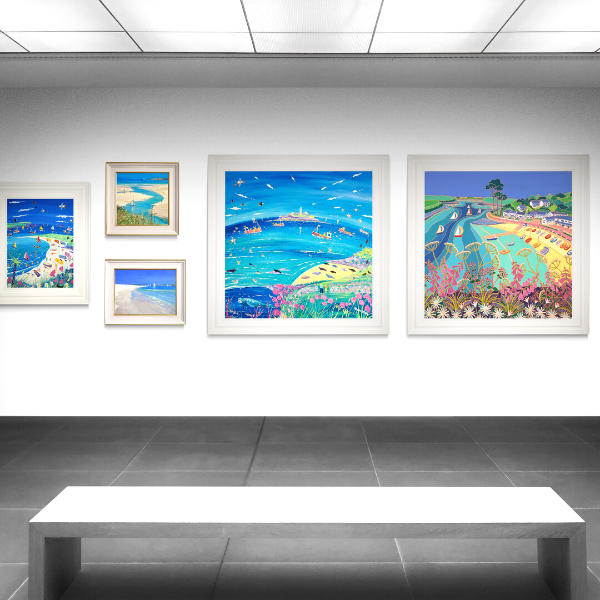
A gallery wall can connect flowers with landscapes, rather than repeating one subject. A shared artist, palette or favourite place can hold the arrangement together. Bring images of your shortlist together first and see what each picture adds to the group.

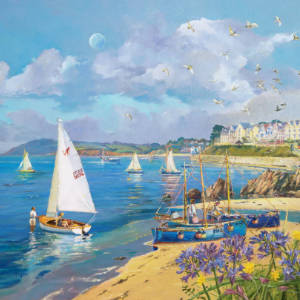
Ted Dyer's 'High Summer, Hayle Sands' offers a broad coastal view alongside the closer attention of a flower still life. You can combine those two ways of seeing, or keep the display entirely floral. Our flower-art collection gives you a place to explore the available flower subjects.

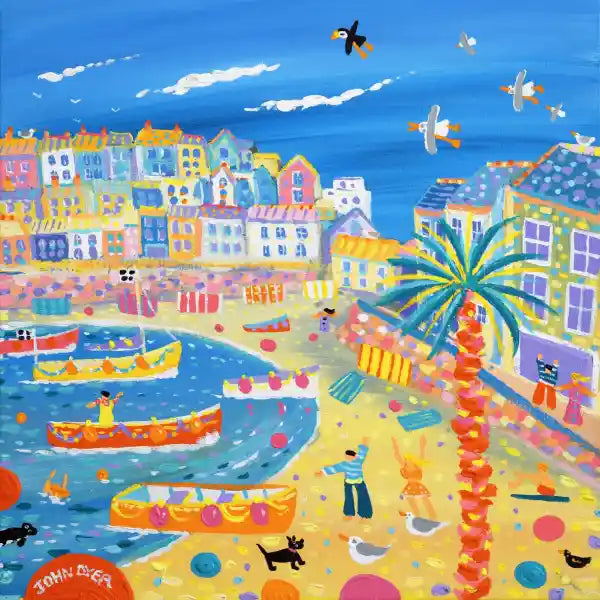
John Dyer's 'A Day at the Beach, Porthminster Beach, St Ives' is another coastal example to consider alongside a bouquet or garden painting. A small group can be connected by colour and place while giving you something different to enjoy in each picture.
Bring your favourites together
Once you have a few favourites, bring the practical details together so that you know exactly what you are choosing:
- The artist and the individual painting or print image.
- The format: an original painting, signed limited edition or open edition.
- The picture and complete framed dimensions, including your chosen mount where relevant.
- The paper and presentation for the print option you have selected.
- The price, availability, delivery arrangements and returns terms for your purchase.
For a gift, a favourite artist, place or colour is a thoughtful starting point. An unframed print leaves the frame choice with the recipient; for a framed picture, it helps to know the wall space available. You can contact the gallery if you would like help comparing a few choices or planning for a particular occasion.
Explore flower paintings and fine art prints
Questions about floral prints and paintings
What size floral print should I choose?
Start with the complete framed dimensions and try a paper template on the wall. A larger print gives the composition more presence across a room; a smaller one can reward a close look. For a group, plan the overall arrangement and gaps before choosing the individual sizes.
Can I buy floral prints framed or unframed?
Yes. Our open editions include framed and unframed choices across the range. Choose an unframed print for the freedom to arrange your own presentation, or explore the framed options for a finished picture. Our print quality guide explains more about the papers and how the ranges are made.
Are art posters fine art prints?
Yes. Our art posters are printed to fine art standards and have a smooth matt finish. Choose the image and format you enjoy; a signed limited edition offers a different appeal, adding a fixed edition run and the artist's signature.
How should I care for my print?
Give your print a good frame and a place away from strong sunlight, heat and dampness. Handle an unframed sheet by its edges, keeping fingers away from the image. Our materials, longevity and care guide brings the practical advice together.