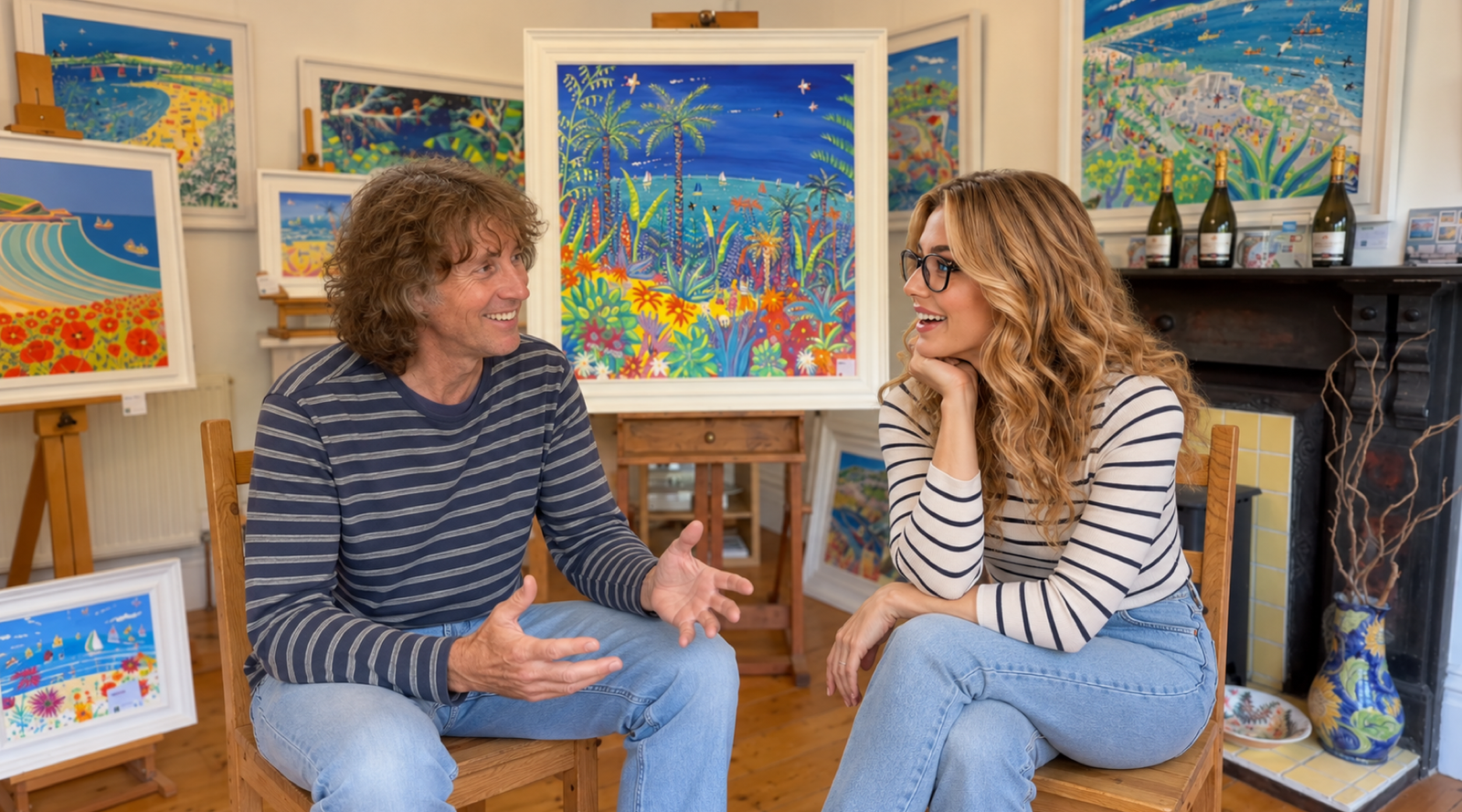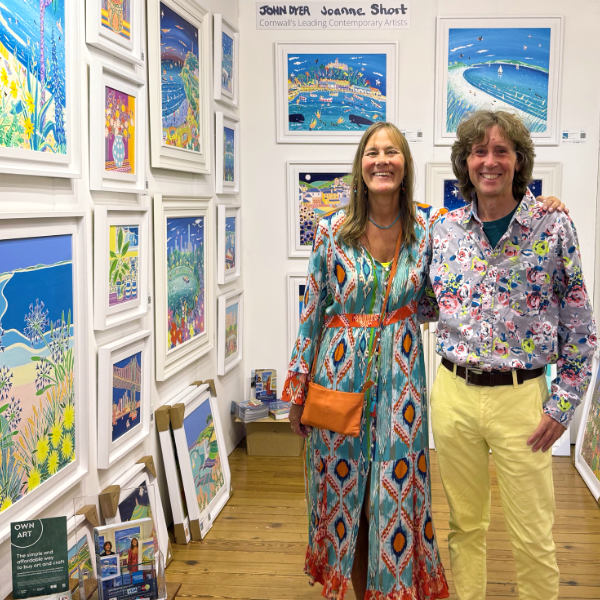




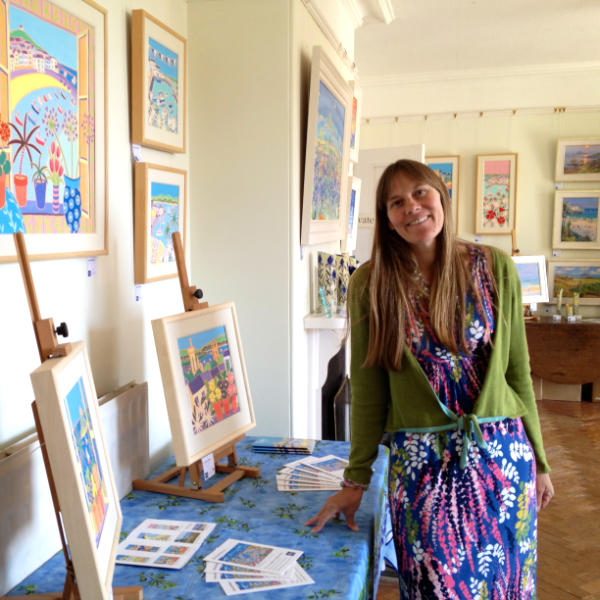
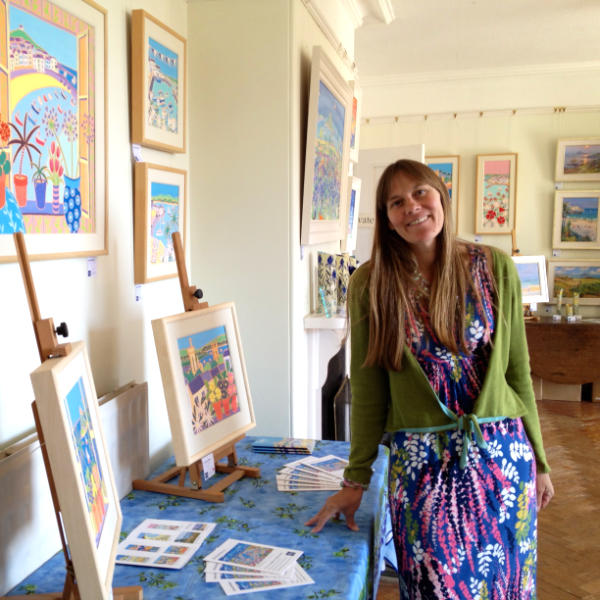













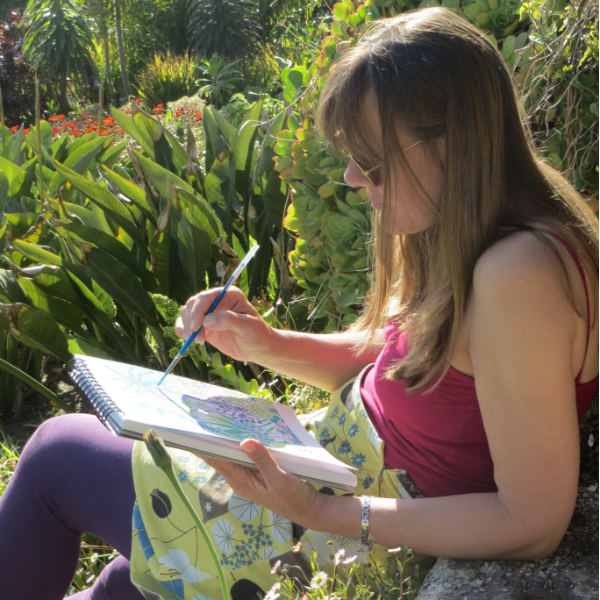
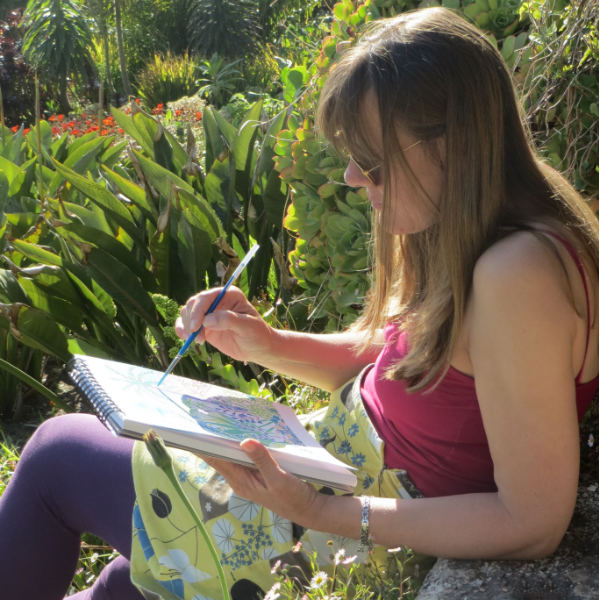




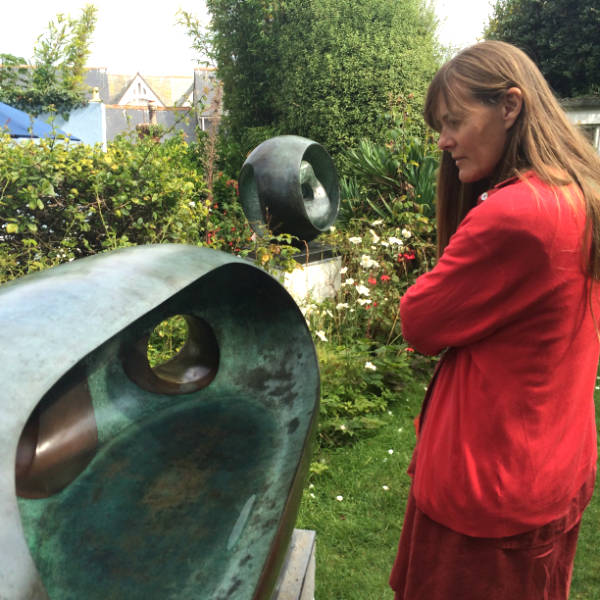
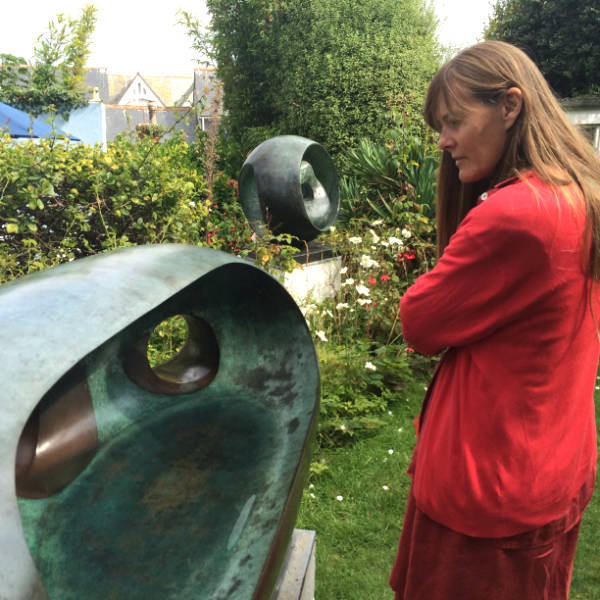
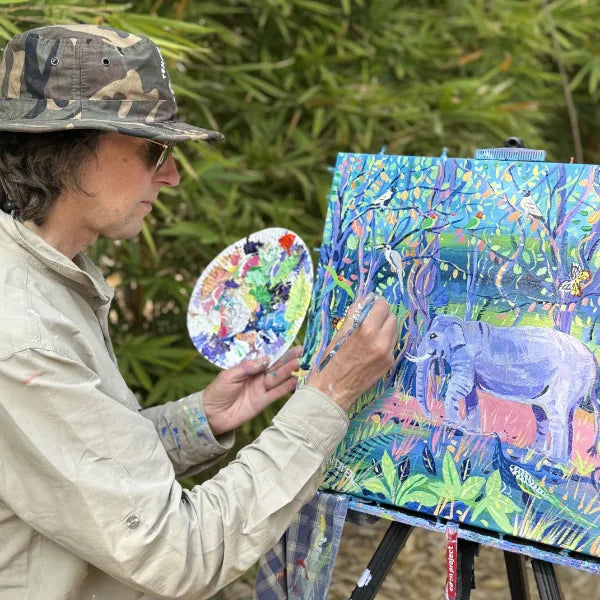

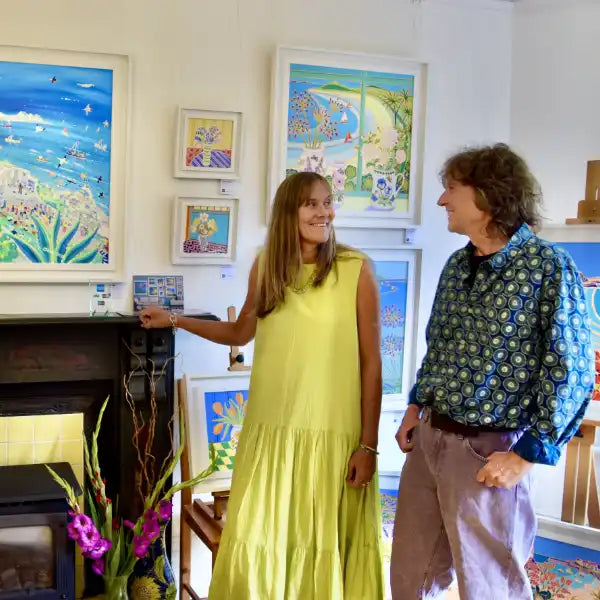

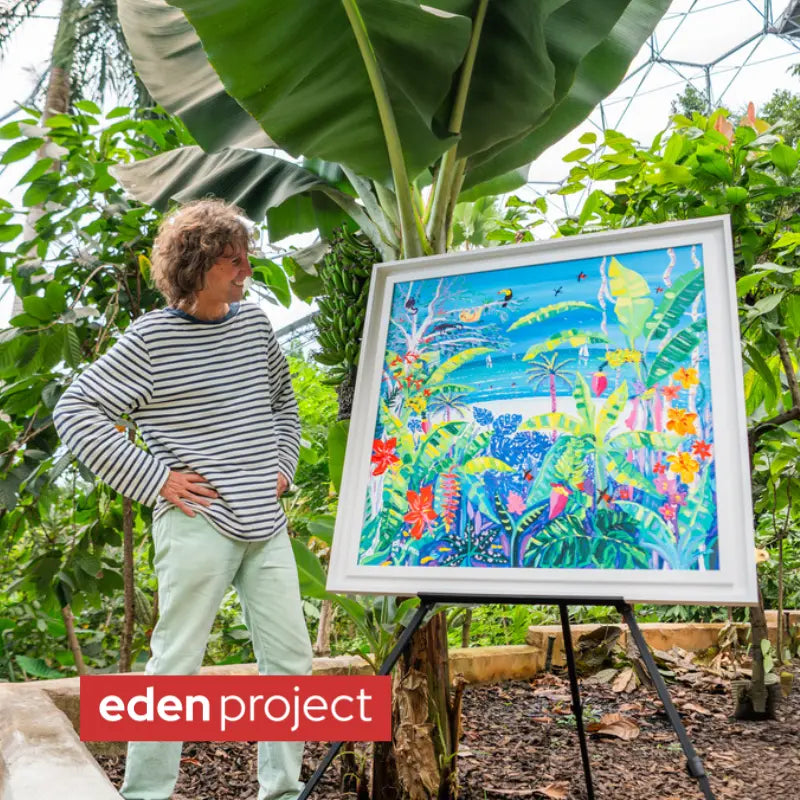

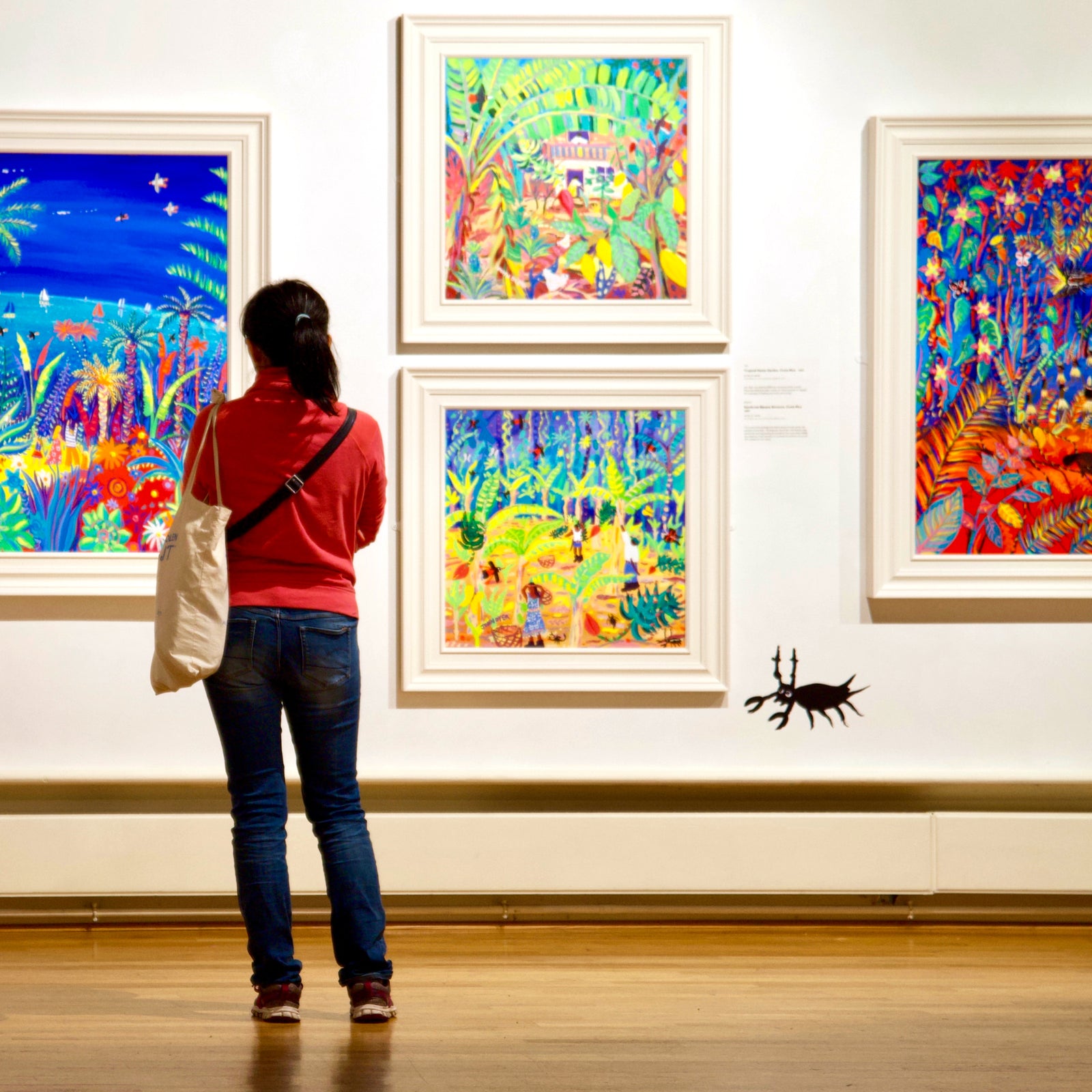
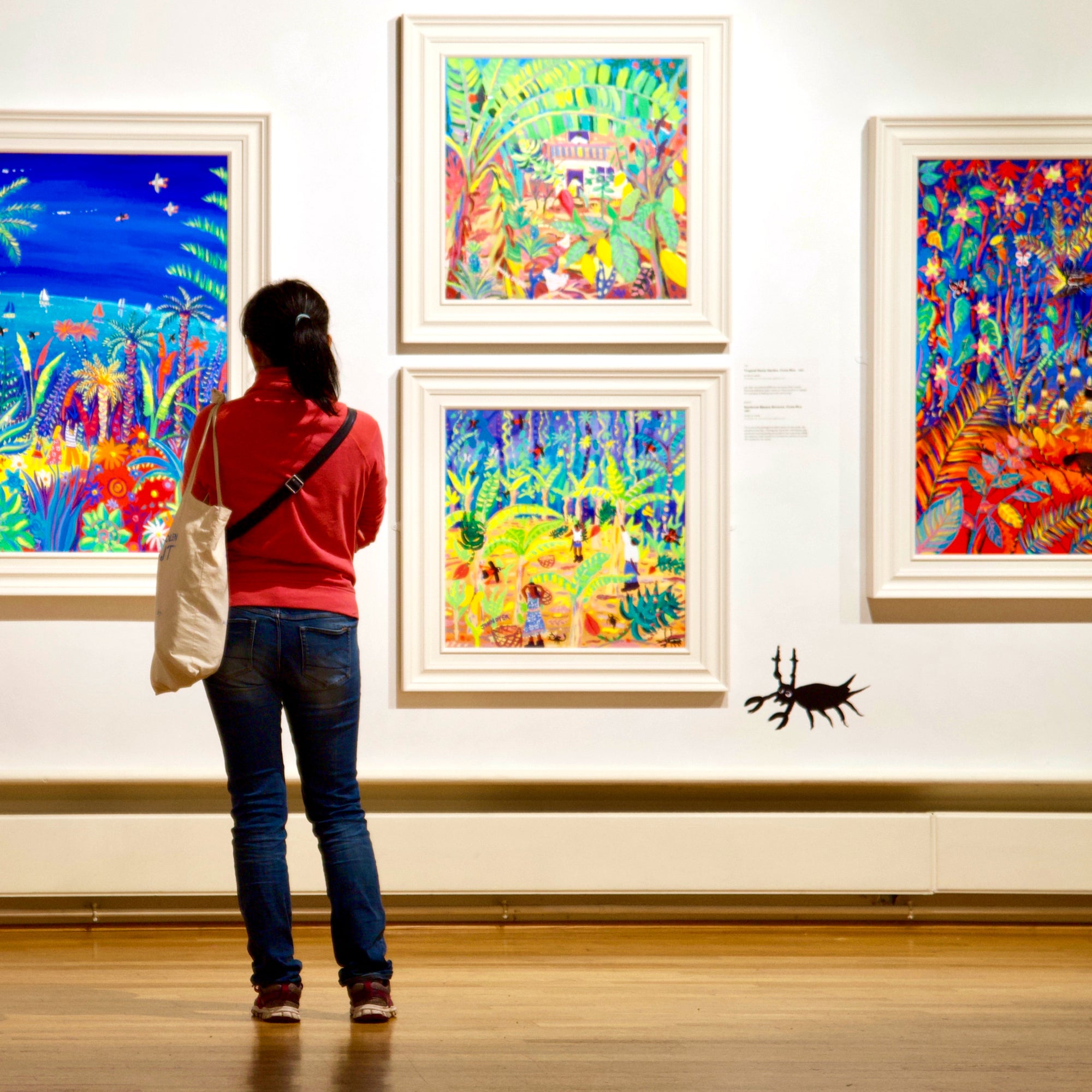
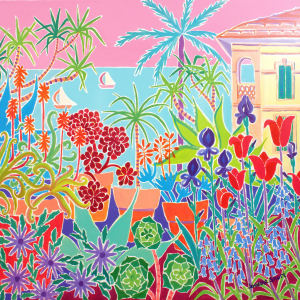
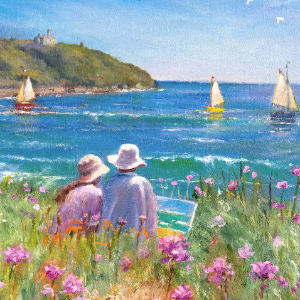

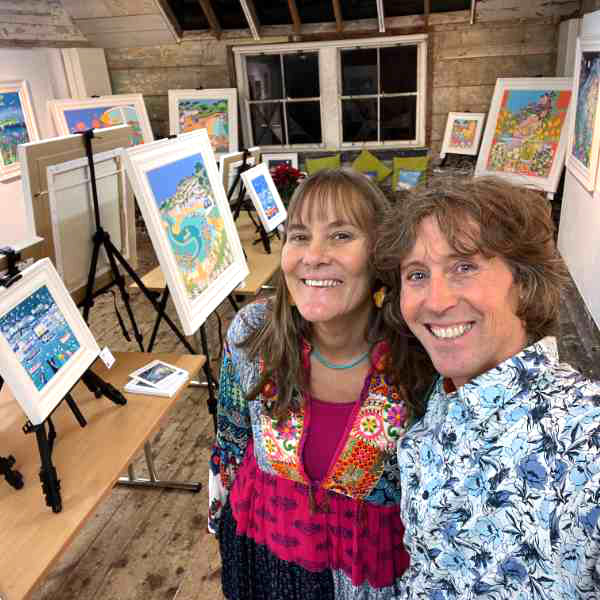





Above: British artist Joanne Short painting flowers in the Giardini Hanbury in Italy
Reviewed and updated 23 November 2026
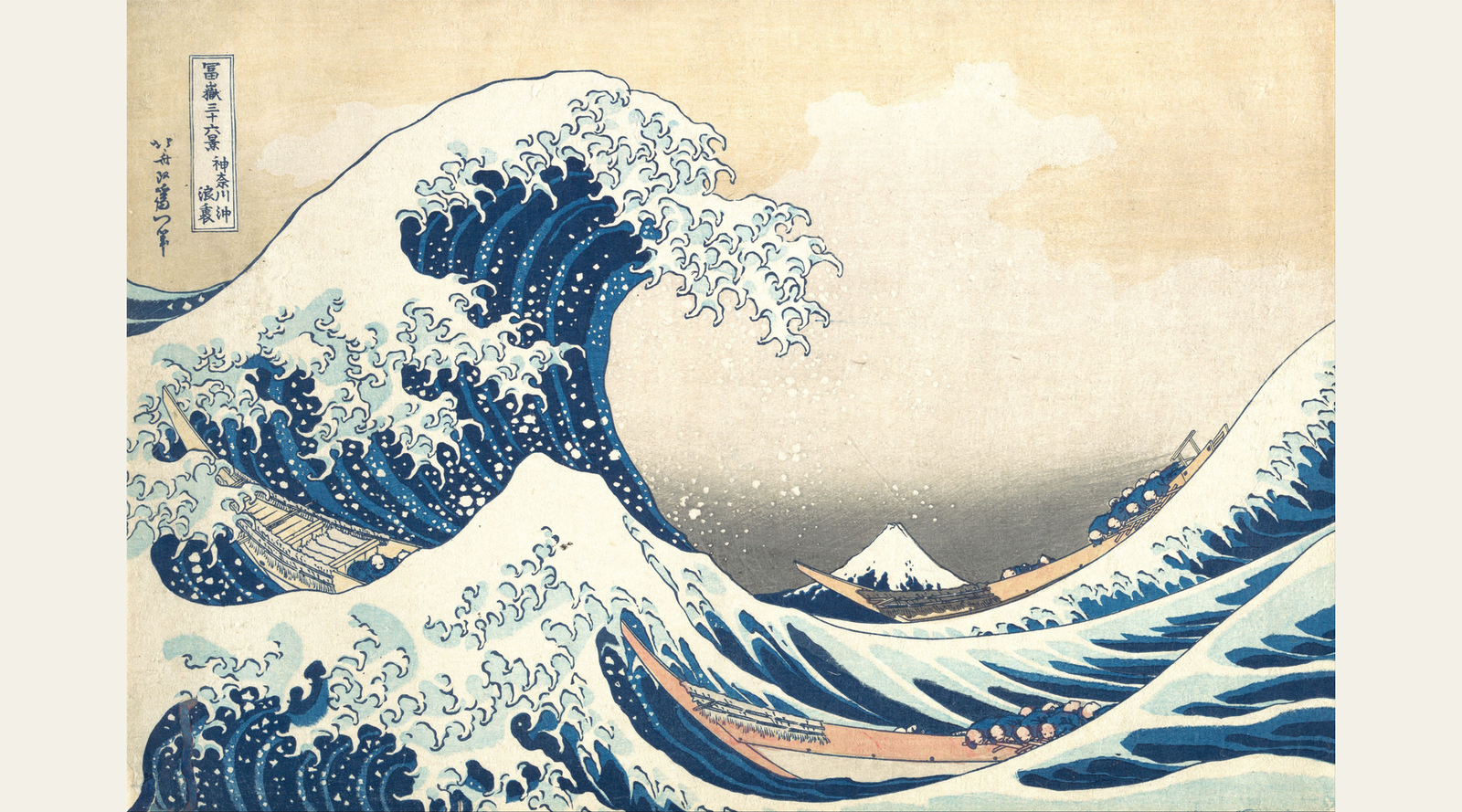
Famous flower painters include Jan Davidsz de Heem, Georgia O’Keeffe, Vincent van Gogh, Claude Monet and Henri Fantin-Latour. What separates them is how they ask us to look: at individual petals, enlarged shapes, brushmarks or a whole garden. Compare those approaches below, alongside Mary Cassatt, Maria van Oosterwijck and our own Cornish artist Joanne Short. Hiroshige’s woodblock prints offer another useful point of comparison.
Explore flower paintings and prints
Find the approach that interests you
-
For finely described bouquets, start with Jan Davidsz de Heem: overlapping stems, small insects and reflections make close looking rewarding.
-
For flowers seen at a different scale, compare Georgia O’Keeffe’s enlarged forms with Monet’s broad views of water and reflected light.
-
For a chronological introduction, read our history of famous flower paintings. This guide focuses on the artists’ different ways of seeing.
Jan Davidsz de Heem: the composed bouquet
In a de Heem bouquet, the whole arrangement matters as much as its individual flowers. Stems bend, blossoms overlap and small details draw the eye back towards the vase. Try following one stem through the picture before looking at a single petal: the composition is carefully organised even when it seems abundant and spontaneous.

Above: 'Vase of Flowers'. Garden Flowers. Still Life by Jan Davidsz de Heem. Open Edition Fine Art Print,
available from The John Dyer Gallery
De Heem makes an abundant bouquet feel remarkably alive. The National Gallery describes him as probably trained by Baltasar van der Ast, and explains how he brought a more natural arrangement to flower painting. That balance of careful observation and a convincing whole is part of the pleasure of his work.
Notice where the light catches a petal and where a stem slips into shadow. Each flower has its own character, but some come forward while others quietly hold the arrangement together. It is that change of emphasis that gives a detailed bouquet its depth.
Georgia O’Keeffe: the flower in close-up

Above: Photograph of Georgia O'Keeffe with Black Cat, ca. 1950 by Doris Bry
O’Keeffe changes the viewer’s relationship with a flower by enlarging it. In works such as Red Canna, a petal becomes a broad area of colour rather than a small part of a bouquet. The edge of the canvas crops the form, encouraging us to follow its curves before identifying the plant.
The Georgia O’Keeffe Museum’s chronology records the first exhibition of her large-format flower paintings in 1925. Her repeated working stays in New Mexico began in 1929. The flower paintings were already an established part of her work before that later landscape became so closely associated with her.
The flower's centre and the edges of the picture become a composition in themselves. Beside de Heem's complete bouquet, the difference is striking: O'Keeffe brings you close to one form, while de Heem draws you through a whole gathering of stems and blooms.
Vincent van Gogh: Sunflowers and Beyond

Van Gogh’s sunflower paintings make a useful comparison with O’Keeffe. Look at the direction of the brushmarks and how a flower head is built from separate strokes. The paint’s surface contributes to the image as well as describing the plant.
The backgrounds deserve attention too. A strong contour makes a petal or stem stand out, while neighbouring colours change the way one another appears. Each sunflower painting has its own colour, arrangement and brushwork; spend time with the differences and you begin to see much more than a familiar subject.

Above: Vincent Van Gogh Framed Open Edition Art Print. 'Irises'

Above: 'Irises'. Garden Flowers. By Vincent Van Gogh. Open Edition Fine Art Print
His irises and roses offer another way into his flower painting. The Metropolitan Museum of Art's 'Irises' belongs to a group of four bouquets painted in May 1890. The museum explains that some of its red colour has faded, changing the violet flowers and pink background. It is a fascinating reminder that an old painting's appearance has a history of its own.
Claude Monet: Water Lilies and Garden Blooms

Above: 'Water Lilies' by Claude Monet. Giverny Garden Open Edition Fine Art Print
Monet offers a different starting point: the flower as part of a garden rather than a subject isolated in a vase. In his water-lily paintings, try deciding which marks describe floating leaves and which describe reflections. Sometimes the surface of the pond holds the whole picture together, with little sense of a horizon.
The Musée de l’Orangerie explains the development of the Water Lilies cycle, inspired by Monet’s garden at Giverny. Its installation contains eight large compositions assembled from multiple panels, displayed in two oval rooms. These are parts of a planned environment, rather than a group of unrelated flower pictures.
His garden painting at Vétheuil offers a useful contrast with the water-lily pond. Compare a view through a planted garden with a close view of water: both give flowers a place within a larger setting, but organise the viewer’s journey differently.
Maria van Oosterwijck: Delicate Petals and Insects

Above: Flower Still Life (1669), Maria van Oosterwijck
Maria van Oosterwijck’s floral still lifes combine carefully described flowers with the smaller life around them. The Royal Collection identifies her as a pupil of de Heem. Instead of stopping at the most prominent bloom, search for insects, leaves and the spaces between the stems.
Alongside the 1669 painting illustrated here, explore her Still Life with Flowers, Insects and a Shell, dated 1689 in the Royal Collection. A bee, butterfly and dragonfly have settled among its flowers. Finding them changes the pace of looking: the impressive bouquet becomes a world of small discoveries.
Utagawa Hiroshige: blossoms and the framed view
Hiroshige's woodblock prints bring a different way of composing flowers and landscape into this comparison. In the river scene illustrated below, the foreground tree frames the distant view. Branches and blossoms give the image its shape as well as its sense of place and season.

Above: Sumida River, the Wood of the Water god by Utagawa Hiroshige
There is a direct connection with Van Gogh: his Flowering Plum Orchard (after Hiroshige) is a painted interpretation of a Hiroshige print. Compare the enlarged foreground branch with the smaller landscape beyond. It provides a concrete example of one artist learning from another’s composition.
Edouard Vuillard: Domestic Elegance
In the Vuillard flower painting illustrated here, consider the spaces around the vase as carefully as the flowers themselves. A still life can also be a picture of a room: the tabletop, background and surrounding patterns affect how the bouquet feels within it.

Above: Flowers (1903) Edouard Vuillard
The pleasure lies in the relationship between bouquet and room. Your eye may settle on a flower, then move to a patch of pattern or a line in the setting. Compare that interweaving with the clear outlines of a Japanese print or the strongly lit flowers in a Dutch still life.
Mary Cassatt: Still Lifes of Lilacs
Cassatt is best known for figure subjects, making Lilacs in a Window a useful discovery. The Metropolitan Museum of Art dates it to about 1880–83 and describes it as one of her rare paintings devoted entirely to still life.

Above: Mary Cassatt, Lilacs in a Window, about 1880–83
The window gives the bouquet a setting and a source of light. The Met draws attention to the relationship between the organised structure of the picture and the freely spreading lilacs. Look at how the straight lines around the flowers make their irregular shapes more noticeable.
Henri Fantin-Latour: tone and texture

Above: Bouquet of flowers (1887) by Henri Fantin-Latour
Fantin-Latour’s bouquets invite a slower comparison of colour and texture. A pale rose can sit close to another pale flower without disappearing into it: small changes in tone, the turned edge of a petal and the surrounding shadows distinguish one from the next.

Above: Still life with flowers (1881) by Henri Fantin-Latour
There is a British connection to this French painter's career. The National Gallery's biography records his visits to London and exhibitions at the Royal Academy from 1862. His portraits and flower paintings belonged to the same working life; knowing both gives you a fuller picture of the artist.

Above: Apple Tree Flowers, Henri Fantin-Latour
Look at the bouquet as a whole, then return to its individual blooms. Fantin-Latour's subtle changes of tone offer a different pleasure from Van Gogh's stronger contrasts or O'Keeffe's broad forms. A favourite often emerges from just this sort of close comparison.
Joanne Short: flowers, colour and Cornish interiors

Above: Cornish flowers in a Welsh Vase, by Cornish artist Joanne Short. Exhibited in the Summer Exhibition 2025 in St Ives
Joanne Short’s contemporary floral art brings flowers into recognisable rooms, gardens and Cornish views. In her oil paintings, the colour of a vase or a piece of patterned wallpaper can be as important as the flowers themselves. The works illustrated below give you a way to compare those choices across several paintings by the same artist.

Above: 'Banana Plant in the Kitchen', by Cornish artist Joanne Short. 12 x 12 inches oil on canvas. Exhibited in the Summer Exhibition 2025 in St Ives
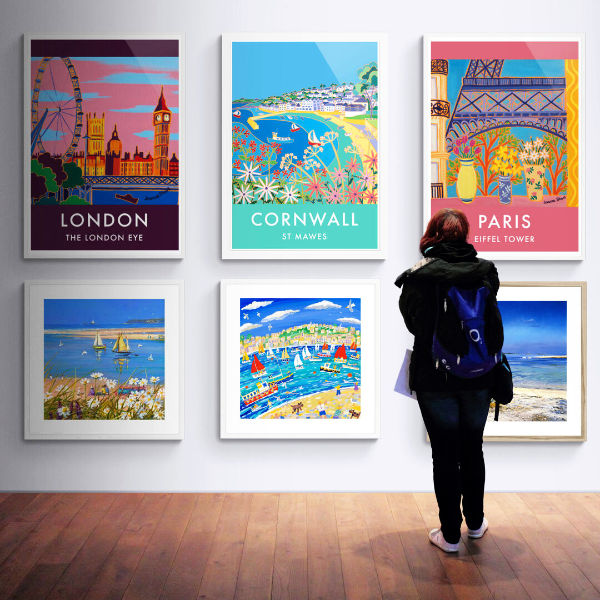
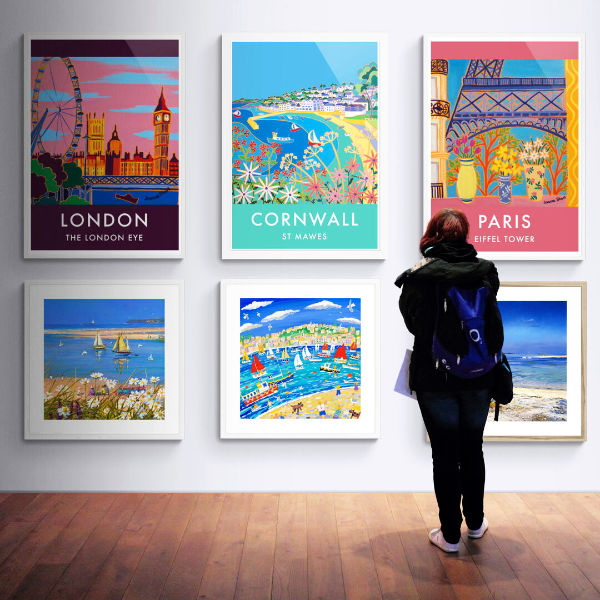
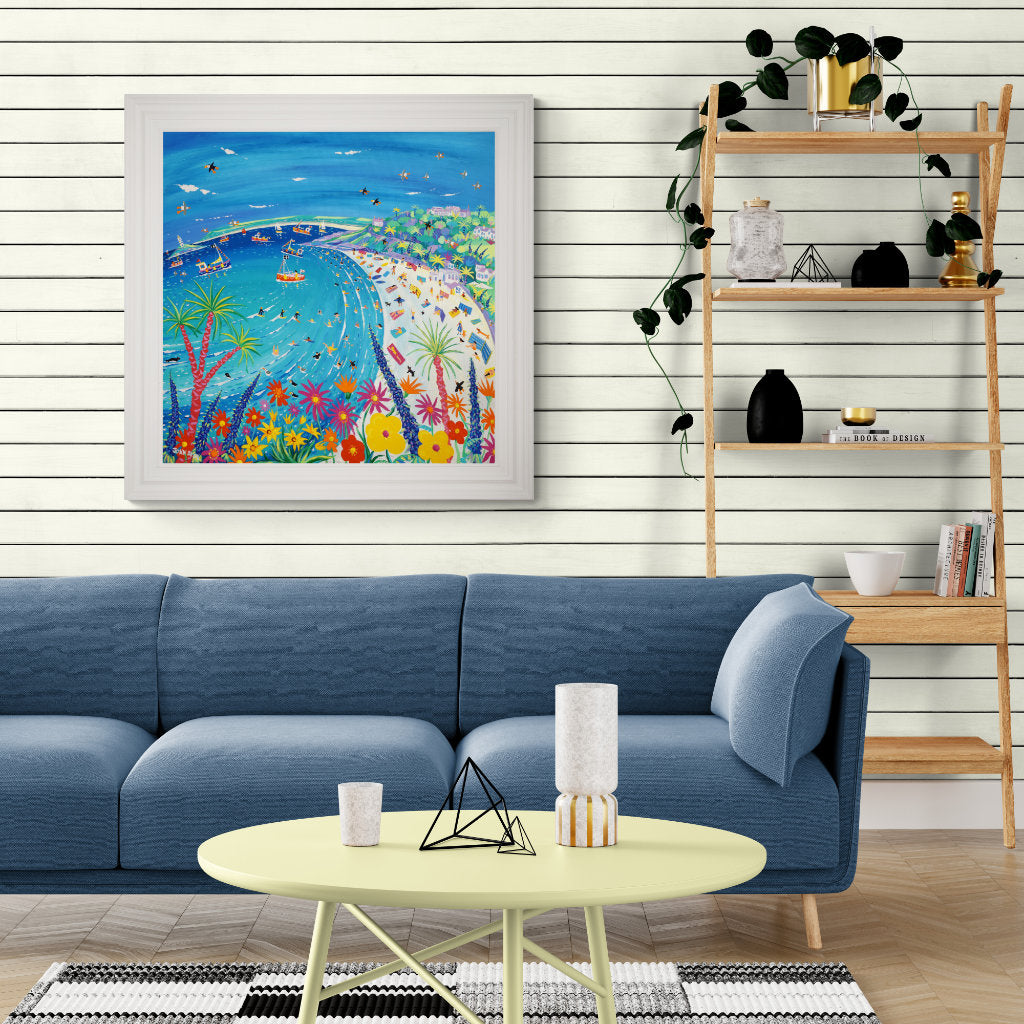
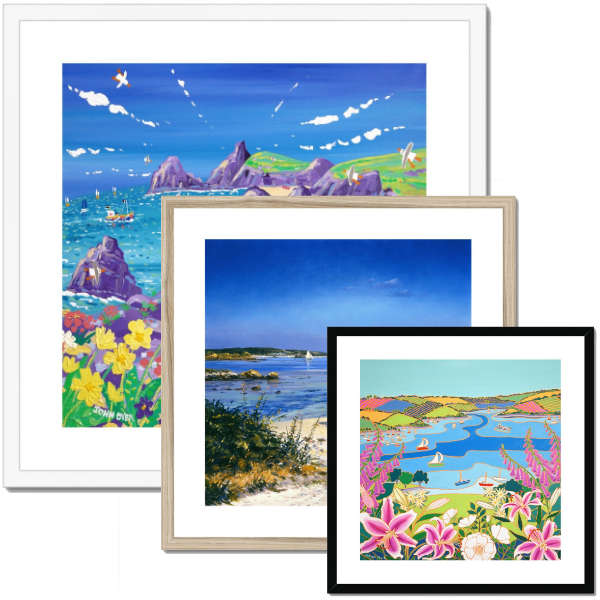
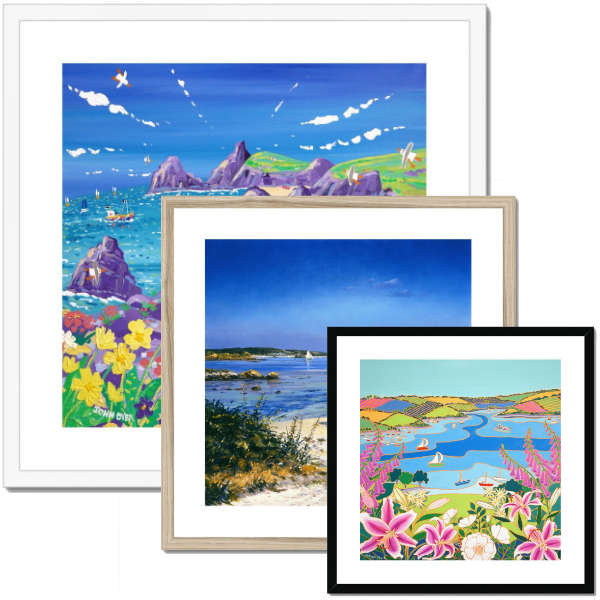
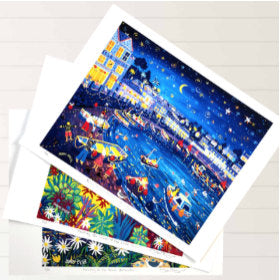
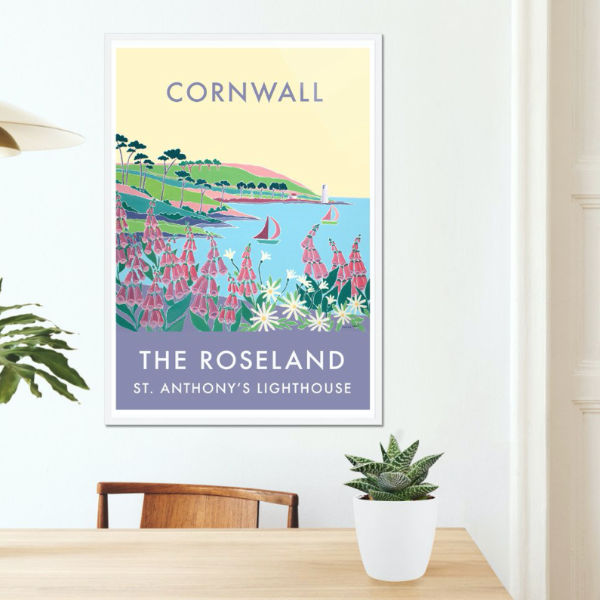
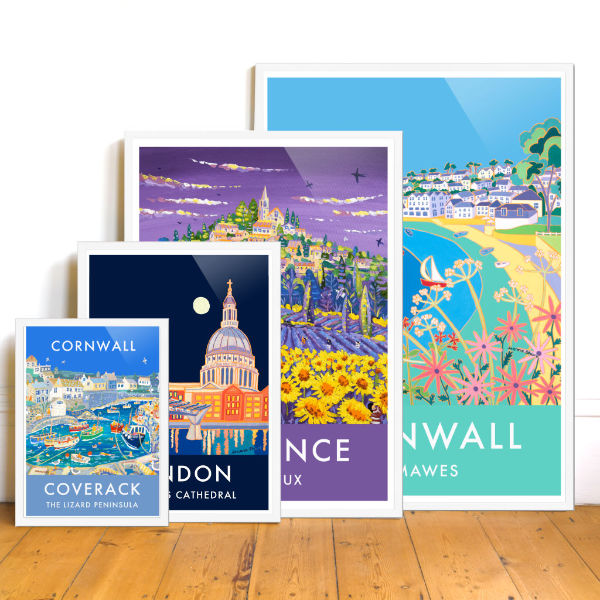
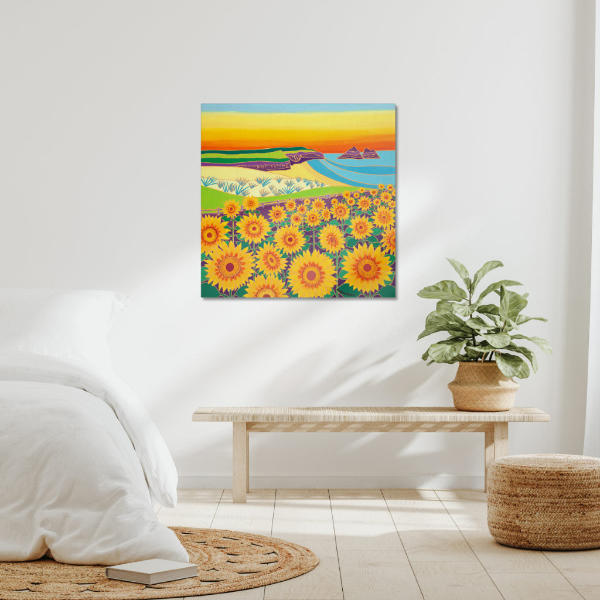
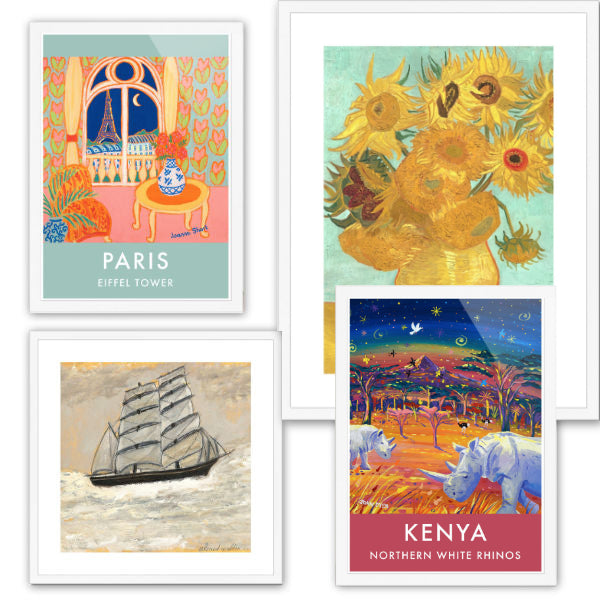
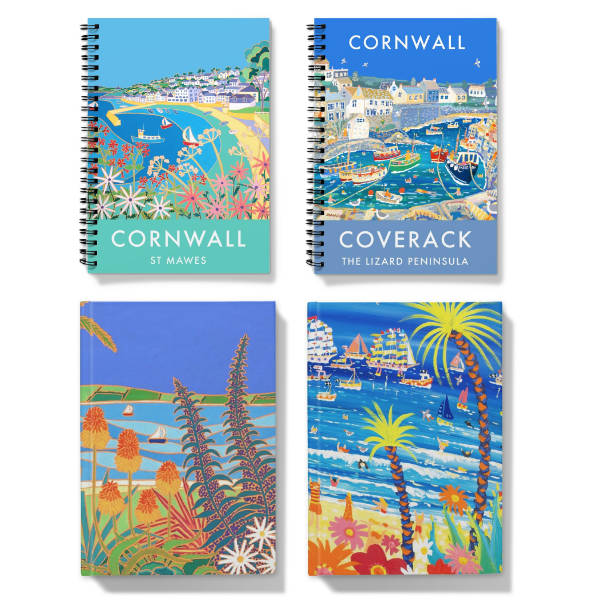
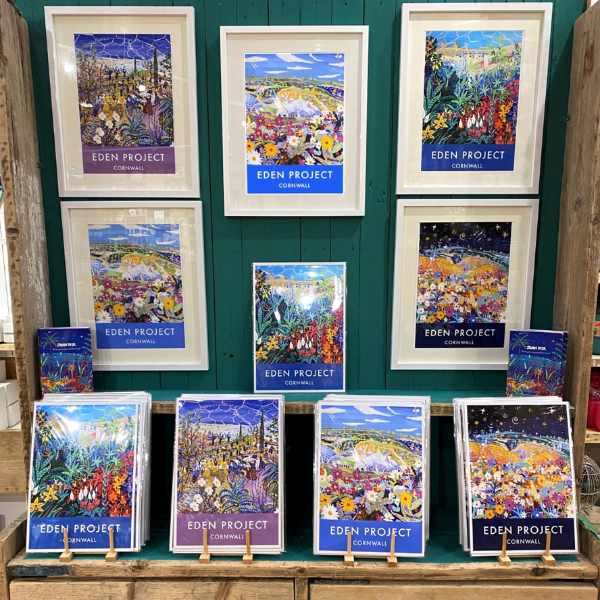
If you would love to live with Joanne's art, her signed limited edition prints bring the personal appeal of an artist's signature, while her travel poster prints offer another colourful way to enjoy her pictures. Begin with the image you keep coming back to, then choose its available size and presentation. Our fine art print quality and care guide explains more about the prints and how to look after them.

Above: 'Wild Flowers in a Spotty Vase', by Cornish artist Joanne Short. 12 x 12 inches oil on canvas. Exhibited in the Summer Exhibition 2025 in St Ives
In Wild Flowers in a Spotty Vase, compare the repeating spots with the less regular shapes of the flowers. In Prickly Cacti and Purple Wallpaper, look at the relationship between the plant and the pattern behind it. These are useful questions when choosing a work for your home: do you respond most to the flowers, the colour relationships or the room around them?

Above: 'Prickly Cacti and Purple Wallpaper', by Cornish artist Joanne Short. 12 x 12 inches oil on canvas. Exhibited in the Summer Exhibition 2025 in St Ives

Above: 'Spring Tulips from a Friend' by Joanne Short 8x8 inches oil on canvas
Another flower painter to explore: Rachel Ruysch
For another approach to the detailed bouquet, look at Rachel Ruysch. The National Gallery records her training with Willem van Aelst and her appointment as court painter in Düsseldorf from 1708 to 1716. Compare how her stems, flowers and insects lead the eye through an arrangement with the work of de Heem and van Oosterwijck.
Choosing a flower painting or print
Begin with the picture you would enjoy seeing every day: an intimate flower close-up, an abundant bouquet, a garden or a room filled with flowers. Our flower paintings and prints collection brings those possibilities together. If you have a space in mind, our guide to choosing flower artwork for your home helps with scale, colour and framing. Our history of flower paintings follows the changing ideas behind the subject.
Frequently Asked Questions
Who is the best painter of flowers?
The most rewarding flower painter is the one who changes the way you see. De Heem and Fantin-Latour draw you into a bouquet's details; O'Keeffe makes an individual form feel expansive; Van Gogh gives brushwork a vivid presence; Monet places flowers within water and light. Let the paintings help you discover your own favourite.
What is the difference between a floral still life and a garden painting?
A floral still life usually presents arranged flowers, often in a vase, as its main subject. A garden painting places flowers within a wider setting. The distinction can be fluid: a view through a window may connect an indoor bouquet with the landscape outside.
Which women artists are known for flower paintings?
Maria van Oosterwijck, Rachel Ruysch, Georgia O'Keeffe, Mary Cassatt and Joanne Short offer wonderfully different flower paintings. Compare a detailed Dutch bouquet, an enlarged modern flower and a contemporary Cornish view: each gives you another way to enjoy the subject.
What inspired Claude Monet's water lily series?
He created the water garden at Giverny that became the subject of his Water Lilies cycle. The flowers share the picture with floating leaves, reflections and changing light, so looking at the surrounding water is as useful as identifying the blooms.
Can I buy a flower painting or a fine art print?
Yes. Our flower art collection includes original paintings and fine art prints. Choose an original for its painted surface, a signed limited edition for its fixed numbered run and artist's signature, or an open edition to enjoy a favourite image with different size and presentation choices across the range. If you would like help finding the right picture and frame for your room, we would be delighted to guide you.