

















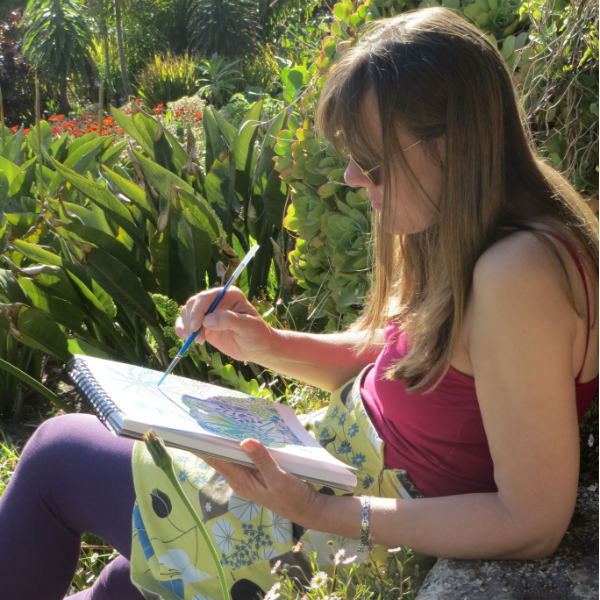


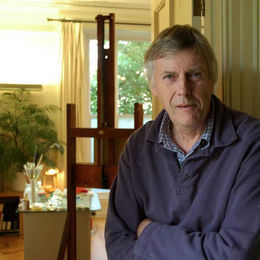
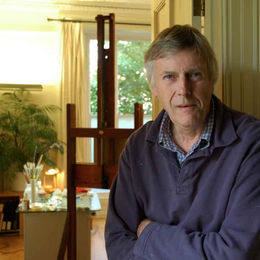


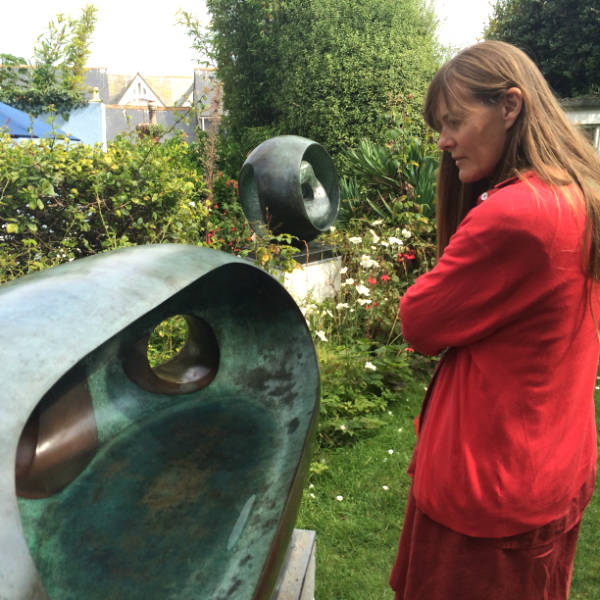











A delisted Google shopping feed and cloned websites helped push us to build Aria. We needed help defending the gallery, keeping our paintings visible and reclaiming time to paint. Here is John Dyer’s view of why we needed her, followed by the real story of making her first interview film.
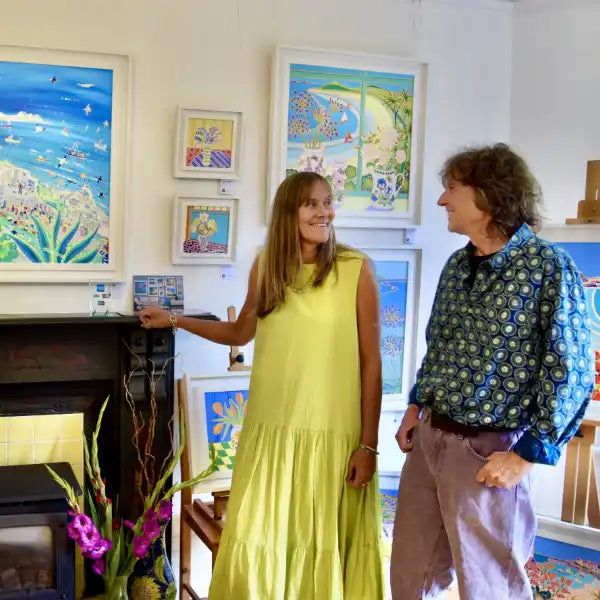
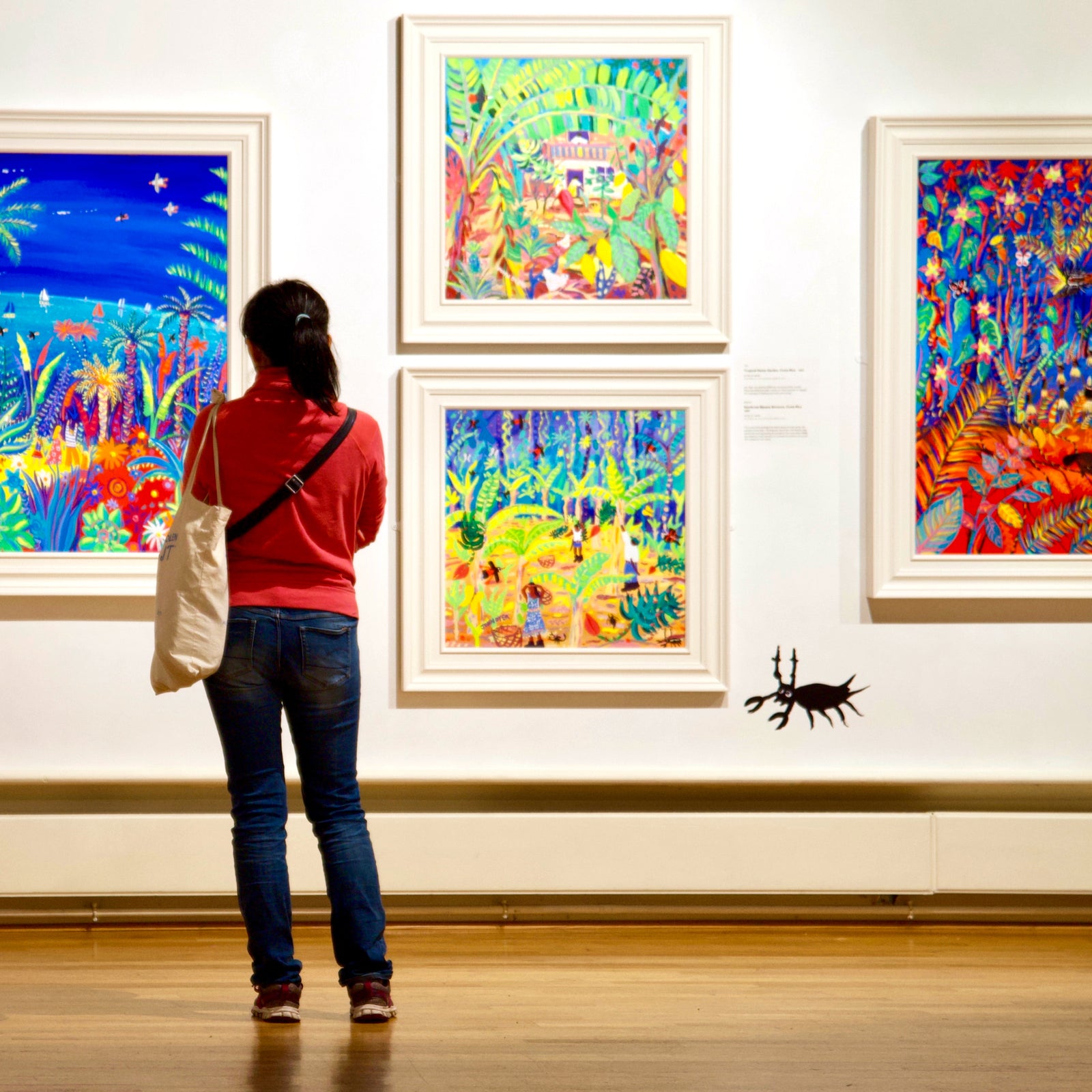
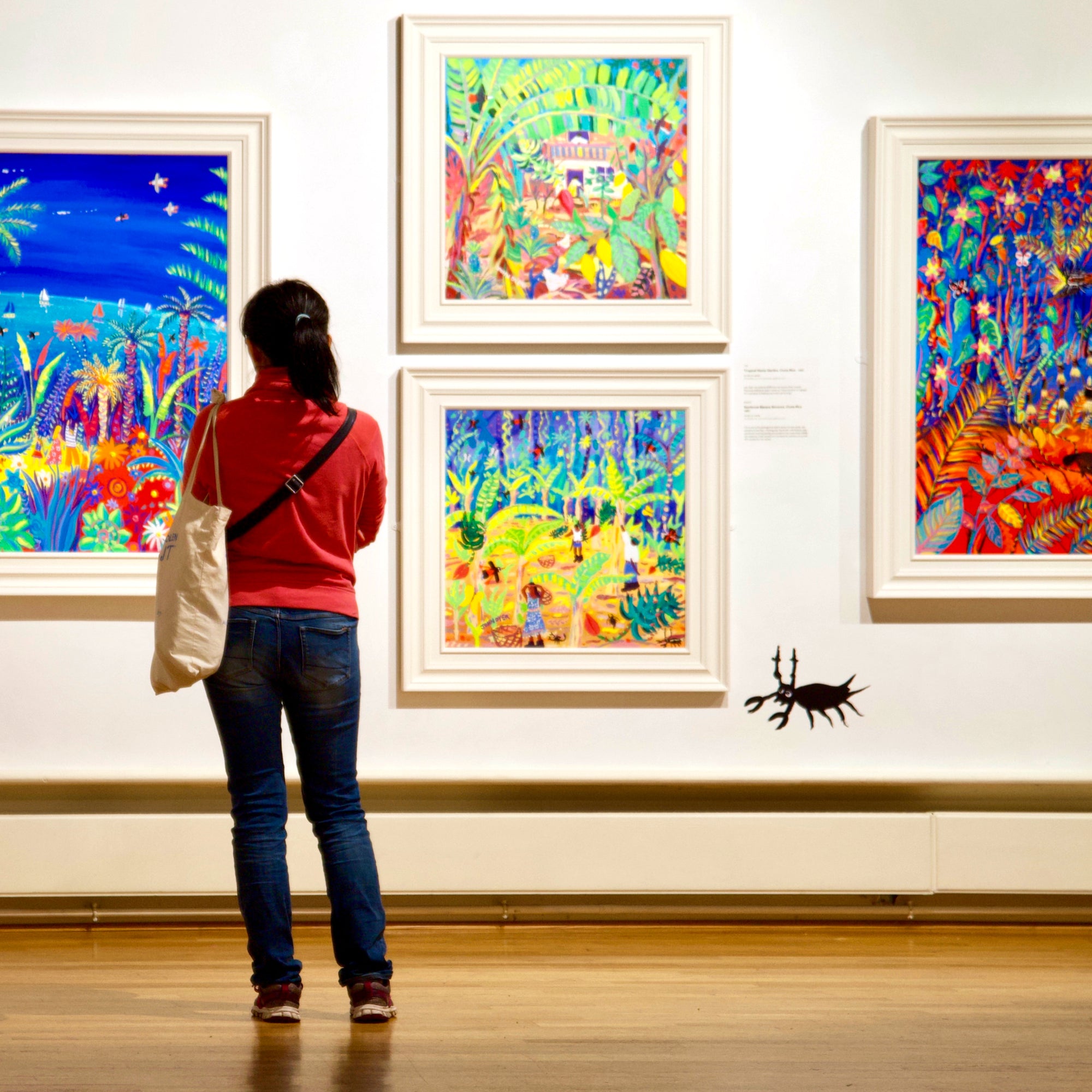
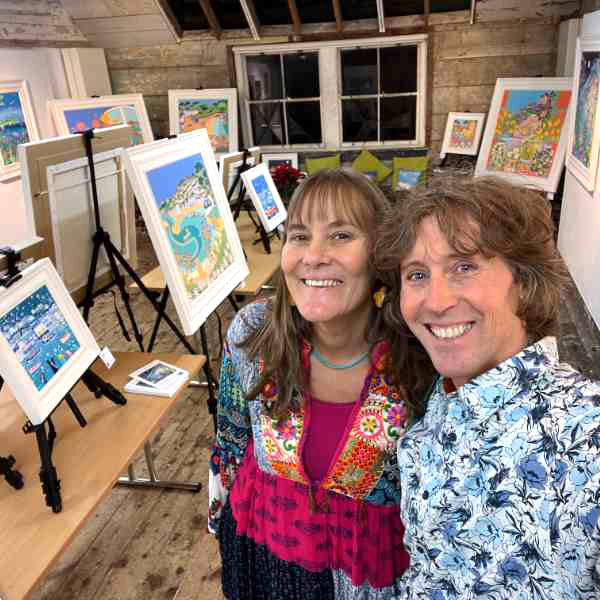
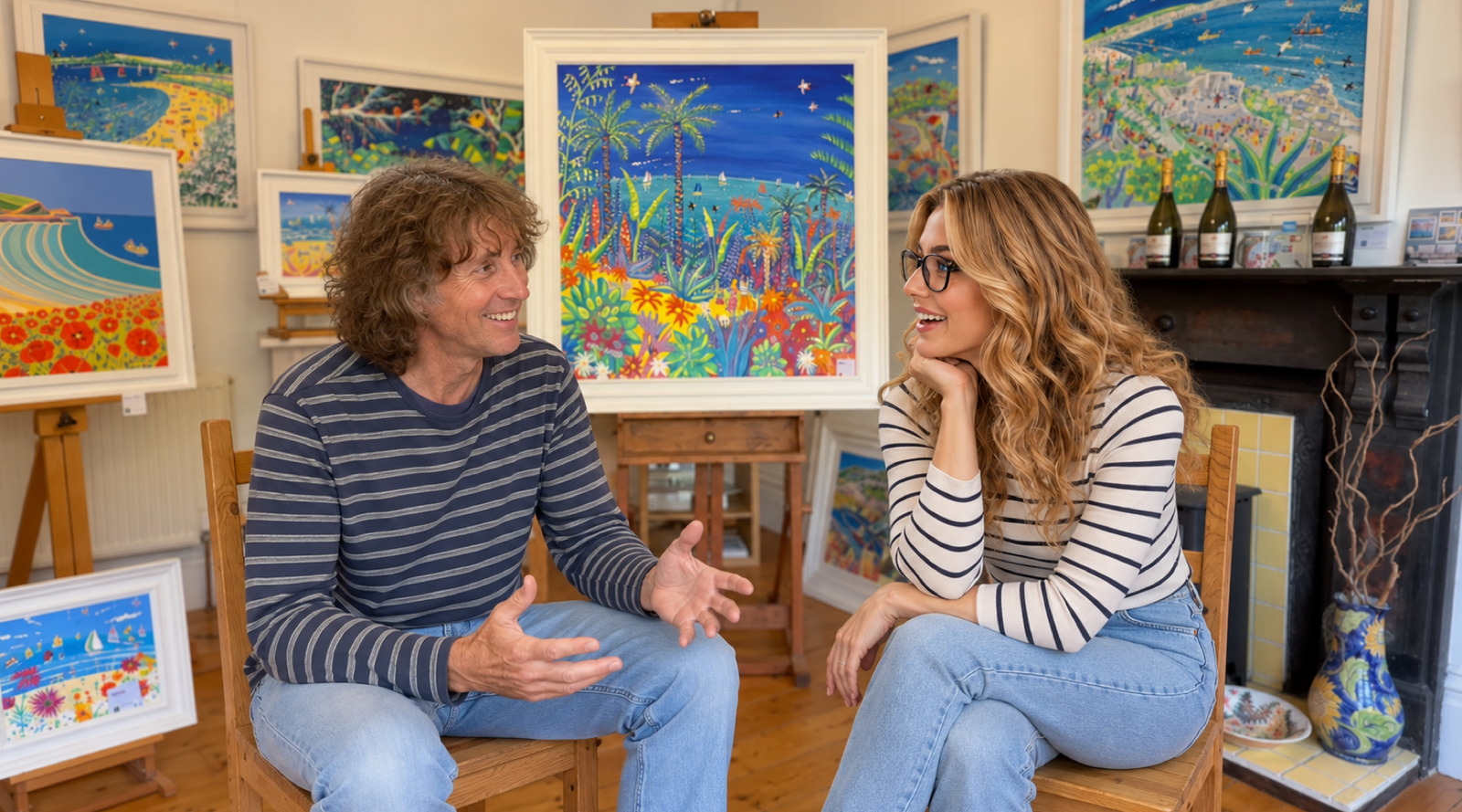
John sat down in the gallery to interview someone who wasn’t there. The paintings were real. The wooden chairs were real. So was John. The chair beside him was empty—and somehow, by the time we had finished, its occupant was questioning his spelling.
That was the beginning of our introduction to Aria. We wanted customers to meet the character behind some of our new art films, understand why she is joining the gallery team, and enjoy a little of the conversation that makes this place ours.
Our approach to AI for artists begins with a practical question: can it help us spend more time making art and sharing it? Aria is our answer in progress. John and Joanne are still here, still painting, and still at the heart of the gallery.

Why we built Aria: defend the gallery and keep painting
John recalls our Google shopping feed being delisted, with Google unwilling to explain why or provide the help we needed to resolve it. We had to use AI to help fix the problem. For an independent gallery, that experience made the need for our own technical support very clear.
We had also faced cloned websites. We had clones removed from the internet through manual work, but it took too long. Those experiences are central to why we built Aria: protecting the gallery and our collectors, keeping our paintings visible and reducing the time we spend dealing with problems outside the studio.
John’s answer connects that need for protection with another enormous demand on the artists’ time: content.
As John explains, the internet increasingly expects businesses to produce a constant stream of useful new material, including video. YouTube, Google, social platforms and AI systems all consume that material. But John, Joanne and Ted are artists. Their paintings are about colour, joy, optimism and love: celebrating the world around us and inspiring people. That is where they want to spend their time.
We don’t want to spend our lives making videos, feeding algorithms and endlessly producing social media content.
We paint.
That is the purpose behind the project: take on more of the digital workload so that the artists have more room to make art. The film below introduces the character we are building to help with that work.
Watch John meet Aria
The film is co-presented by the real Cornish artist John Dyer and Aria, our AI-created art host. Her entrance in armour is a visual joke about one of her behind-the-scenes jobs: helping us look after the gallery online.
Watch the full John and Aria interview on YouTube.
AI helping us respond to AI: our online shield
Getting clone sites removed meant manual work, and John found that it took far too long. He wants Aria to help with the work that consumed that time: monitoring the brand, gathering evidence and preparing issues for review. Protecting the business and collectors from fraud, and improving our visibility in traditional search and the new AI search world, are growing parts of her role. Her armour in the film brings a little humour to a serious reason for building her.
AI created some of the problems we suddenly found ourselves facing, but AI can also help us defend ourselves against them.
He increasingly suspects that businesses, artists and individuals will need their own trusted AI systems to help them navigate, and sometimes protect themselves from, the other AIs operating around them. That is his view of where the world is heading, shaped by the problems the gallery has been facing.
For the gallery, protection includes helping spot suspicious uses of our images, collect evidence and prepare issues for review. People assess what has been found and decide what should happen next. If you see something that seems to be us but doesn’t feel right, come directly to JohnDyerGallery.com and contact the gallery through our website.

How we are coding Aria
Aria is the public personality of Agent Art, the custom software we are developing around the gallery’s work. As John explains, she can call on different AI models and specialist tools when she needs them, including OpenAI’s coding models and xAI’s Grok. Our own rules, knowledge and safeguards wrap around those systems. Behind her face and voice are Python workflows, saved gallery knowledge and a dashboard where we can inspect what is being prepared and what has actually been delivered.
We build her abilities a task at a time. A useful skill needs more than an instruction: it needs the right source information, code to carry out the work, checks on the result and a way to recover when something fails. Preparing a description, rendering a film and publishing a reviewed release are separate steps.
John directs what the gallery needs; Codex helps write and improve the code. We retain examples, corrections and production lessons so that successful work can become repeatable. When John points out a floating foot or an awkward cut, the aim is to turn that observation into a better process for the next film.
The saved development history goes back to July 2026, and we are still building. That is a record of an evolving project, rather than a count of uninterrupted working hours or a claim that every planned ability is finished.
John is candid about the project: Aria is not perfect. She is still learning, and we are still building her. This is the world the gallery now finds itself in, and developing useful support takes ongoing work. Some steps already run through Aria’s native tools; others still need hands-on assistance. We judge progress by completed work and useful results.
How we filmed a conversation with an empty chair
The script came first. It had to introduce Aria’s work without turning into a list of software features. We wanted warmth, interruptions, a little Cornish gallery character and proper banter. Her delight in a painting needed to feel more interesting than her job description.
John filmed his part with a continuous prompting soundtrack in an earpiece. Aria’s lines and the spaces between them gave him something to respond to, even though her chair was empty. We also recorded close views of paintings, books and a side angle beside the large Tresco painting.
Those extra shots mattered. When Aria becomes distracted by the colours, the side view lets us follow her interest. A close view of the actual painting gives the audience a chance to see what she is talking about. Each cut needs a reason in the conversation.
We then built Aria’s performances in short generated sections, using her approved visual references and Grok video generation. The final film combined those performances with John’s footage through editing and compositing. This was a hands-on, Codex-assisted production with John directing and reviewing the results—not a finished interview produced autonomously at the press of a button.
The difficult part was making her belong in the room
A convincing still image is only the start. A person has to remain the same size when they stand up. Their feet need to meet the floor. A chair must remain underneath them. Hair, glasses, hands and a moving sword all need clean edges from one frame to the next.
We discovered just how quickly a tiny error breaks the illusion. Aria could look lovely in one frame, then seem to float, flicker or grow in the next. John’s feedback became very precise: where her feet should land, how her head should line up with the painting, and whether her eyes were actually looking at it.
One wonderfully specific reference was the little black puffin towards the top right of the Tresco canvas. When Aria stood close to the painting, that bird helped us judge her intended head height. We also had to account for perspective: moving nearer the camera naturally changes apparent size.
The paintings themselves were an essential reference throughout. We kept returning to the authentic photographs and filmed artwork, rather than asking a generative model to reinvent their colours or brushwork. When a rendered section looked washed out, the answer was to correct the source and colour handling, not casually turn up the saturation.

How we directed Grok, one performance at a time
We did not ask Grok to invent the whole interview in one go. Each short performance started with a chosen scene image, Aria’s approved face and body references, a voice reference and a specific piece of dialogue. The prompts described the camera, costume, eyeline, gestures and the moments when she should listen rather than speak.
The first six-second test gives a sense of the detail. Aria had to deliver “Also, his spelling”, pause with a knowing eyebrow lift, then add “Creative”. The prompt specified the speaking windows, closed lips during the pause and a small hand gesture that stayed in her own space. It also told the model to keep the camera and room still, add no subtitles or music, and leave the filmed man silent because John’s real performance would replace that part of the generated image.
Those instructions improved control, but they did not guarantee a usable take. We checked the returned performances against the references and the conversation, then selected, repaired or replaced them. A lively voice still had to sound like Aria; a convincing face still had to remain the right size in the room.
Editing the conversation rather than joining clips
Python scripts described the shot order, source starting points and durations. FFmpeg assembled the selected footage and sound, while image-processing code combined Aria’s isolated foreground with the filmed gallery. Cutaways to the real paintings gave the conversation somewhere to look, rather than simply hiding the joins.
Some fixes were very small. A later version held six outgoing reaction frames before a new seated shot, avoiding an awkward generated opening movement while keeping the speech timing. Other repairs replaced a whole short section. The video and soundtrack were handled separately, so a picture correction could leave an already-checked conversation intact.
The black-and-white image that lets Aria share the room
A generated performance arrives with its own background. To place Aria in John’s filmed gallery, we needed a moving cut-out. Early tests used Apple Vision on the local Mac to identify her foreground shape in each frame. The resulting mask tells the editing software which parts of the generated picture to keep and which to leave out.

The outline has to move with her. A missed hand, a broken strand of hair or a trace of the generated background can give the game away. When the foreground detector lost a partly hidden figure, one repair carried the last usable outline forward by following the movement between frames. Other passes refined the edges before the layers were combined.

Why a chair became a camera problem
Cutting her out was only half the job. Aria and the real chair also had to share the same sense of position and camera distance. In a later repair, we rebuilt six seated shots around one fixed chair position, then applied the camera crop to the combined scene. That helped stop a close-up from making her appear to grow or drift away from her seat.
Colour needed its own care. John’s original footage had to be converted for a standard video display without losing the paintings’ character. When a side-angle background looked washed out, we replaced it with the correctly converted original frame at the matching viewpoint. The repair preserved the artwork; it did not ask an image model to repaint it.
What John, Aria, Codex and Grok each contributed
John supplied the real performance, paintings and direction, and judged whether the result felt convincing. Grok generated Aria’s short performances from the chosen references and prompts. Codex helped write and run the Python and FFmpeg work that isolated her, aligned the layers, repaired the cuts and assembled the film.
Aria’s own Agent Art tools were part of that process too. The later chair repair ran a reusable positioning function from her native video-learning tools. The production record confirms that those tools loaded the retained lessons and executed the repair under Codex’s direction. The aim is for each solved problem to become something Aria can handle more dependably next time, with human judgement still guiding the finished film.
We also inspected groups of frames to catch jumps, compared close details, balanced the recorded voices and checked speech timing around the cuts. A technically clean outline is not enough if a reply interrupts John or an eyebrow joke disappears too quickly. The software work served a simple ambition: two characters having a believable, warm conversation in a real gallery.
Finding Aria’s voice—and her raised eyebrow
We wanted Aria to sound delighted to be here: lively, curious and occasionally cheeky. Simply making a voice faster does not achieve that. The important details are emphasis, changes of pace, the pause before a joke and the lift when something catches her attention.
The room mattered too. John had been recorded in a real gallery with a wooden floor. We retained his original voice and used its level and the decay at the ends of spoken words as a guide for Aria’s sound. Her generated voice was balanced against his and given a short, diffuse room response. This was an acoustic approximation, not a measured recording of the room’s impulse response.
For her opening off-screen line, the mix made her quieter, reduced the high-frequency detail and increased the proportion of reflected sound. As she approached, it blended towards the clearer nearby voice. In the retained mix, the distant treatment was 4.5 decibels lower and the transition took 0.9 seconds. Those small changes help the ear believe the same movement the eye is about to see.
A quiet layer of recorded room tone continued beneath the edits so the space did not fall silent between clips. The music level was lowered where the dialogue needed room, and peak limiting controlled sudden loud moments. John’s voice did not receive extra artificial reverberation, and Aria’s dialogue was not sped up to force it into the edit. The aim was a shared room, not two unrelated recordings.
Then there was the spelling joke. A raised eyebrow only works if the edit holds long enough for us to notice it. Cut away too soon and the joke disappears. The same care went into her enthusiasm for the painting: we wanted the feeling of someone who can’t wait to point out a colour relationship.
These discoveries are being retained in Aria’s production guidance and tools, alongside the source material and review notes. Future films still need checking, but they should benefit from what this one taught us.
From the gallery to an imagined encounter in Japan
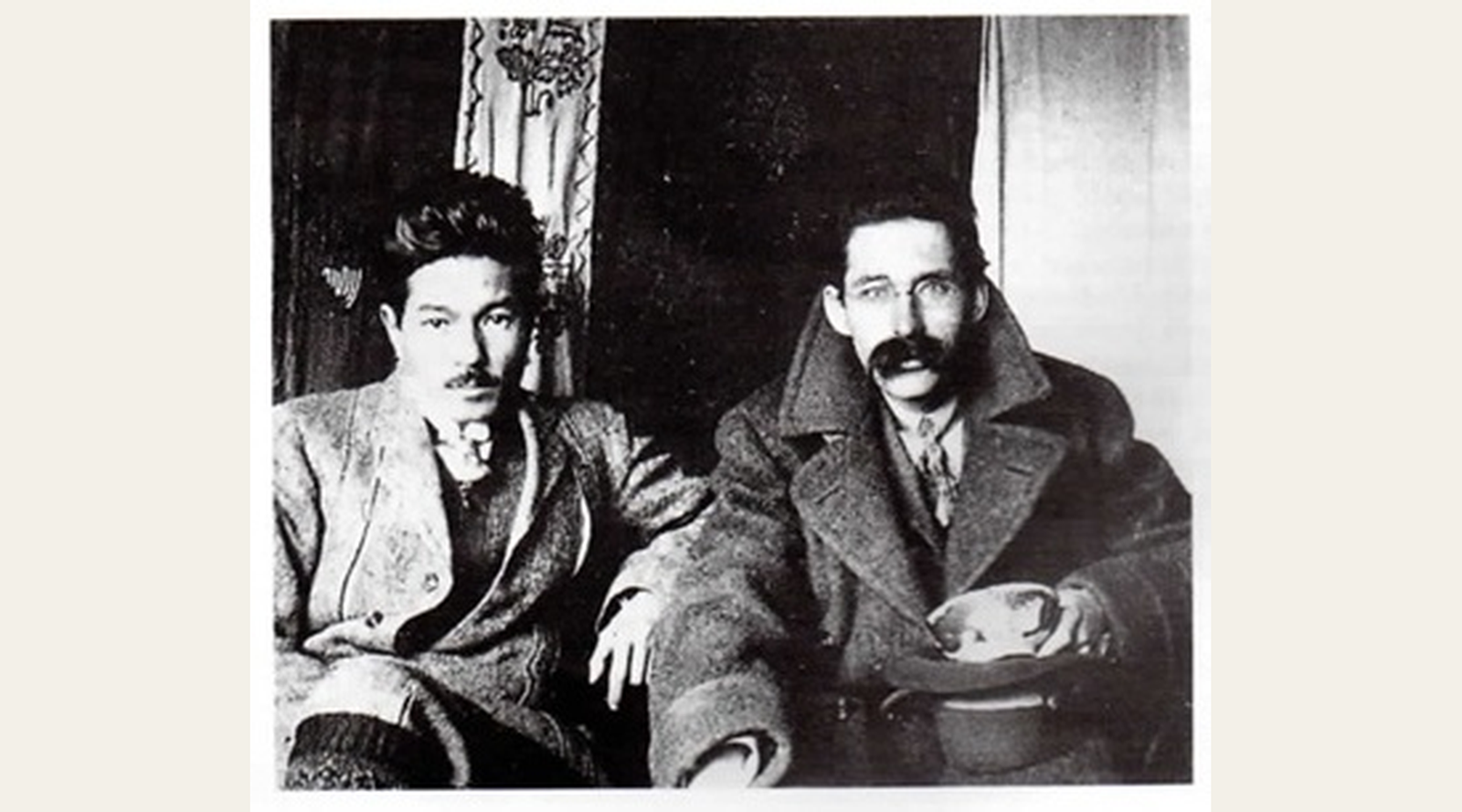
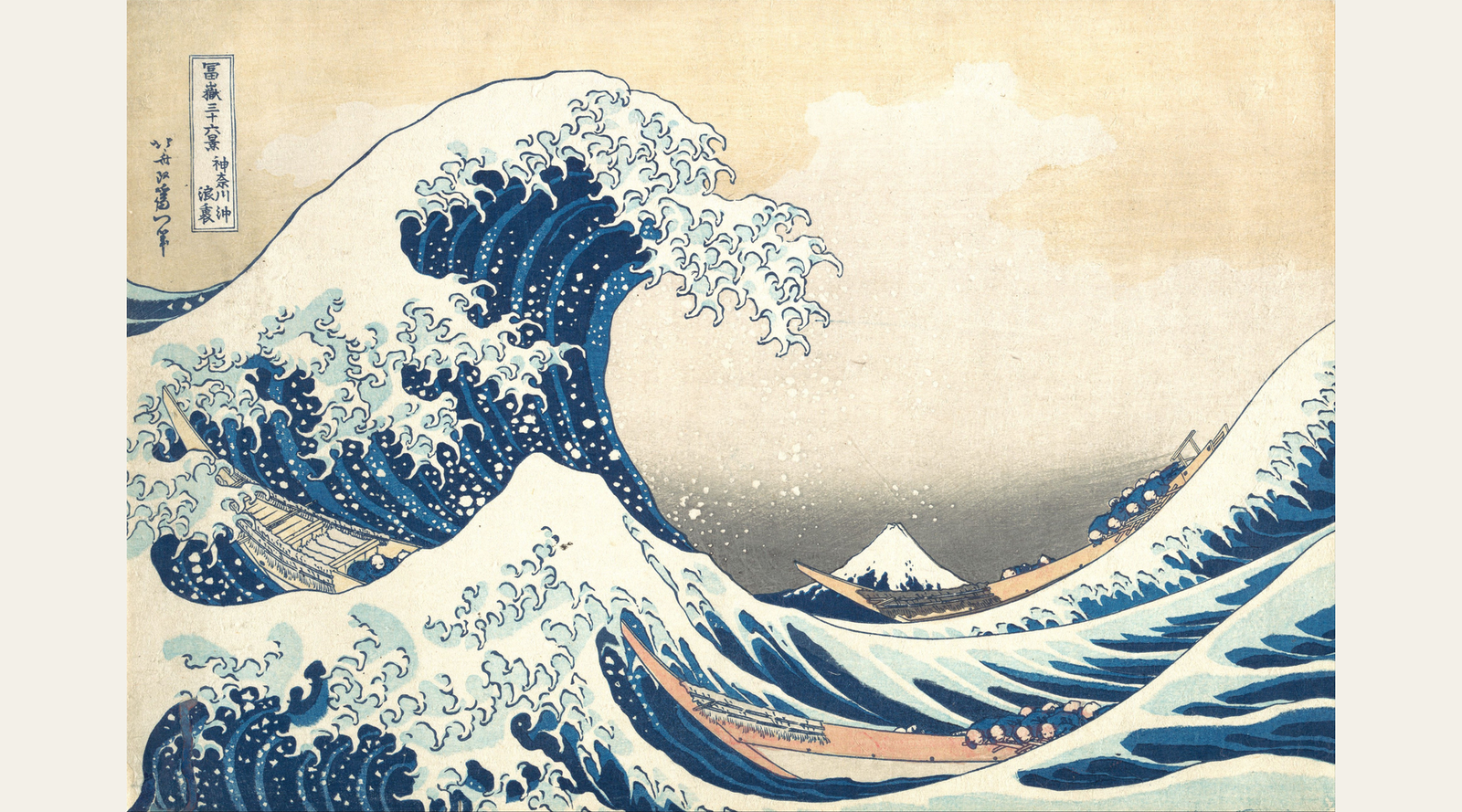
Aria’s curiosity also takes her beyond the gallery. In her art-history adventures, she steps into imagined scenes inspired by documented people, places and artistic processes. Her Japan film takes that approach to Hokusai’s The Great Wave.
These are creative reconstructions, not recovered footage or genuine interviews with historical artists. Research provides the foundation; Aria provides a way into the story. You can explore the history and making of that film in our Great Wave article.

Watch Aria’s Japan adventure on YouTube.
A closer look at real paintings
John’s answer sets out the work he wants Aria to take on: telling the stories behind the paintings, exploring fascinating moments in art history, producing videos, improving how our work is presented online and making the gallery more accessible to collectors around the world. For him, those jobs belong together. The digital work should help people discover and enjoy the paintings, while leaving the artists more time to make them.
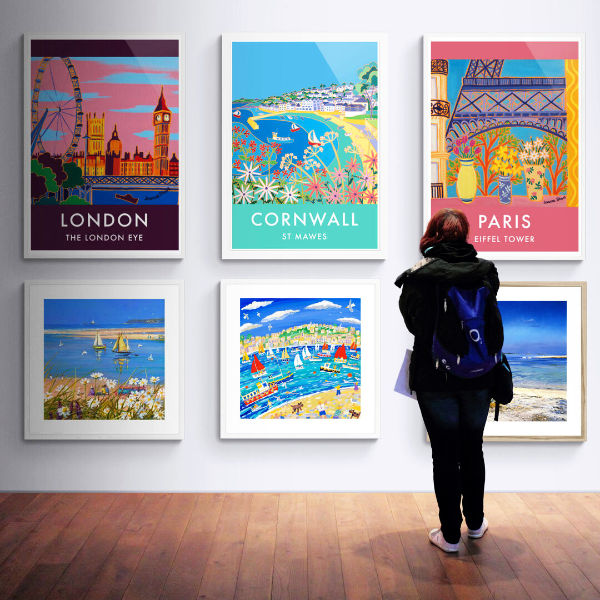
You will also meet Aria introducing artworks and helping visitors explore the gallery’s painting and collection pages. The purpose is to encourage a longer look: colour combinations, small details, brushwork and the stories surrounding a work.
In her presentation of Joanne Short’s Flowers from the Garden, Old Grimsby, Tresco, the original oil painting is the focus. Aria and the presentation room are virtual; Joanne’s artwork is real.

Watch the Joanne Short painting presentation on YouTube.
The work behind the character
Agent Art gives us a place to organise production, review films and keep track of releases. Below is a small view of a published film’s record. It is one glimpse of the practical work behind the personality—without exposing customer information or private gallery operations.

Looking back in October 2026, John sees enormous promise in Aria. He points to the work she is already doing to support protection of the gallery and its customers, and to the art-history stories and new ways of presenting our paintings that are beginning to emerge. It has been quite a ride this year. Her abilities are developing gradually, with human review and assistance still part of the work.
Come and meet the team
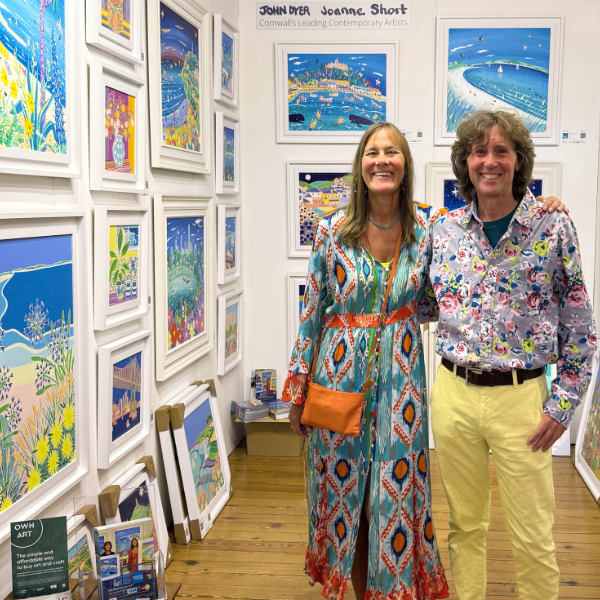
John and Joanne are not going anywhere. Aria is joining them: another voice to help share the paintings, ask questions and sometimes deliver a very well-timed look to camera.
Meet Aria at The John Dyer Gallery, follow @AriaBondArt for her adventures, and follow @JohnDyerGallery for the artists and their latest work.
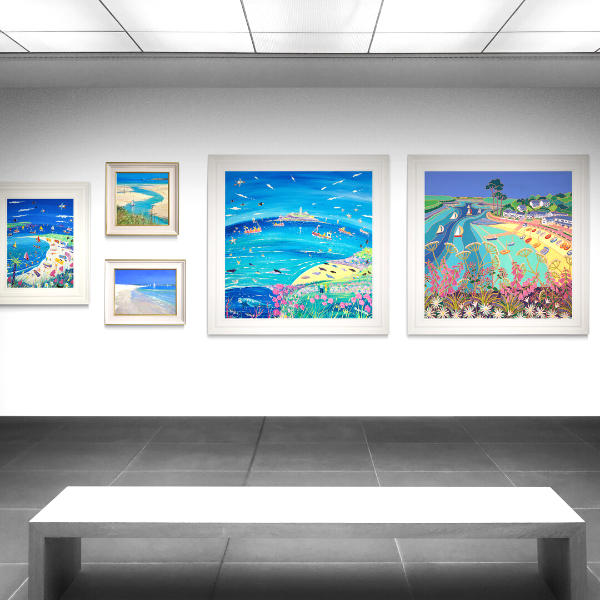
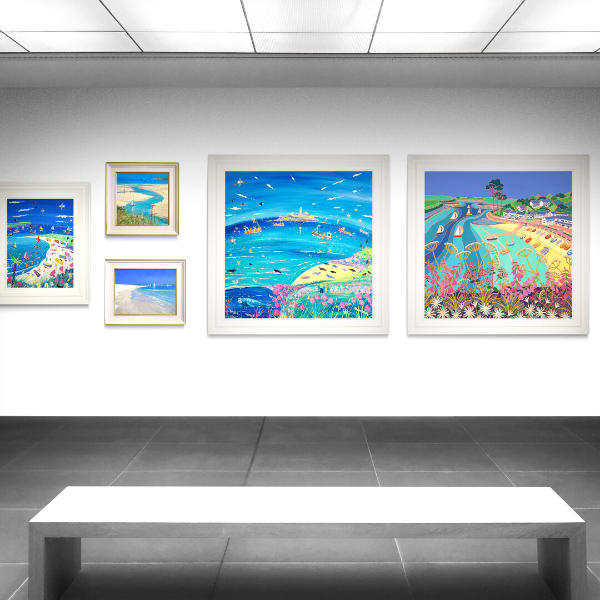
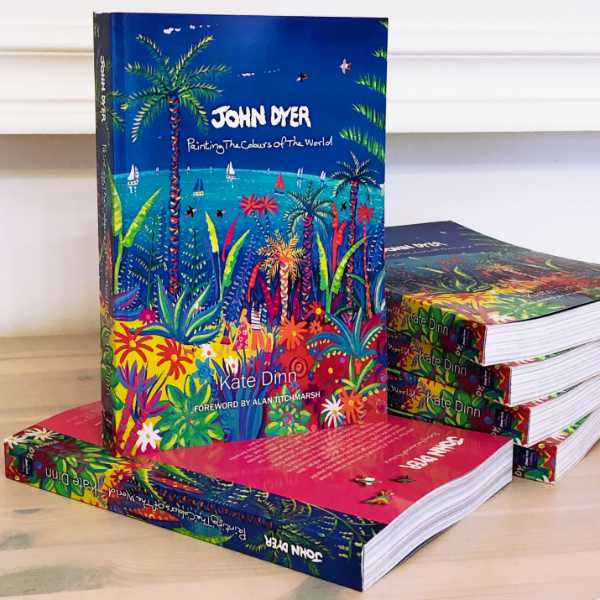
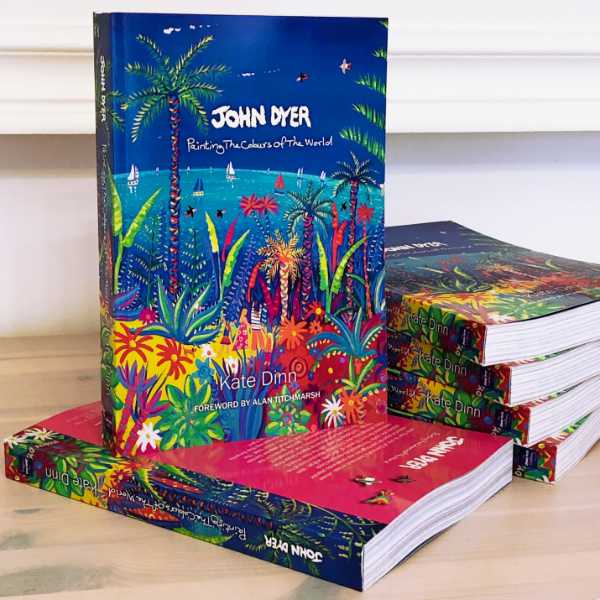
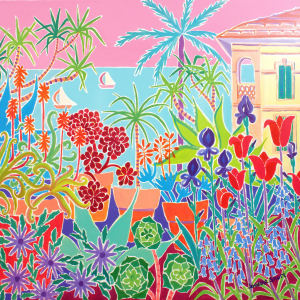
And the painting that distracts her during the interview? That is John’s Painting the Colours of the World, Tresco. After all that talk about technology, it brings us back to where we wanted to be: looking at a painting together.
For us, Aria is there so that Joanne and I can spend less time fighting the internet and more time doing what we are actually here to do.
Paint.
John Dyer supplied the personal views and quotations in this article. The Gallery’s research and production records provide the making-of detail; AI-assisted tools helped develop and organise the article.