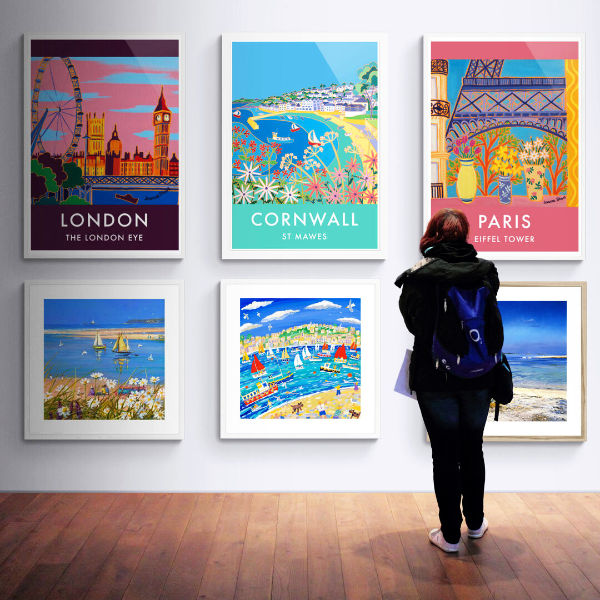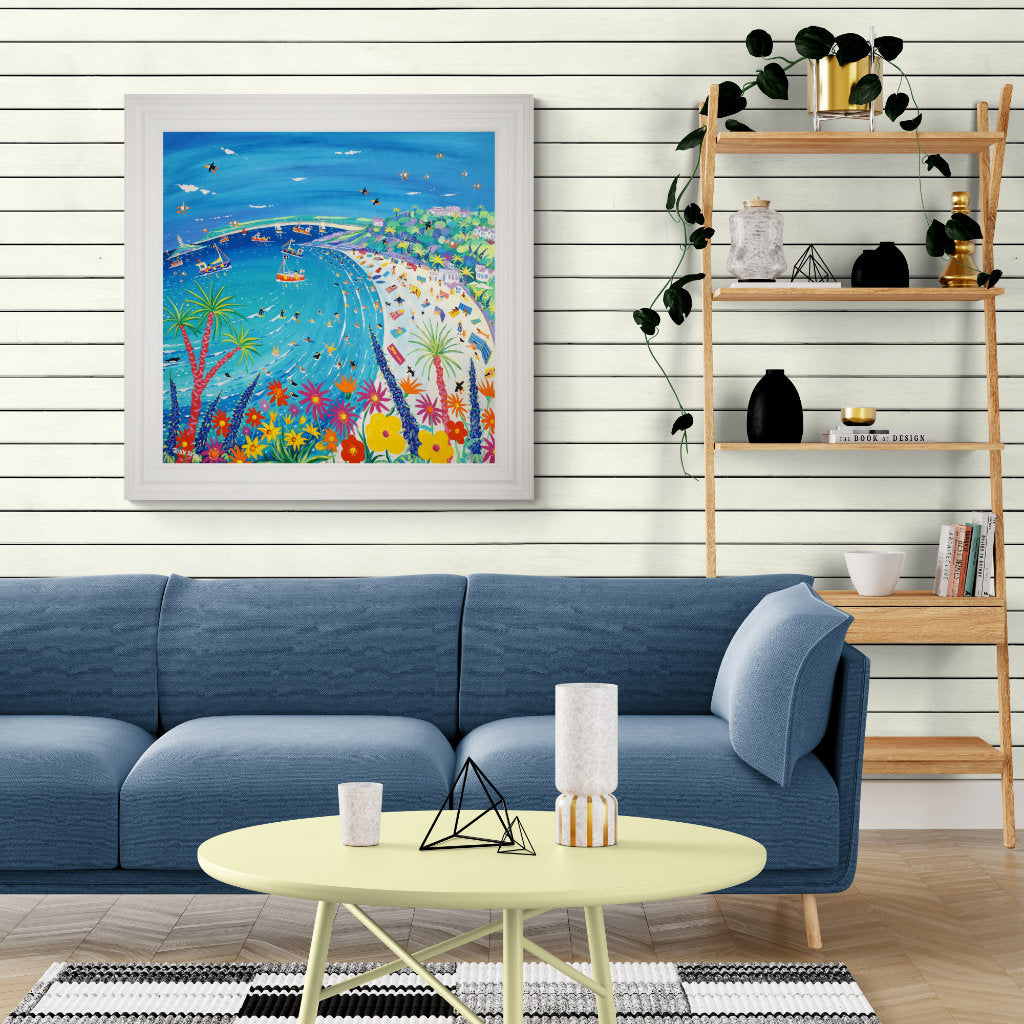

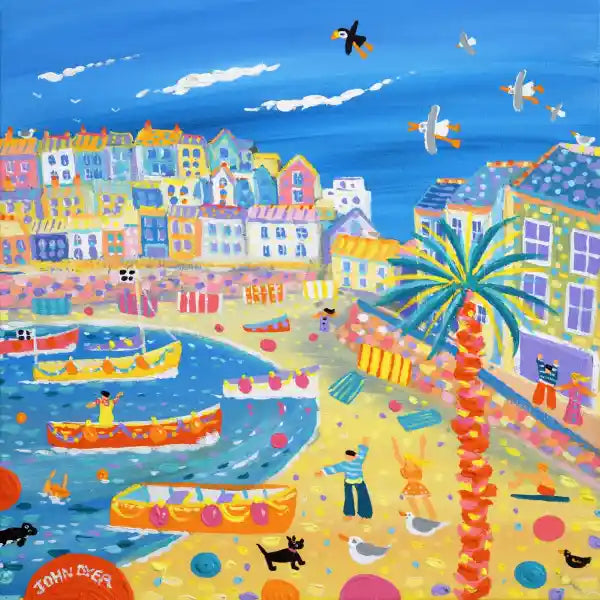



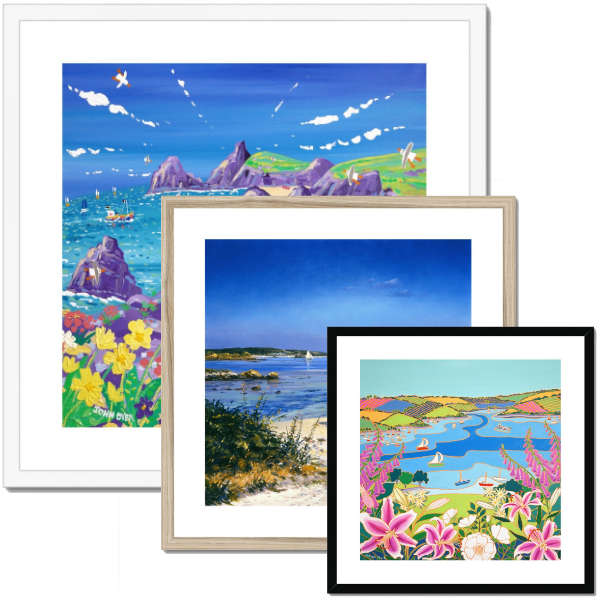
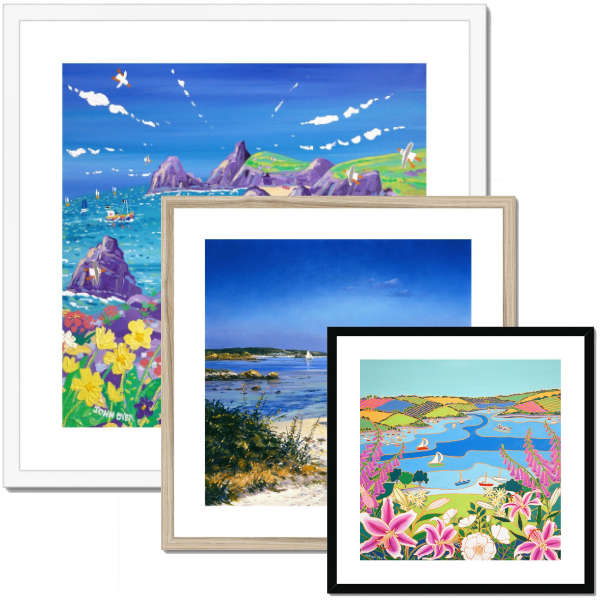
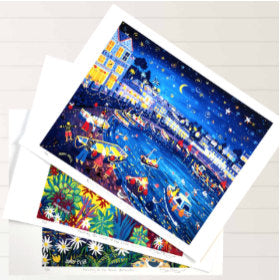
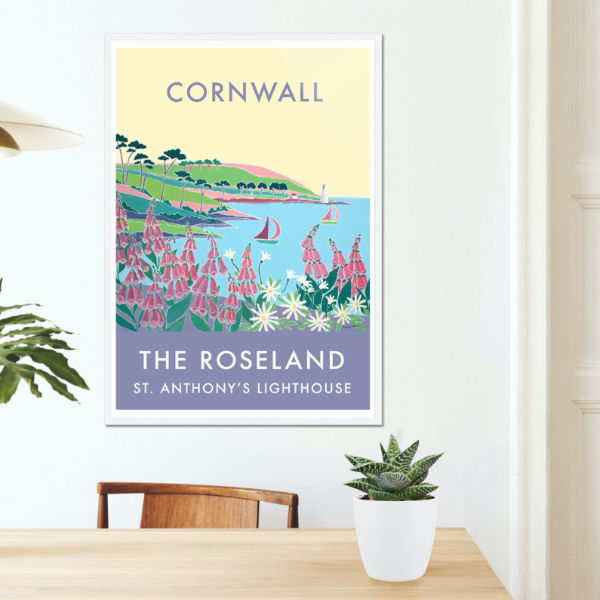
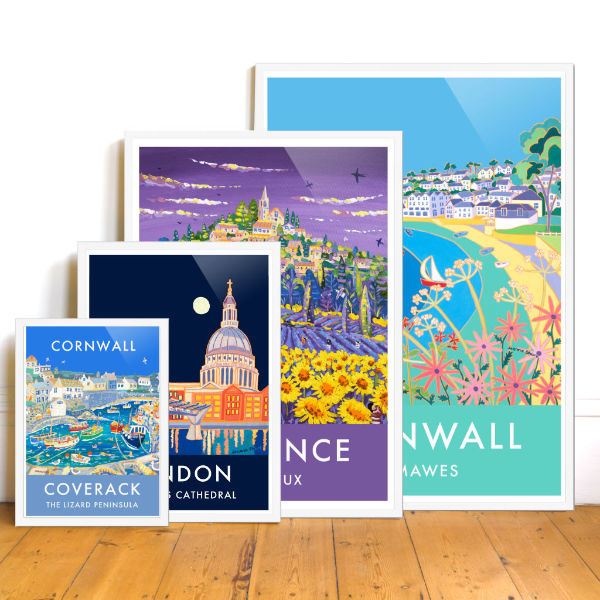

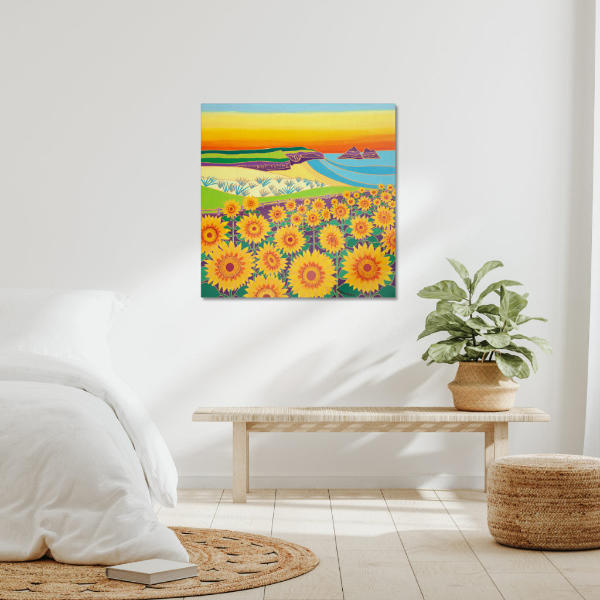
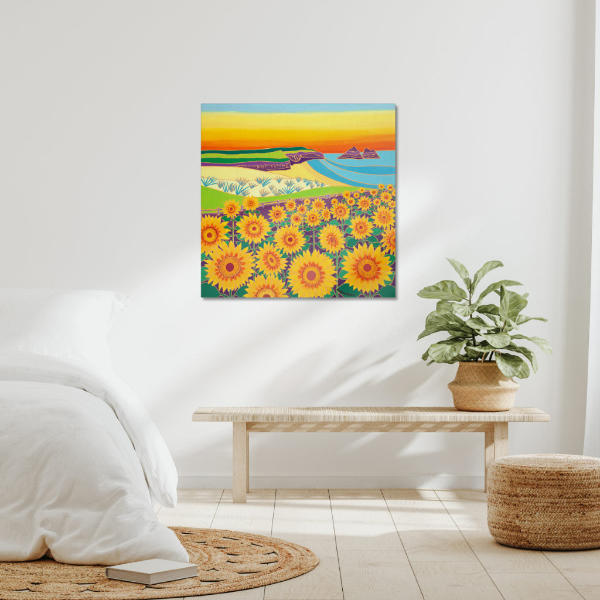
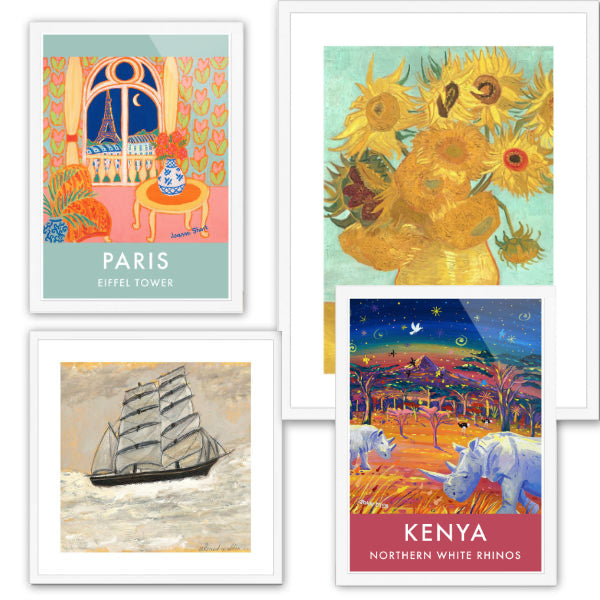










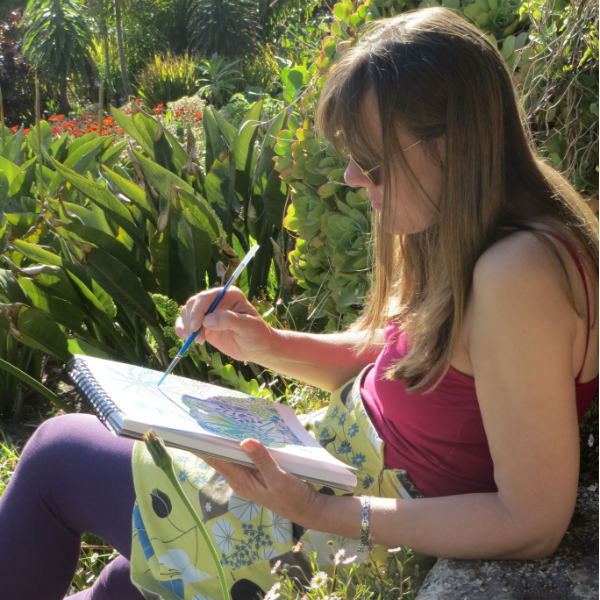




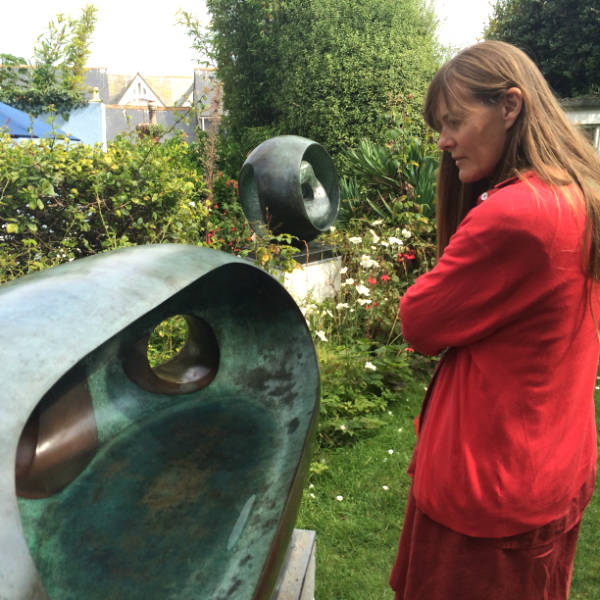


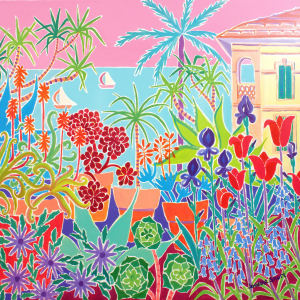
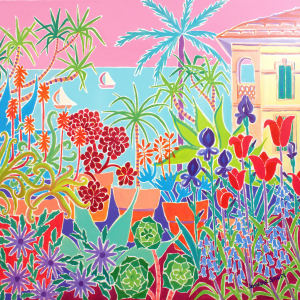
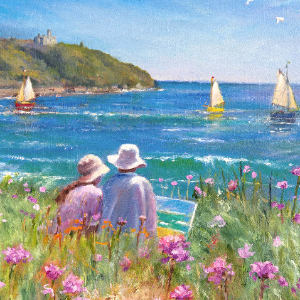






Above: Joanne Short Fine Art Open Edition Art Print. 'Wild Flowers and Wedding Lilies, Sophie's View'.
Last updated April 2026
Flowers have been a popular subject for paintings throughout history. They are beautiful and can be used to create stunning compositions. This blog post will explore the history of floral paintings in western art, from the early masters to the modern-day artists who continue to be inspired by them. We'll take a look at some lesser-known still-life paintings, as well as some of the most famous flower paintings in history. So grab a cup of tea and get comfortable - it's time to appreciate some beautiful flowers through art!
If you're inspired by these works, you can explore our full collection of original paintings for sale, featuring vibrant contemporary art from leading British artists.
Buy Flower Paintings and Prints
Floral Still Lifes

Above: Original still life painting by Joanne Short. Cakes on Plates, Falmouth
Artist Joanne Short says:
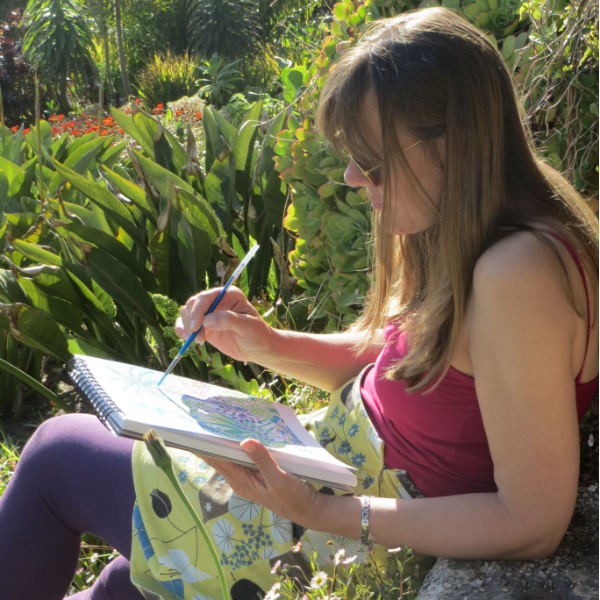
"One of my favourite genres of painting has to be a still life, especially a still life with a vase of flowers. I have been influenced over the years by many flower painters and as a result, love painting flowers myself.A few years ago we even had an allotment where we grew a variety of flowers for cutting and painting. Our own 'artists' flower garden' if you like."

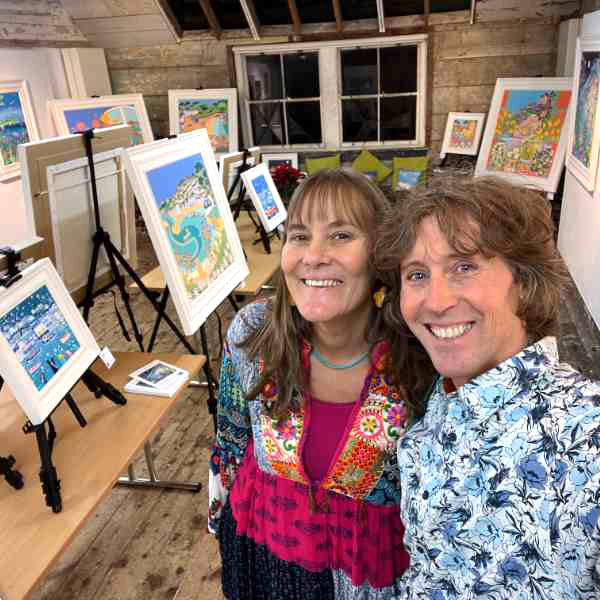
Above: Artist Joanne Short pictured in 2003 on her Falmouth allotment collecting fresh flowers to paint.
For centuries, humans have expressed a wide range of emotions by exchanging flowers, from declarations of love to gestures of apology.
The History of Flower painting in Holland
Regardless of whether you have artistic abilities or not, it’s impossible to ignore the emotional inspiration the natural beauty of flowers provides.
Dutch artists were deeply inspired by the natural world, drawing on its beauty and diversity to create authentic and emotionally resonant flower paintings.
The first painters who specialised in flower painting played a pioneering role in establishing the genre, setting standards that influenced later artists. The significance of the sixteenth century lies in its emergence as a key period for botanical and flower painting, marked by early artistic advancements and the influence of humanist ideas.
The presence of flowers in a room has been proven to improve air quality, lift your mood, and reduce stress levels significantly. Perhaps this is the inspiration for some of the large famous floral paintings from Holland in the early 17th century.

Above: 'Bouquet of Flowers in an Earthenware vase' (c.1610) Jan Breughel the Elder, available as an open Edition print.
In 1590 one of the first botanical gardens was created in Leiden, in the Netherlands. More people showed interest in flower paintings as foreign species became more common in the Netherlands. The early 17th century saw the Dutch Golden Age of flower painting, marked by painters including the pioneering Dutch still life artist Ambrosius Bosschaert (1573-1621) and Jan Brueghel the Elder (1568-1625) and their ambitious, larger-than-life painted bouquets. Bosschaert was among the first to focus on painting bouquets with painstakingly detailed realism and scientific accuracy, helping to elevate this genre within art history. These works are significant historical paintings that contributed to the evolution of still-life art, challenging earlier distinctions that favoured religious and historical subjects. The exotic flowers that were being shipped into the country at this time were so expensive that it was cheaper for people to acquire a painting of floral arrangements instead.

Above: 'Flowers in a Wan-Li Vase'(c.1610-1615), Jan Breughel the Elder, available as an open edition art print

Above: 'Bouquet of Flowers on a Ledge (1619), Ambrosius Bosschaert the Elder. Available as an open edition art print
Jan Davidsz de Heem (Dutch, 1606-1684) and Jan van Huysum (Dutch, 1682-1749)
The artists who followed this previous, formal style of painting became more naturalistic themselves, including the work of Jan Davidsz de Heem and Jan van Huysum. Instead of depicting each flower side by side with no overlapping, these artists started interweaving them and introducing layers in their paintings. This approach led to more dynamic artwork, as their arrangements of flower bouquets became livelier and more energetic, setting their work apart from earlier, more static compositions.

Above: Jan van Huysum Fine Art Open Edition Art Print. 'Still Life with Flowers' availabel as an open edition print
In the later eighteenth century Jan van Huysum, often called the last of the great still-life of flower painters, started painting on lighter backgrounds rather than darker ones common in his earlier work. This brought a sense of lightness to his palette. By featuring floral arrangements in a glass vase and using these lighter backgrounds, van Huysum's paintings achieved a timeless sense of beauty and elegance.

Above: Vase of Flowers (c. 1670), Jan Davidsz de Heem, available as an open edition art print
Jan Davidsz de Heem was popular and successful during his lifetime, studying in Leiden for four years in the late 1620s. His paintings were so highly sought-after that they could sell for more than a Rembrandt at the time. De Heem’s palette was more subdued than those of his predecessors, and he too favoured asymmetrical compositions, resulting in dynamic artwork that conveys a sense of energy and movement. Here, it seems as though all the flowers are struggling to escape the confines of the vase.
Maria van Oostervijck (Dutch, 1630-1693)
Maria van Oosterwijck was a well known female artist of the Dutch Golden Age who specialized in still lifes. She is considered to be one of the best painters of this genre and her paintings are held in many royal collections throughout Europe.
Maria was known for her still lifes of flowers and fruits, spending great detail to paint them by hand with precision. At that time, perishable flowers were relatively rare and expensive which is why Maria worked like many other painters of that era: first drawing a sketch before moving on to watercolour and then oil on canvas.

Above: 'Still Life of Roses, Carnations, Marigolds and other flowers with a Sunflower' (1680) Maria van Oosterwijck. Available as an open edition art print.
Jan Brueghel the Younger (Flemish, 1601 - 1678)
Jan Brueghel the Younger mainly repeated his father’s painting style since that is what most people wanted at the time. The Brueghel family’s paintings are especially notable for their rich botanical imagery, capturing the diversity and beauty of flowers with remarkable detail. Jan Elder was a very popular painter at that time, so to meet customer demand, Jan younger, his son, would sometimes copy his father’s paintings and sell them as if they were done by Jan Elder. Because of this market trend, it can be tough to tell their styles apart though pictures done by Jan Younger are usually brighter in colour and not drawn quite as precisely. However, art historians sometimes identify a particular painting as the work of Jan Elder or Jan Younger based on subtle differences in technique or colour.

Above: 'Still Life with Flowers in a Glass' (c. 1625-1630), Jan van Brueghel the Younger
Famous Flower Paintings
Vincent Van Gogh (Dutch, 1853-1890)
Some artists’ famous floral paintings are better known than others. Dutch painter Vincent van Gogh painted sunflowersand irises in vases in his own style of rustic charm. His 'Still Life with Irises', now housed in the Metropolitan Museum of Art, features a now faded pink background that creates a soft, harmonious ambiance and enhances the painting's mood. In his 'Roses', the delicate rose petals are depicted with great attention to their color and texture, adding to the romantic quality of the artwork. The famous paintings in this flower series are well-known worldwide.

Above: 'Sunflowers' by Vincent Van Gogh. Available as an Open Edition Fine Art Print
Although Van Gogh is famous for his sunflowers he also painted a small series of paintings of roses in 1890.

Above: 'Roses' (1890), Vincent Van Gogh. Available as an open edition art print
The painting below of mixed flowers in a vase is also less famous.

Above; 'Bouquet of Flowers in a Vase' (1890), Vincent Van Gogh. Available as an Open Edition print
Van Gogh also painted several other stunning vases of flowers including 'Red Poppies and Daisies', 'Roses and Anenomes', 'Gladioli and Carnations', 'Vase with Poppies, Cornflowers, Peonies and Chrysanthemums' and many more.
Claude Monet (French, 1840-1926)
French painter Claude Monet painted some beautiful canvases of the water lily pond in his garden at Giverny, which became the subject of his most famous paintings. His innovative approach to depicting flowers and landscapes resulted in remarkable landscapes that have captivated viewers for generations.

Above: 'Water Lilies' by Claude Monet. Open Edition Fine Art Print
In 1880 Monet painted this beautiful still-life of jerusalem artichokes which is very unusual.

Above: 'Jerusalem Artichoke Flowers' (1880), Claude Monet. Available as an open edition print.
Famous Artists' Less well-known Floral Paintings
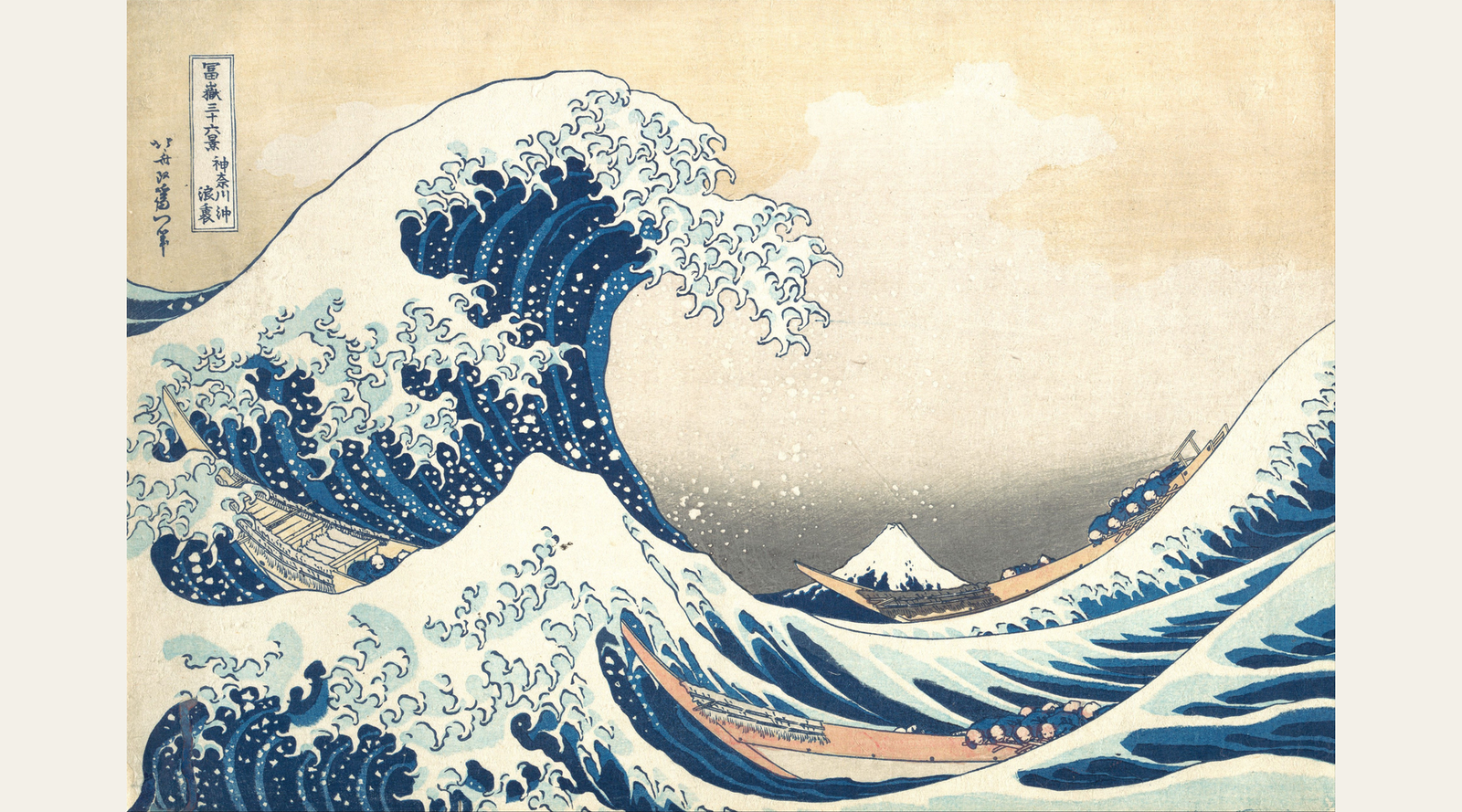
Some of the most beautiful still-life paintings of flowers are actually by famous artists who are less known for this style and genre of work. Japanese woodblock prints have also played a significant role in the tradition of floral imagery in art history, standing alongside Western styles such as Dutch still-life paintings. These lesser-known floral paintings play a significant role in art history, reflecting cultural and stylistic shifts across different periods.
Henri Rousseau (French, 1844-1910)
Henri Rousseau (1844-1910) was a primitive, post-impressionist artist who painted in a ‘naïve art style’. His best-known paintings contain images of dense, tropical forests. Although he had never seen a jungle himself, he was inspired by the gardens and zoo near his home in Paris. However, in 1909, he painted this very accomplished still-life, featuring a wood table whose color and texture provide a contrasting background that enhances the floral arrangement and influences the overall mood of the painting.

Above: 'Flowers in a Vase' (1909), Henri Rousseau. Available as an open edition art print
Edouard Manet (French, 1832-1883)

Above: 'Flowers in a Crystal Vase' (c.1882), Eduard Manet. Available as an open edition art print
Paul Gauguin (French, 1848-1903)
Post-impressionist painterPaul Gauguin is famous for his paintings of Tahiti. However throughout his painting life he produced paintings of flowers which demonstrate his love of the natural beauty of nature. These works show just how much nature influenced his artistic vision and inspired his floral compositions. Many of Gauguin’s floral works incorporate elements of the decorative avant garde, blending natural beauty with innovative artistic influences that push traditional boundaries.

Above: 'Flowers and a Bowl of Fruit on a Table' (1894), Paul Gauguin. Available as an open edition print

Above: 'Flowers Still Life' (1884), Paul Gauguin. Available as an open edition print

Above: 'Still Life with Flowers and Idol' (1892), Paul Gauguin

Above: 'Still Life with Peonies' (1884), Paul Gauguin . Available as an open edition print
Two accomplished french painters from the early 20th century that have painted fantastic still-life paintings are Odilon Redon and Maxime Maufra.
Odilon Redon (French, 1840-1916)
Bertrand-Jean Redon, who is better known as Odilon Redon, was born in Bordeaux, France. He was a symbolist painter and printmaker who turned to the genre of floral still-lifes around 1900 when he was 60 years old. By 1904, most of his time and efforts were devoted to creating flower compositions. It’s likely that many of the specimens he gathered for his paintings came from his garden in Bièvres.
Featured image: One of Redon’s notable still lifes showcases a striking white bouquet placed centrally in the composition, its delicate petals creating a vivid color contrast against the darker background. In another floral arrangement, Redon masterfully depicts white lilacs, capturing their soft texture and subtle luminosity, which stand out among the surrounding blooms. In several works, a dark aubergine vase with its deep, rich purple hue serves as a focal point, anchoring the composition and adding a sense of casual elegance and artistic depth.
"I do not know of anything that has given me more pleasure than such an appreciation of simple flowers in their vase breathing air”
(quoted in Odilon Redon: Prince of Dreams, exh. cat., The Art Institute of Chicago, 1994, p. 294).

Above: 'Bouquet of Flowers' (c.1900-1905), Odilon Redon. Available as an open edition print

Above: 'Vase of Flowers (Pink Background) (c. 1906), Odilon Redon. Available as an open edition print

Above: 'Large Green Vase with Mixed Flowers' (1910-1912), Odilon Redon

Above: 'Vase of Flowers' (1916), Odilon Redon. Available as an open edition print
Maxime Maufra (French, 1861-1918)
Impressionist painter Maxime Maufra from Nantes, France, exhibited his work in the Paris Salon in 1886. He settled in Brittany and became part of the ‘Ponr Aven’ group of artists after meeting Gauguin and Serusier. After painting mainly landscapes throughout his life, around the turn of the century he produced several very competent paintings of vases of flowers. These floral works are excellent examples of impressionist painting, featuring loose brushwork and a vibrant use of light.

Above: 'Vase de Fleurs', Maxime Maufra
Still life prints available at The John Dyer Gallery
Ted Dyer
In his early life as a painter, Ted Dyer became well-known for his still life painting - he painted flowers in vases alongside various fruit in bowls. These paintings reflect the influence of the artistic style of the dutch masters on Dyer's work.

Above: Ted Dyer Fine Art Print. Open Edition Cornish Art Print. 'Peaches and Dog Roses Still Life'
More recently Ted Dyer has painted this delightful series of vases of flowers which we have released as a collection of open-edition prints.

Above: Ted Dyer Fine Art Print. Open Edition Cornish Art Print. 'Daffodils Still Life'

Above: Ted Dyer Fine Art Print. Open Edition Cornish Art Print. 'Daffodils and Tulips in a Vase, Still Life'
John Dyer
John Dyer is well known mainly for his fun landscape paintings of Cornwall. However, he has done several still life paintings himself, often painting roses and other botanical subjects, capturing their beauty in vibrant compositions.

Above: John Dyer Fine Art Print. Open Edition Still Life Cornish Art Print. 'Café View, St Ives'.

John Dyer Fine Art Print. Open Edition Still Life Cornish Art Print. 'Blue Irises on a Cornish Table'

John Dyer Fine Art Print. Open Edition Still Life Cornish Art Print. 'Tea for Two'.

John Dyer Fine Art Print. Open Edition Still Life Cornish Art Print. 'Red Wine and Daffodils'

John Dyer Fine Art Print. Open Edition Still Life Cornish Art Print. 'Cornish Teatime'.
Joanne Short
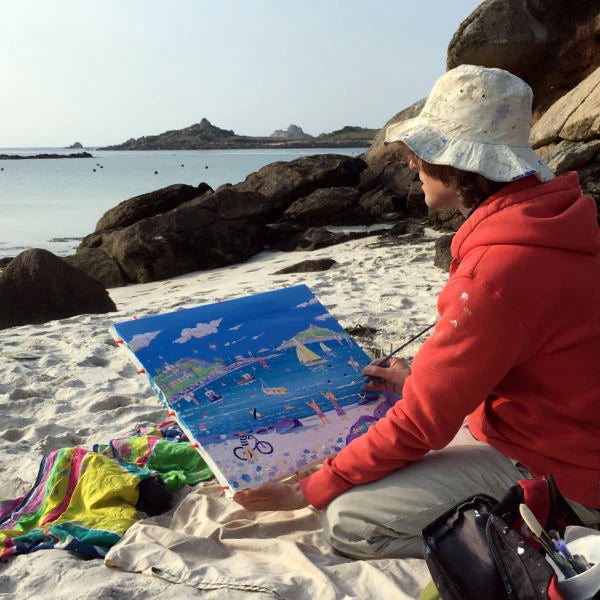
Joanne Short features flowers growing in the wild, in the majority of her beautiful paintings. Some of the prints we have available show the use of cut flowers in a vase in the foreground with the landscape behind.

Above: Mount's Bay Moon. Limited Edition Print by Cornish Artist Joanne Short

Above: Signed Limited Edition Cornwall Art Print by Cornish Artist Joanne Short. 'Glorious View, St Ives'
Conclusion
Throughout history, artists have been drawn to painting flowers. The paintings featured in this blog range from the precise and detailed still-life paintings from the Dutch Golden Age to the impressionist works of Claude Monet and Paul Gauguin and the symbolist paintings of Odilon Redon and Maxime Maufra, leading right up to date with our gallery artists Ted Dyer, John Dyer and Joanne Short. What all of these artists have in common is their mastery of capturing the beauty and simplicity of flowers in a vase.
Andy Warhol's iconic flower series, with its innovative techniques and central floral motif, has had a lasting influence on modern art. Additionally, Japanese culture, through traditional practices and art forms like woodblock prints, has deeply impacted the symbolism and representation of flowers in art history.
If you are interested in purchasing still-life printsby some of these masters and our gallery artists, or learning more about famous paintings and their artists, please visit our online gallery.
Frequently Asked Questions
Who are some of the most famous flower painters in history?
Some of the most famous flower painters include Ambrosius Bosschaert, Jan Brueghel the Elder, Rachel Ruysch, Vincent van Gogh, Claude Monet, and Odilon Redon. These artists are renowned for their detailed and expressive floral paintings that have significantly influenced the genre.
What is the significance of flower paintings in art history?
Flower paintings have served multiple purposes throughout art history, from scientific botanical illustration to symbolic and decorative art. They often represent themes such as the fleeting nature of life, beauty, and emotions, and have evolved from realistic depictions to more abstract and expressive forms.
How did the Dutch Golden Age influence flower painting?
During the Dutch Golden Age, flower painting became a highly respected genre. Artists like Ambrosius Bosschaert and Jan Davidsz de Heem pioneered detailed and realistic floral still lifes, elevating the status of flower paintings and inspiring generations of artists to explore floral themes with scientific accuracy and artistic creativity.
What role did Claude Monet's garden play in his flower paintings?
Claude Monet’s garden at Giverny, especially his water lily pond, was a major source of inspiration for his famous flower paintings. Monet’s innovative approach captured the changing light, reflections, and natural beauty of the water lilies, creating remarkable landscapes that have become iconic in art history.
How have modern artists like Andy Warhol contributed to flower art?
Andy Warhol brought a contemporary pop art perspective to flower paintings by using vivid colors and innovative techniques. His flower series transformed traditional floral imagery into bold, graphic art that challenged conventional boundaries and influenced modern and contemporary art.
What are some common themes in floral still life paintings?
Common themes include the celebration of natural beauty, the transience of life, symbolism related to emotions or virtues, and the interplay of light and color. Floral still lifes often invite viewers to appreciate the delicate details and ephemeral nature of flowers.
How do Japanese woodblock prints relate to flower paintings?
Japanese woodblock prints have a rich tradition of floral imagery, often emphasizing simplicity, symbolism, and harmony with nature. This tradition has influenced Western flower painters by introducing new aesthetics and cultural meanings to floral art.
Where can I find high-quality prints of famous flower paintings?
High-quality prints of famous flower paintings are available through reputable galleries and online art stores. Many institutions and artists’ estates offer open edition and limited edition prints, allowing art lovers to enjoy these masterpieces in their homes.