SPIRIT OF THE HARVEST – FULL TALK SCRIPT
John Dyer
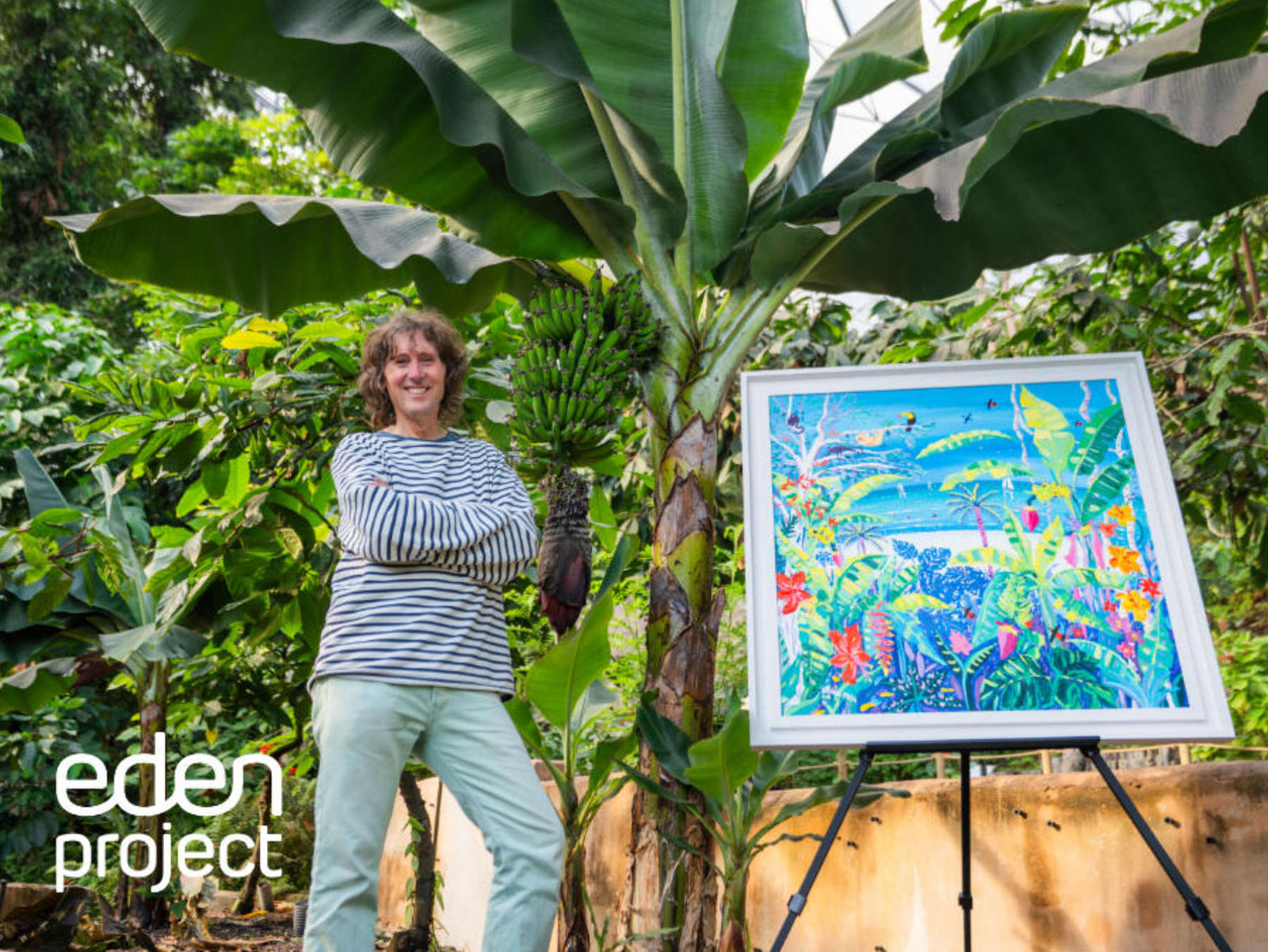
Eden Project – December Event
Thank you, Andy… (CEO Eden Project)
Good evening everyone.
It really is wonderful to be here with you at Eden tonight,
surrounded by these remarkable biomes,
in a place that has become so central to how we think about
plants, people, and the living world.
This evening I want to do three things.
First, to share how I fell in love with the extraordinary relationships
between plants and people —
what I call the spirit of the harvest.
Second, to take you with me on a short journey
through some of the harvests and plant-people stories I’ve painted around the world —
from grapes and bananas
to rice and potatoes.
And finally, to bring it back here,
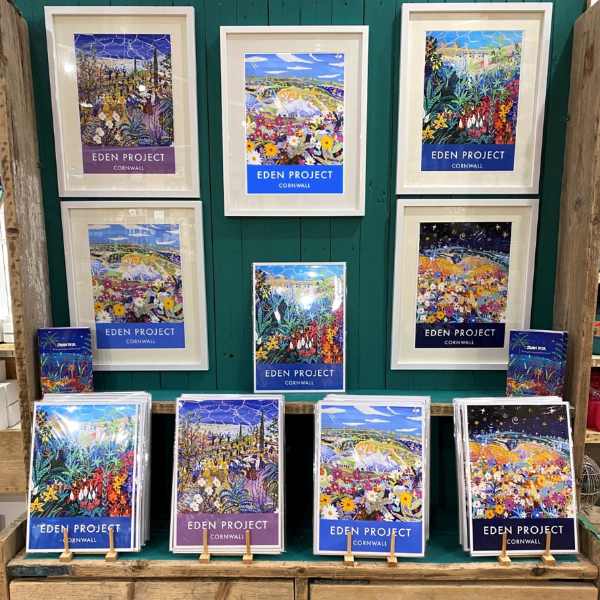
to this exhibition,
to Eden’s mission,
and to why these stories matter so much
as Eden completes its first quarter century.
1. HOW IT BEGAN – PROVENCE TO EDEN
For me, it all began in 1997
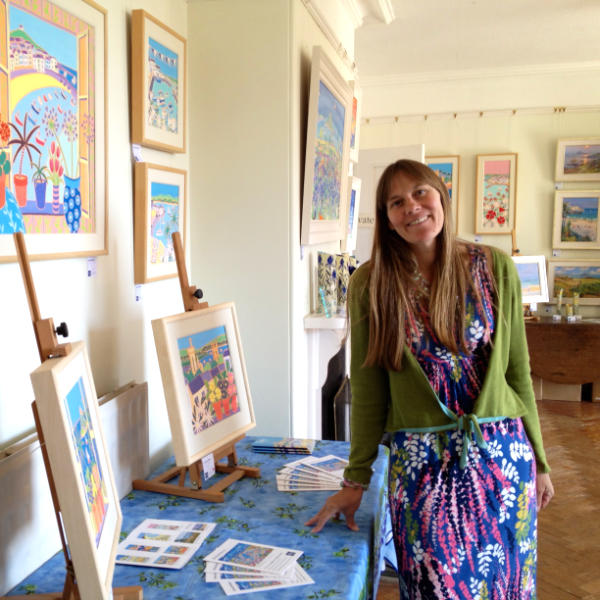
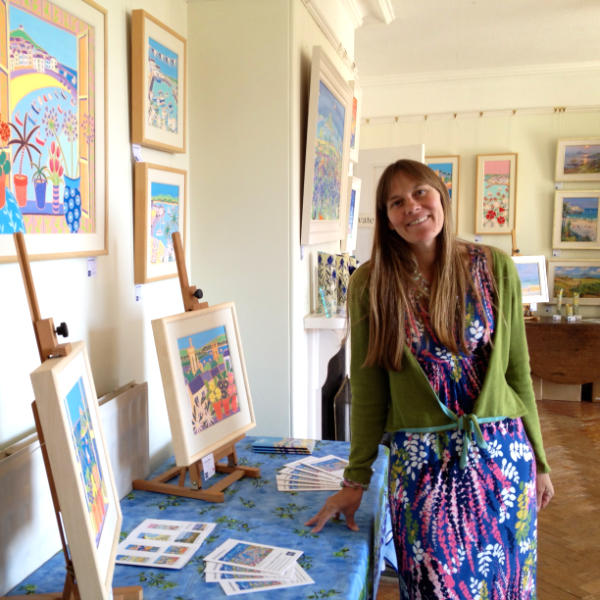
on honeymoon in Provence with my wife and fellow artist, Jo.
We were there for sunshine, good food,
and the romance of it all,
but what captured my imagination
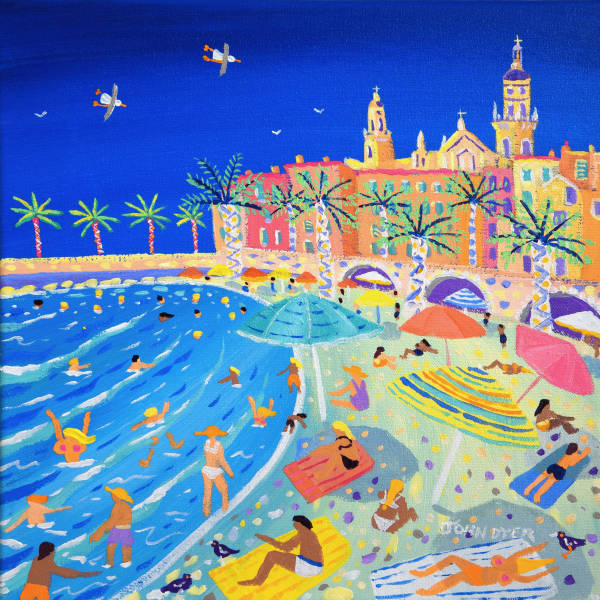
was the grape harvest!
The colour, the smell of crushed fruit in the heat,
the raw human spirit in the fields,
and the fragility of the whole thing —
the fact that a year’s work could be shaped
by weather, luck, or timing.
I realised that a harvest doesn’t just fill glasses and plates.
It shapes entire landscapes,
villages,
families,
and lives.
So I went back a year later with my paints,
determined to celebrate this connection
between people and the plants that sustain us.
A few years later, in the year 2000,
the Eden Project appeared on my radar whilst I was a lecturer at Falmouth School of Art
I became absolutely obsessed
with what was being planned here.
A brief conversation with Sue Hill from the Eden Project
somehow resulted in me becoming
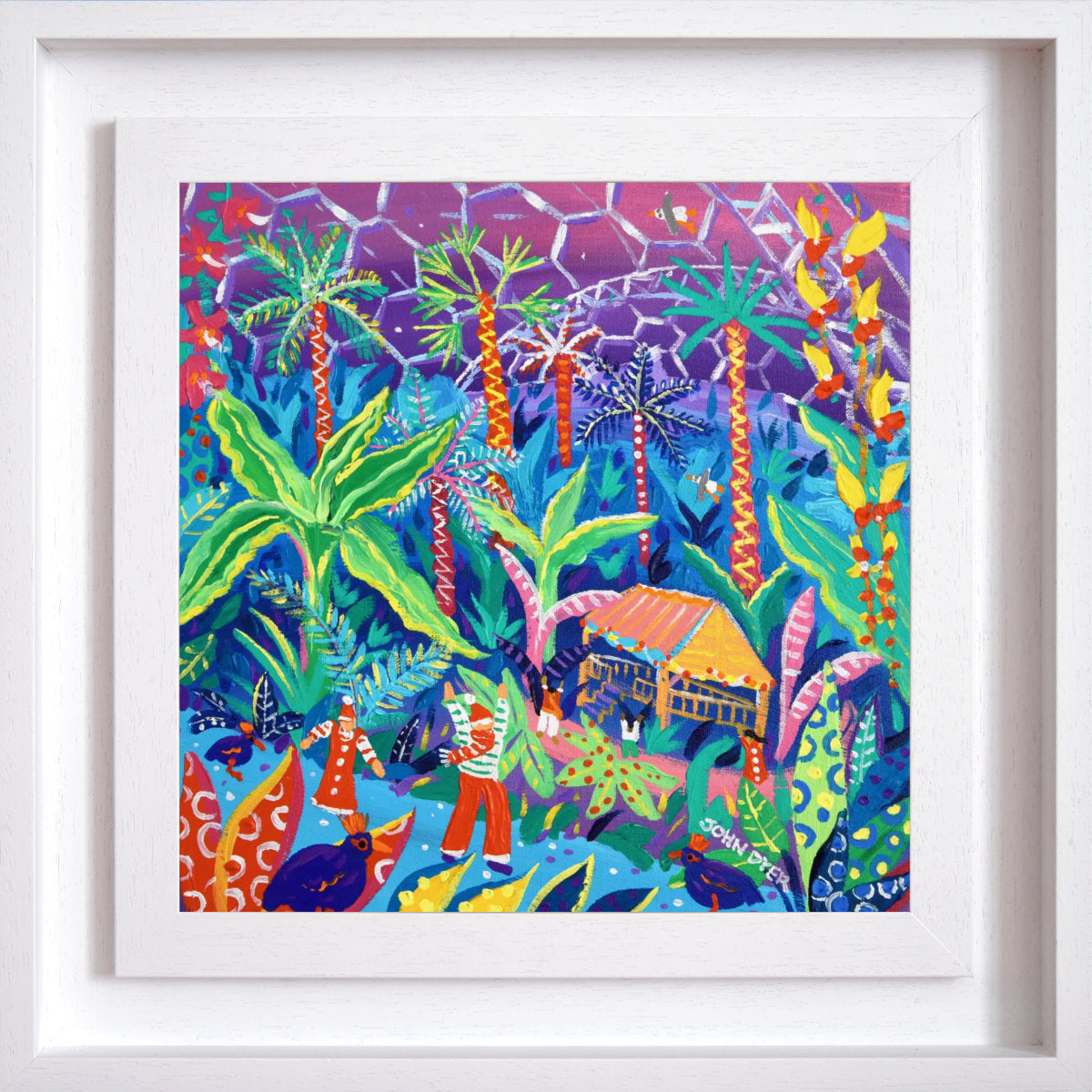
their artist, or painter in residence
before the biomes had even opened.
I watched these extraordinary structures rise from the clay pit,
and at one point I asked Sue
whether Eden actually had any plants
I could paint.
Apparently, I was the only artist at that time
who had remembered to ask about the plants!
So once a week,
I made a pilgrimage from Falmouth
to Watering Lane Nursery,
painting among giant greenhouses
filled with young plants destined for Eden.
It was a living Noah’s ark of plants ready to colonise the biomes
And it was there
that I fell in love with the incredible diversity of plants,
and with the enthusiasm of Eden’s green team
who infected me — in the very best way! —
with their passion.
In 2002, Sue Hill asked whether I’d create a new series
of Mediterranean crop paintings for
World Food Day.
So off we went to Italy —
My wife Jo, our good friends David and Rose Ashe (who I think are here this evening)
Rose providing world-class photography of the mini-expedition and David world class picnics —
and we painted among vines, olives,
and landscapes steeped in centuries of harvest.
Those paintings set me on the path
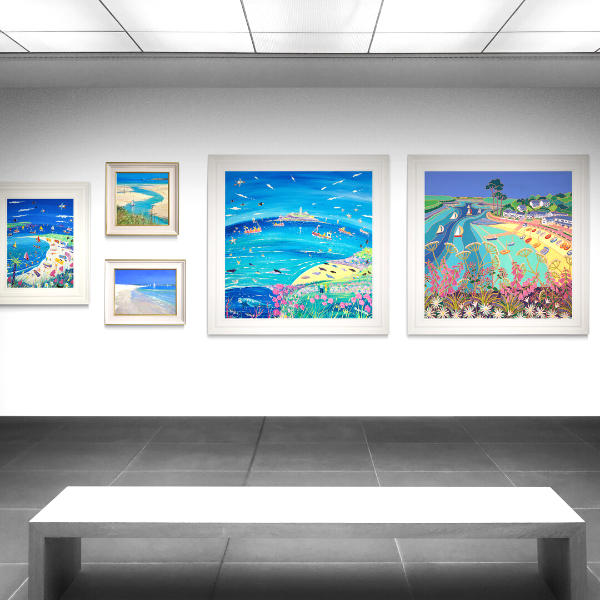
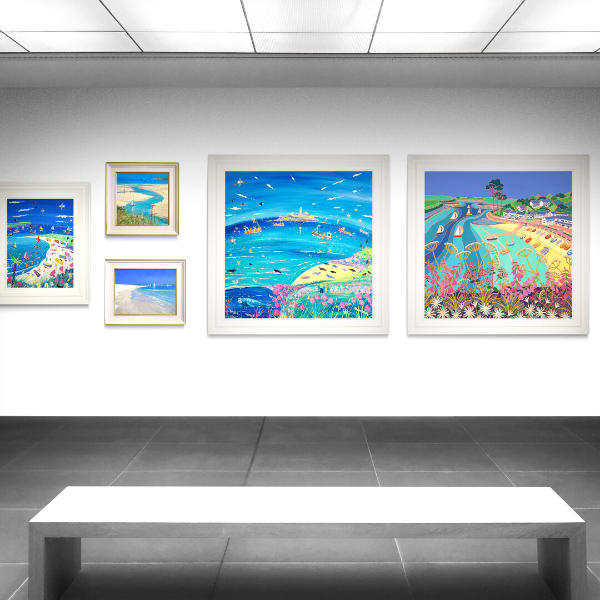
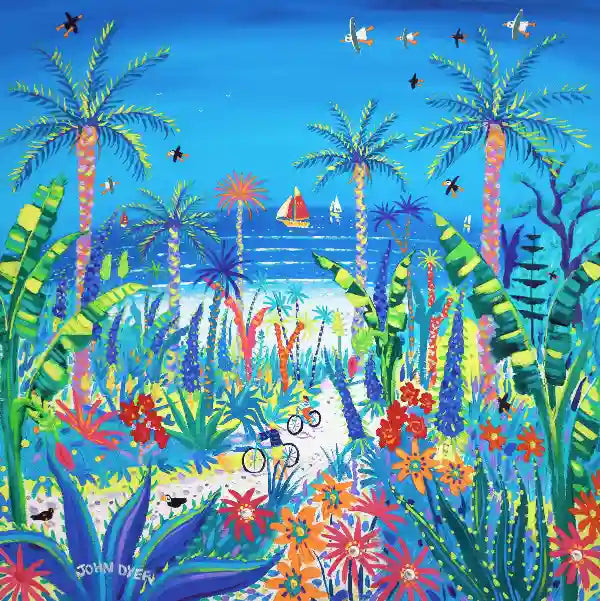
that you can see represented in this exhibition tonight —
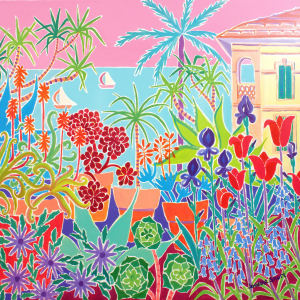
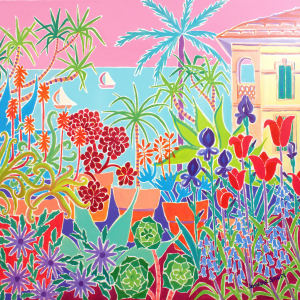
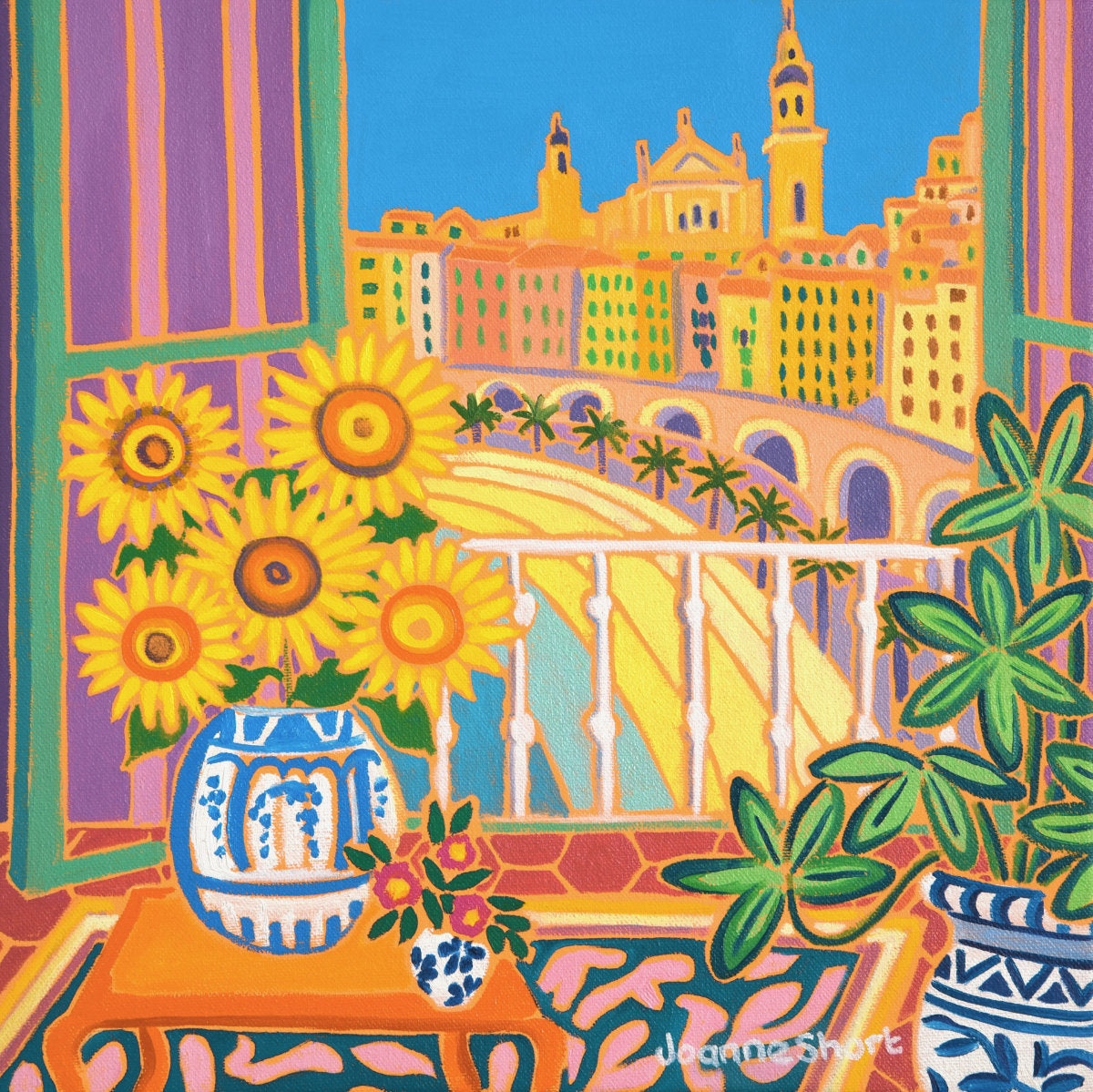
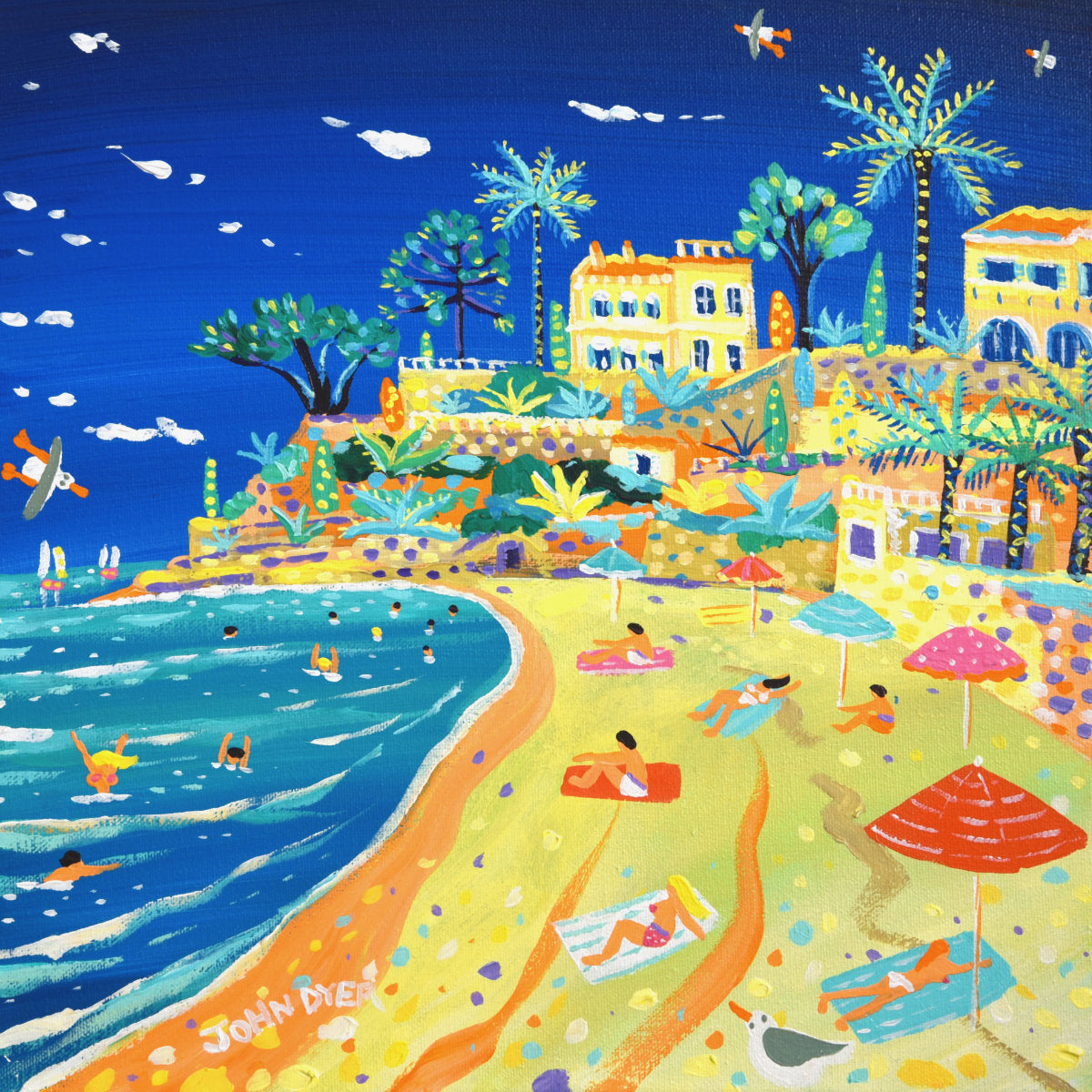
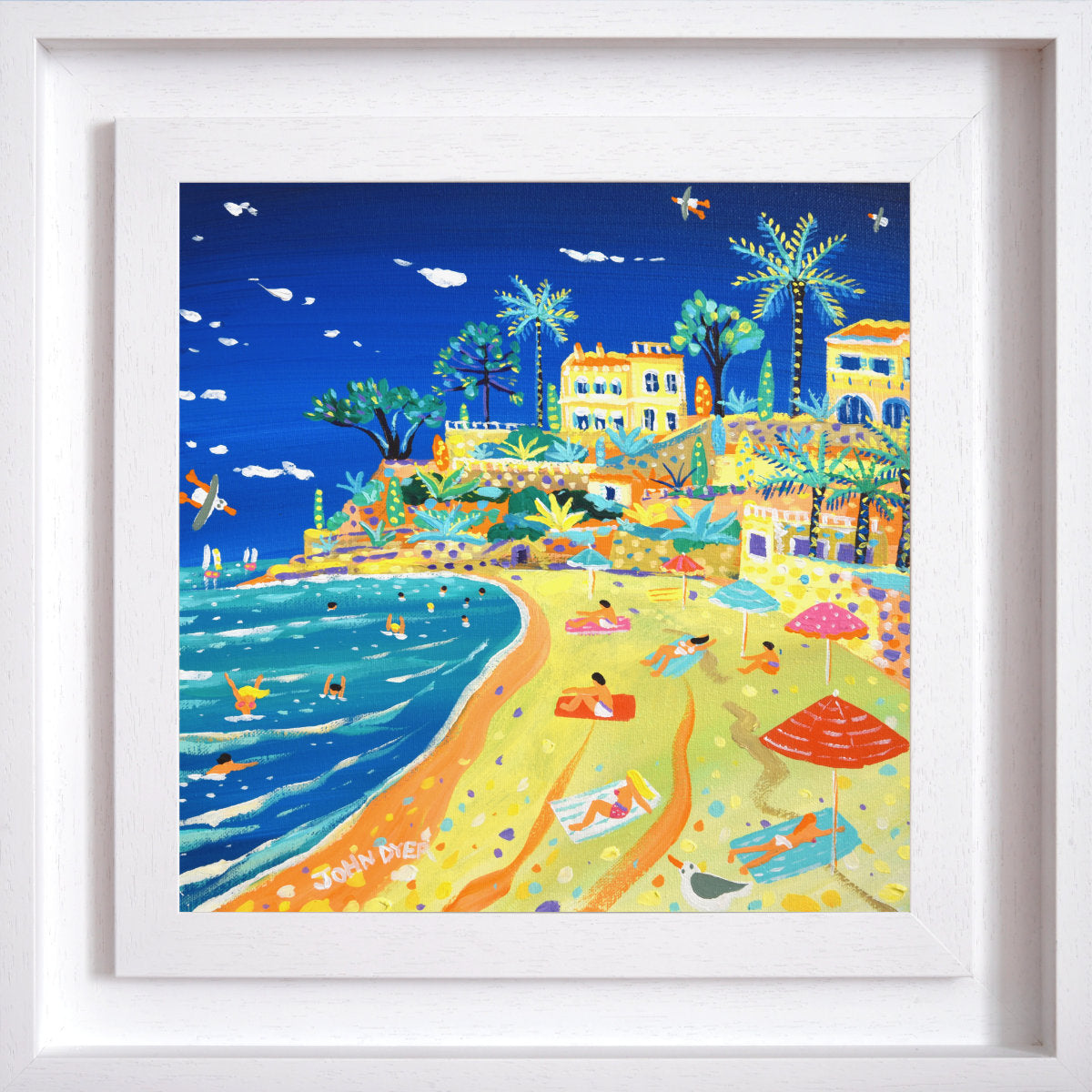
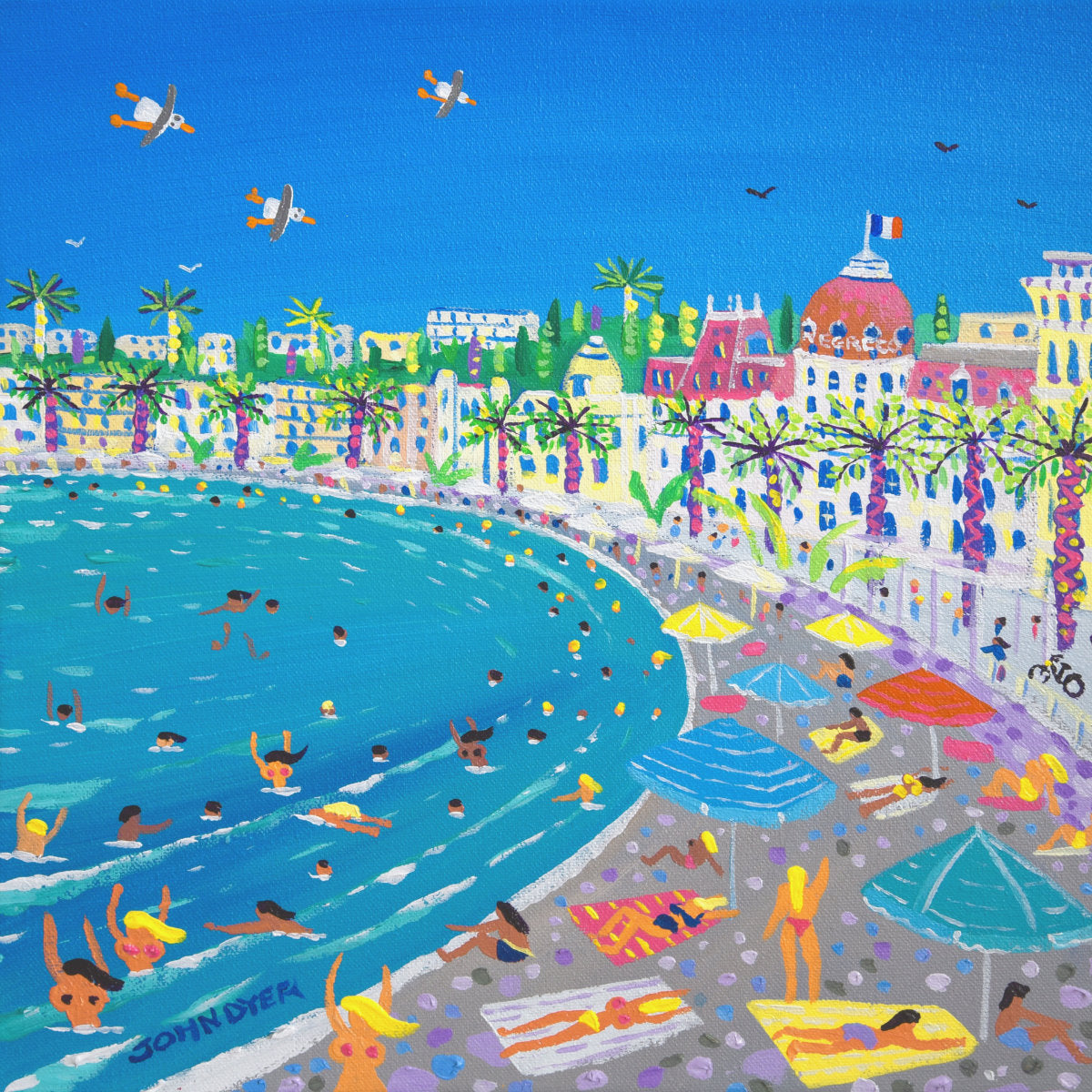
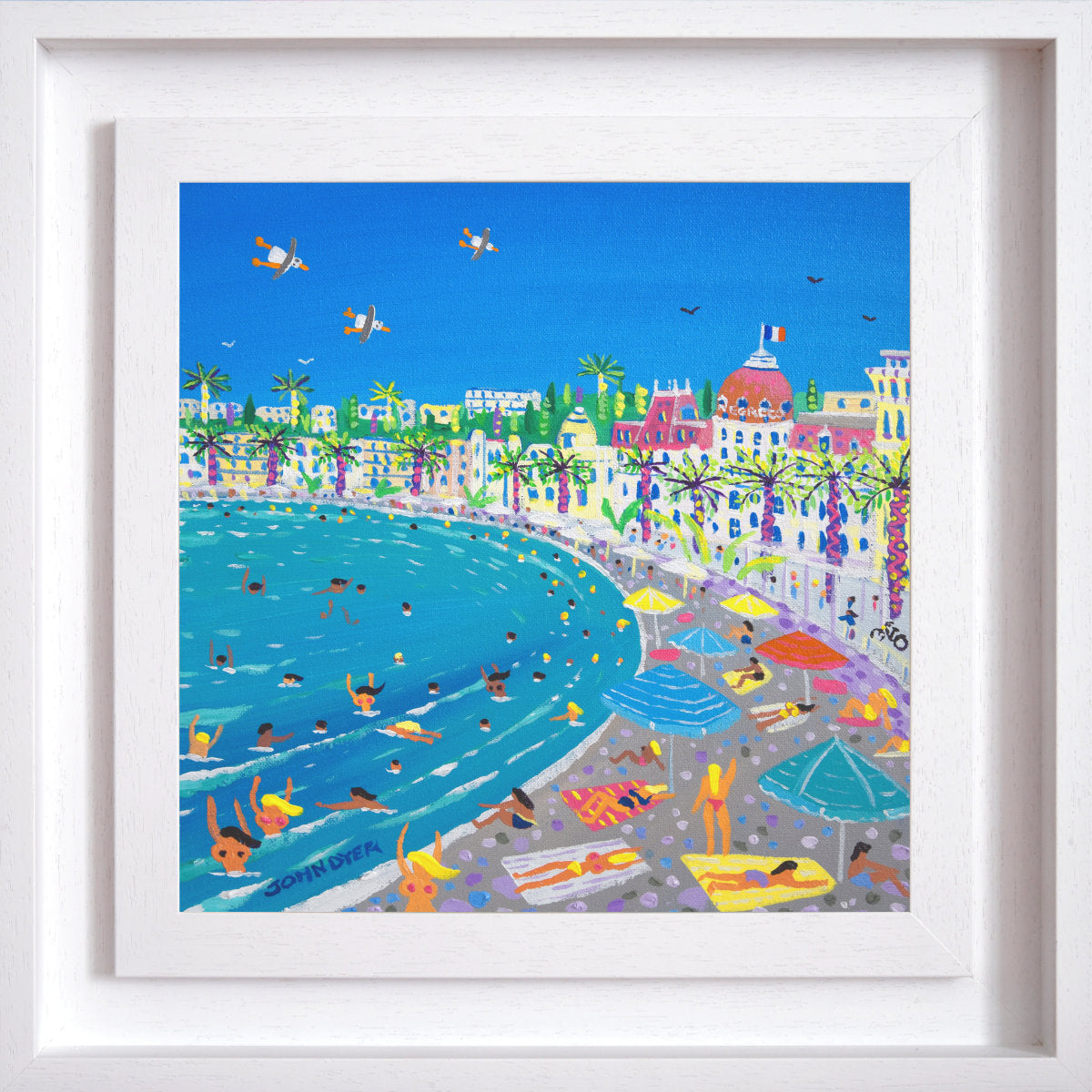
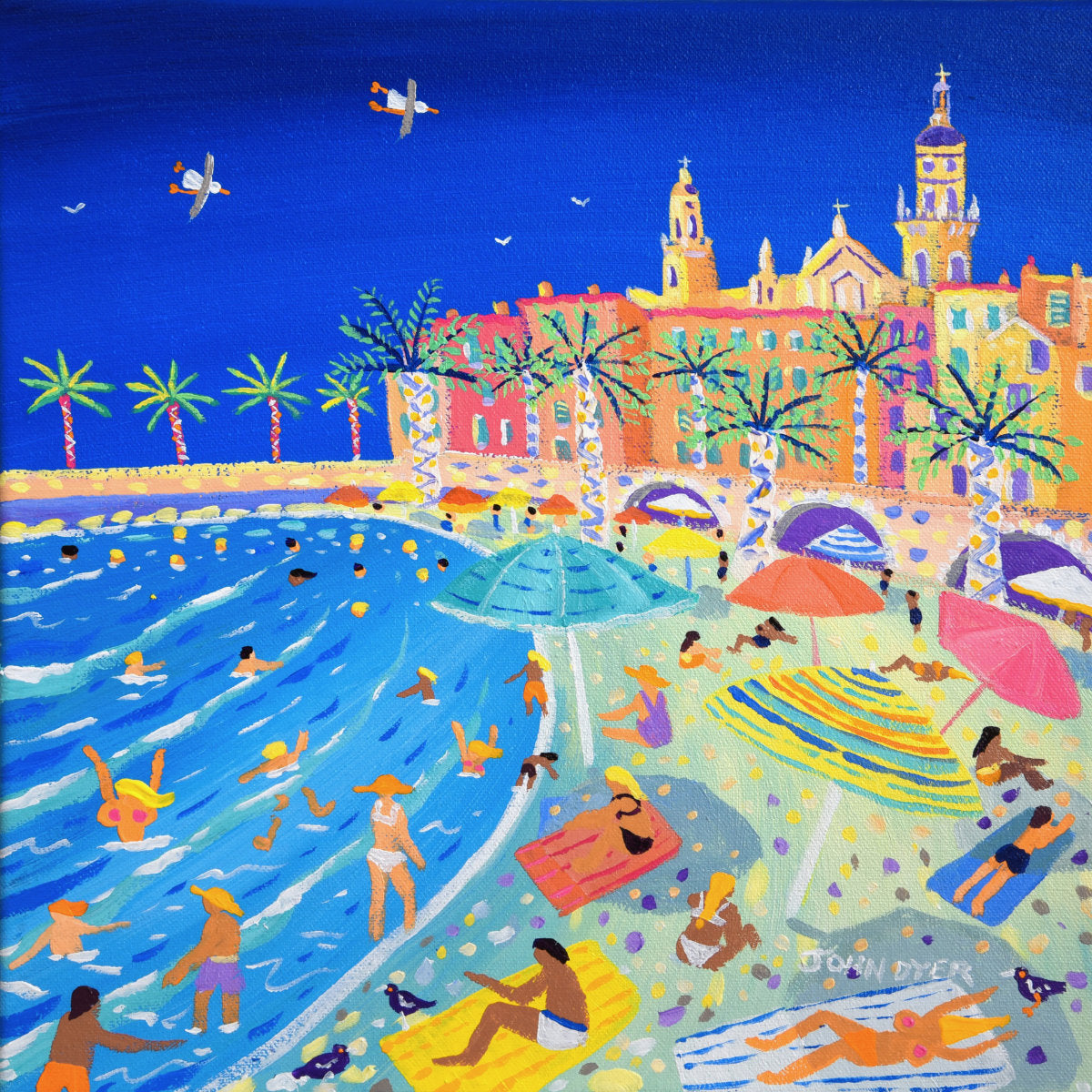
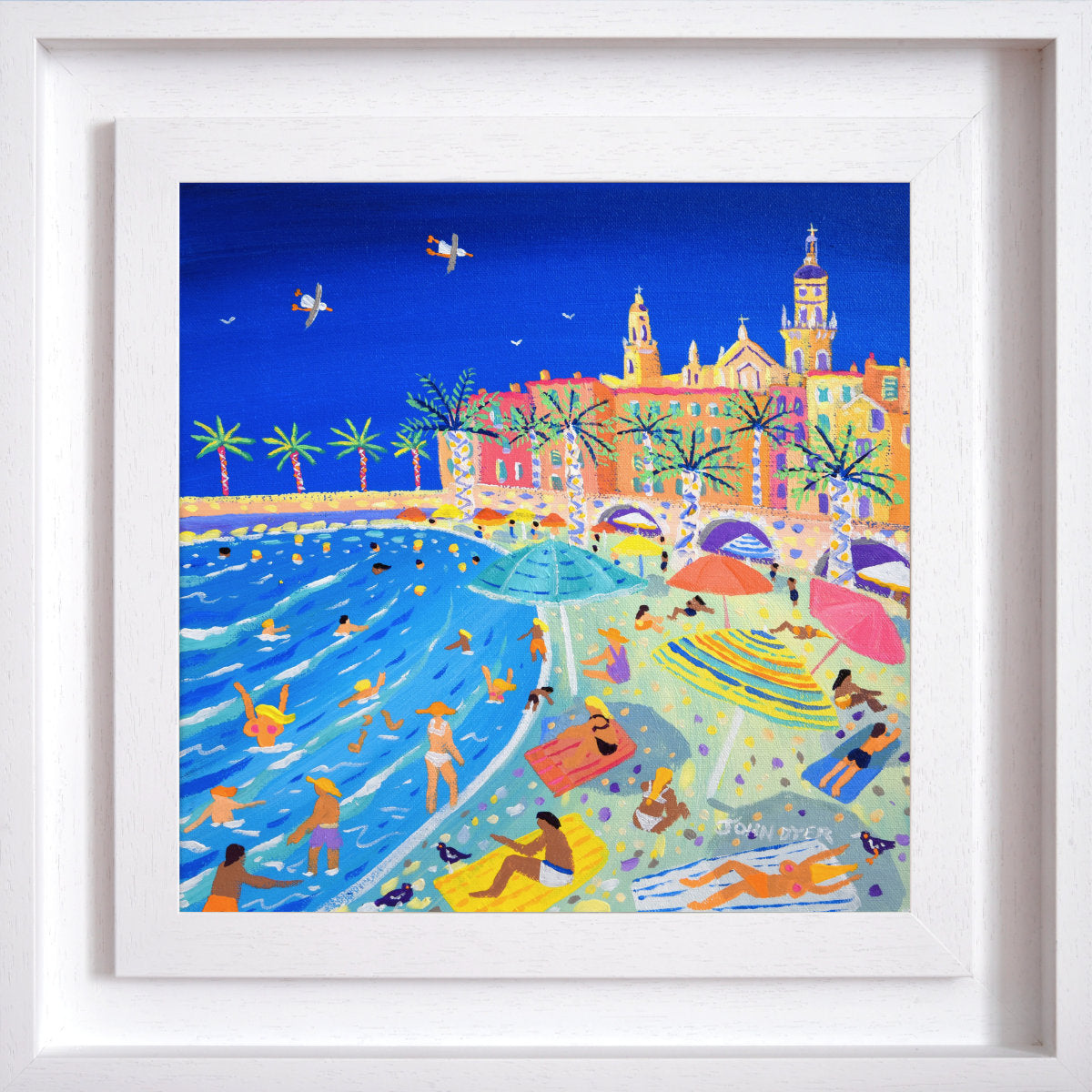
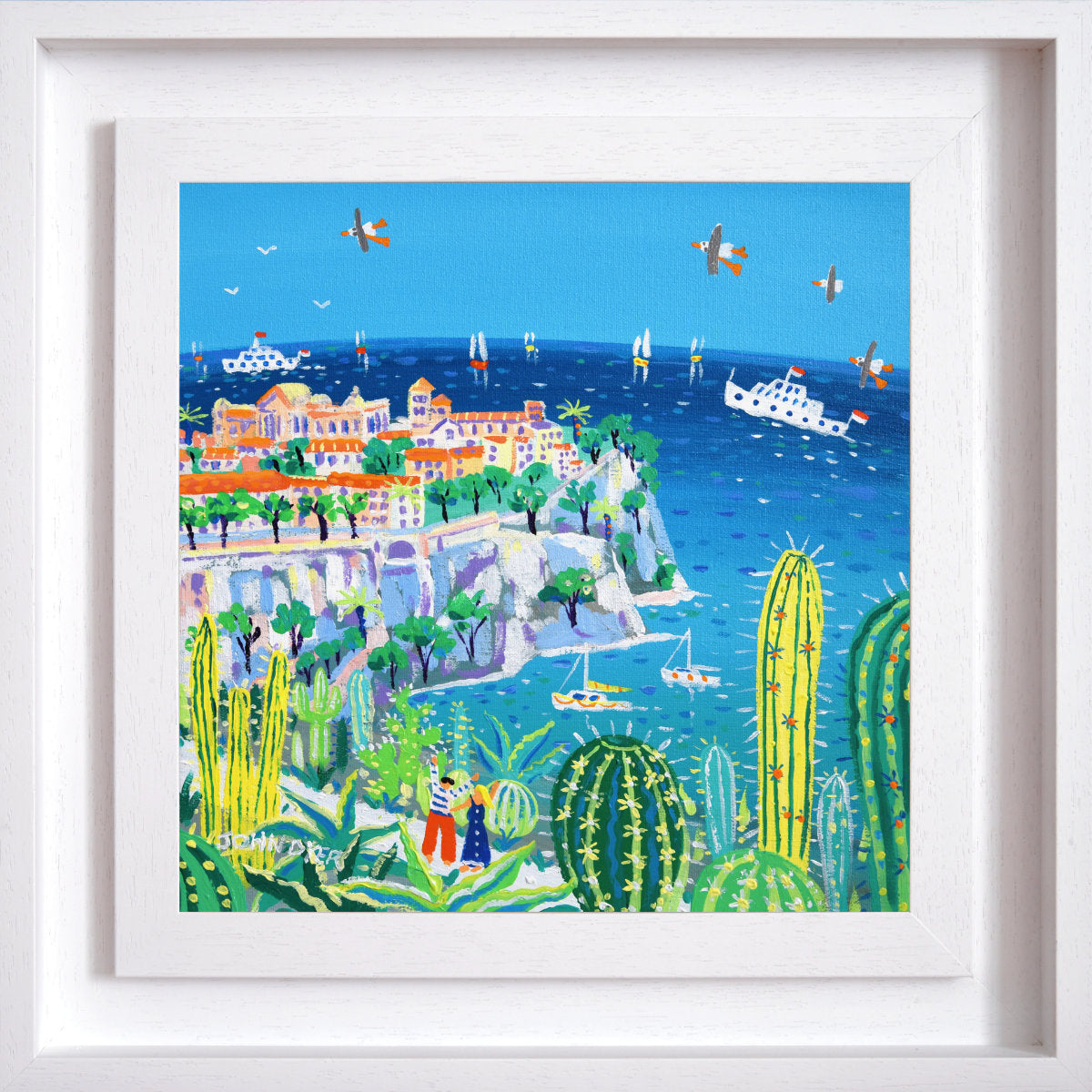
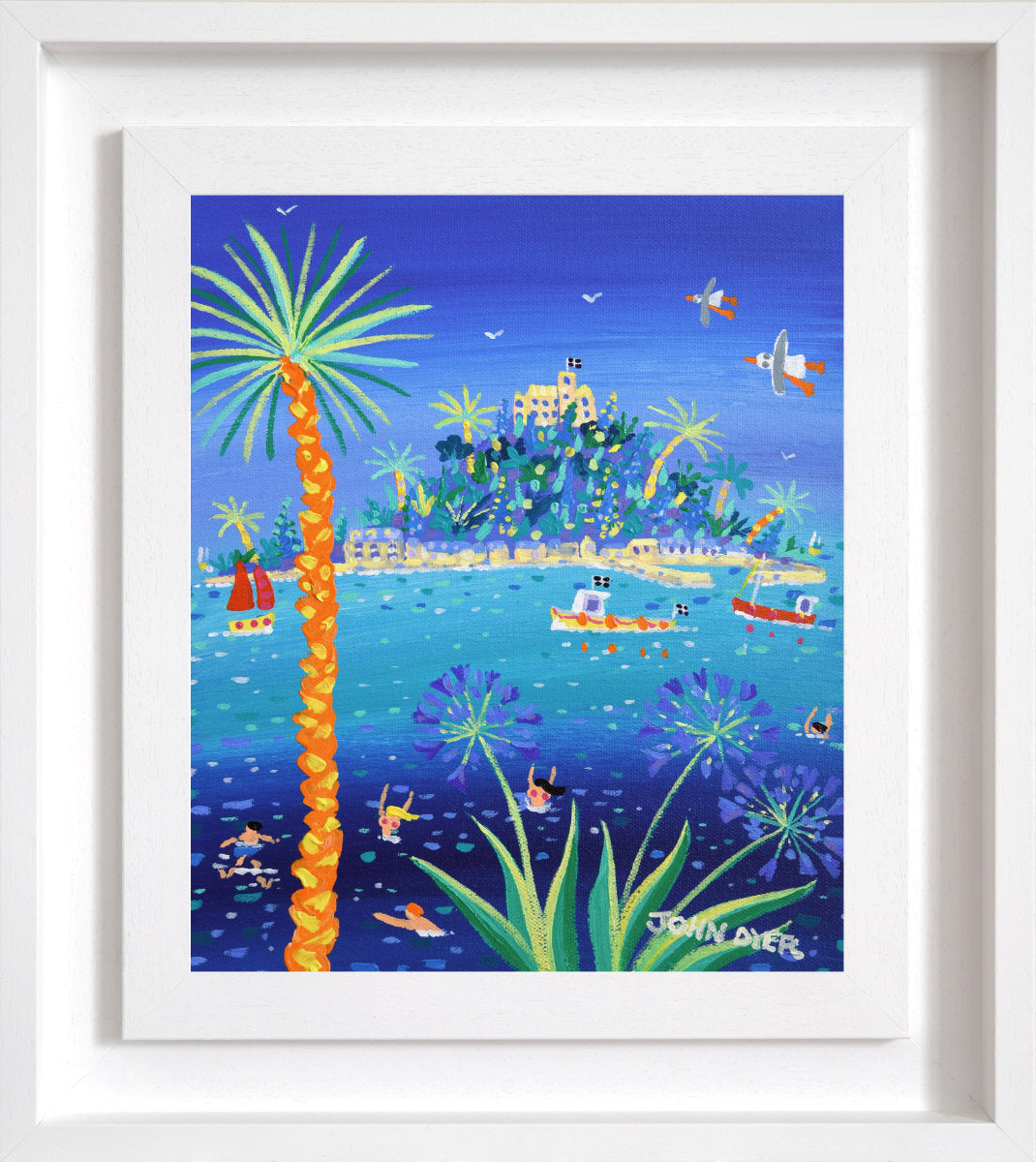
including my new French paintings —
as they are all connected by this thread of plants and people.
That Italian harvest exhibition then led to a message
from an organisation with the rather brilliant name
INIBAP — the International Network for the Improvement of Banana and Plantain.
They asked if I would create a banana-inspired smallholder harvest painting
for their annual report.
They had a fee to pay me too, which is remarkable, as artists rarely get paid!
And, being an artist who is not used to being paid
I used the entire fee
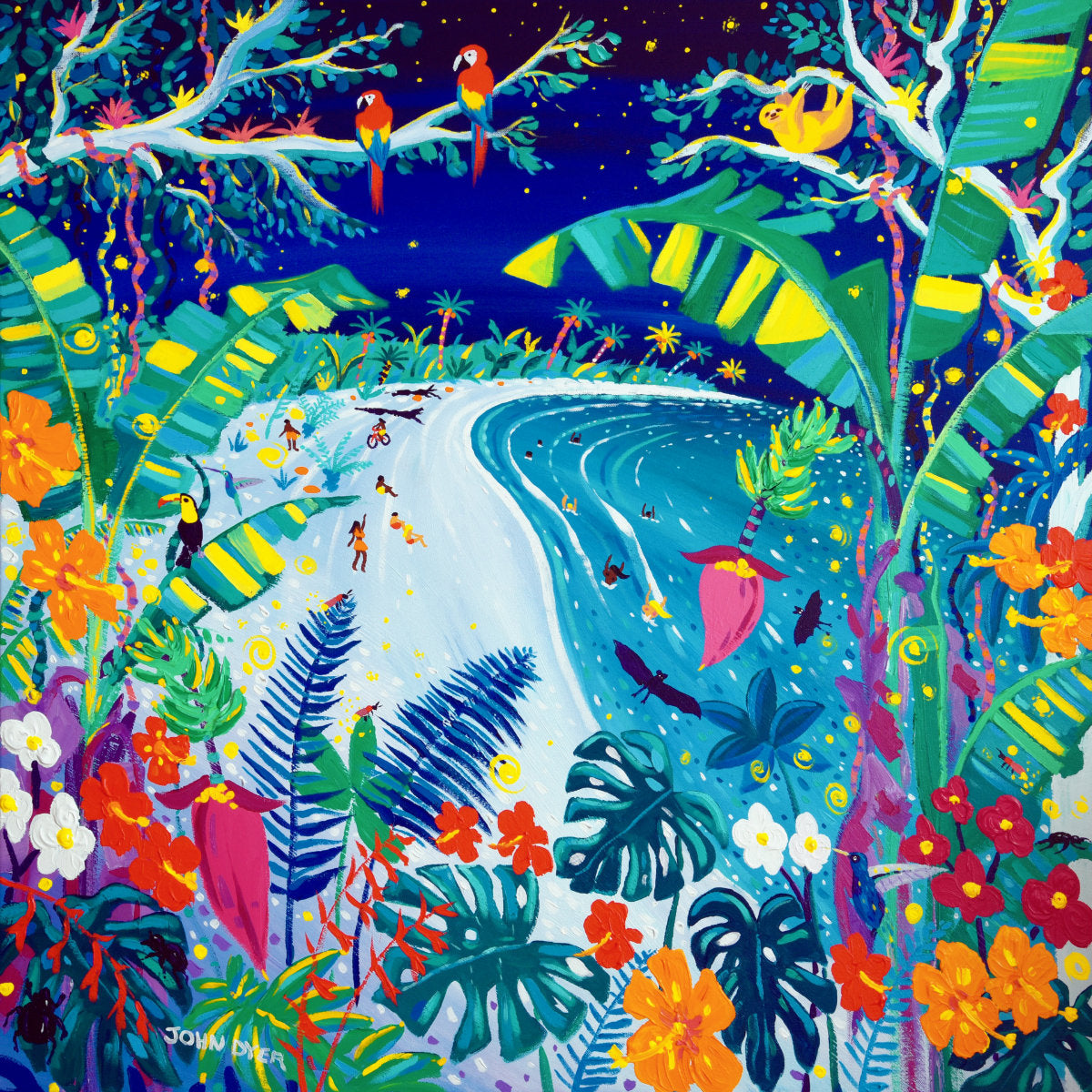
to get to the Costa Rican rainforest
to paint that banana inspired painting.
I am very good at that sort of maths.
Never any profits!
And that takes us
to the first big harvest story.
2. COSTA RICA – BANANAS, CACAO AND APPLE SHIRTS
So — in 2003, off I went to Costa Rica.
I needed someone to carry bags and capture a few photographs,
so my friend David volunteered.
Some of you might remember him as the picnic man from Italy.
Now, David worked for Apple computers,
and he took full responsibility for his own wardrobe.
I packed sensible expedition clothes.
David packed a selection of crisp white Apple cotton shirts.
Perfect, he thought,
for the rainforest.
We arrived with paints, canvas,
Apple shirts,
and — for reasons still unclear —
a large Delsey suitcase whose little wheels
absolutely refused to travel across a rainforest floor - oh why hadn’t I packed a rucksack!
David also had high expectations
of a rugged 4x4 vehicle
for our journey across the mountains and down the Caribbean coast to the Panama border
What we actually received
was a rather small and slightly odd Toyota Yaris
His face when he saw it
was something I wish I’d painted.
We set off up roads so rutted
that an articulated lorry nearly tipped over onto us
we actually jumped out of the Yaris at speed!
I explained —
as calmly as possible —
that the budget was a little tight to have a decent vehicle.
Each day I painted
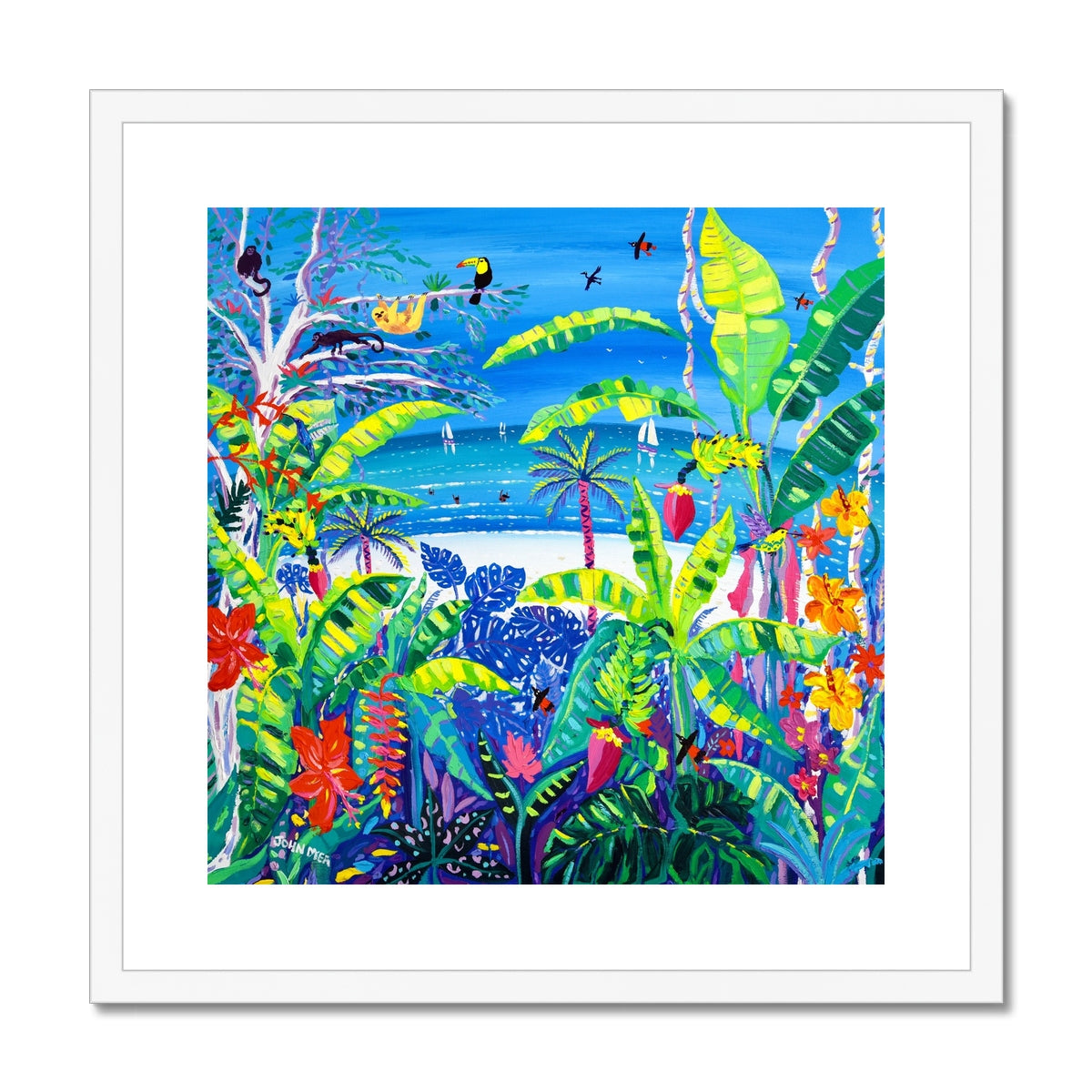
smallholder plots of bananas intercropped with cacao:
a beautiful system,
the bananas shading the cacao,
the whole place humming with life.
And each day,
David and I quietly - expected to die!
Nobody had mentioned
that everyone wears wellington boots
to avoid snakebite
in the deep banana leaf litter.
We had neat white trainers.
At least my Rohan clothes held up.
David’s Apple shirts however
slowly disintegrated into a white heap of sweaty wet material
and when he got home
he never unpacked —
he simply put the whole suitcase on a bonfire!
The farmers found us wildly amusing I am sure—
a pale English painter
and an official-looking Apple representative
sweating gently beside him.
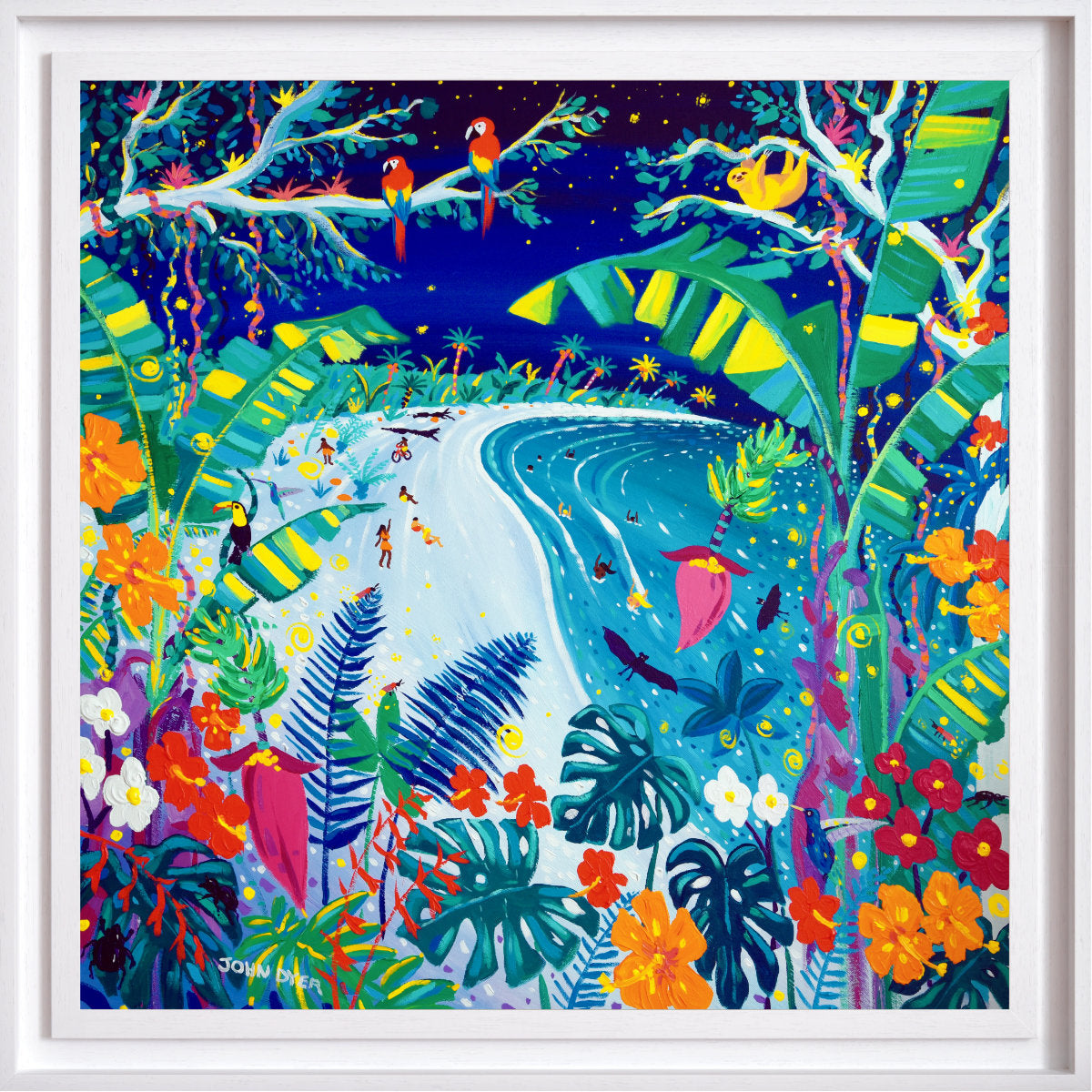
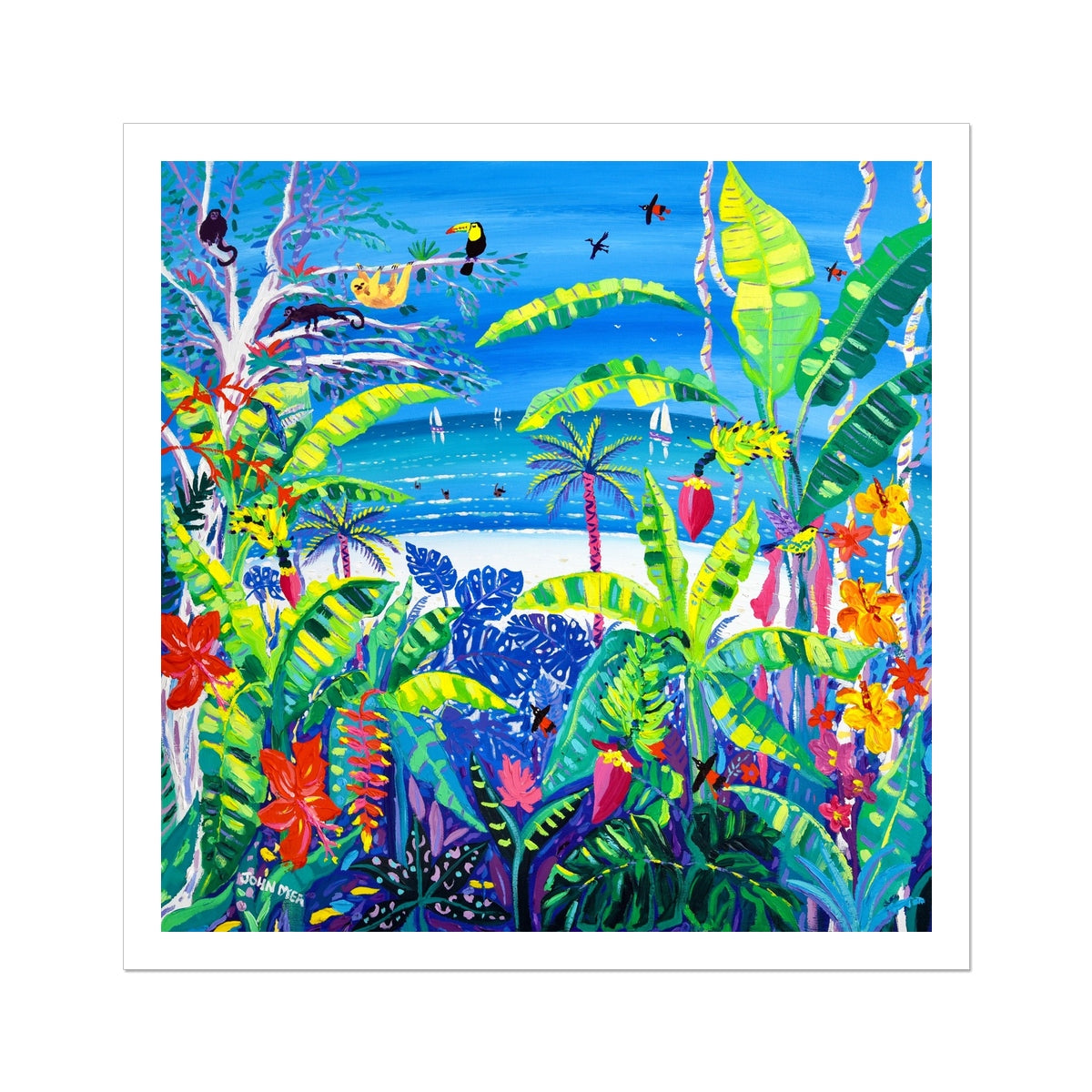
The rainforest wildlife was astonishing —
insects roughly the size of dinner plates —
and some of those extraordinary creatures
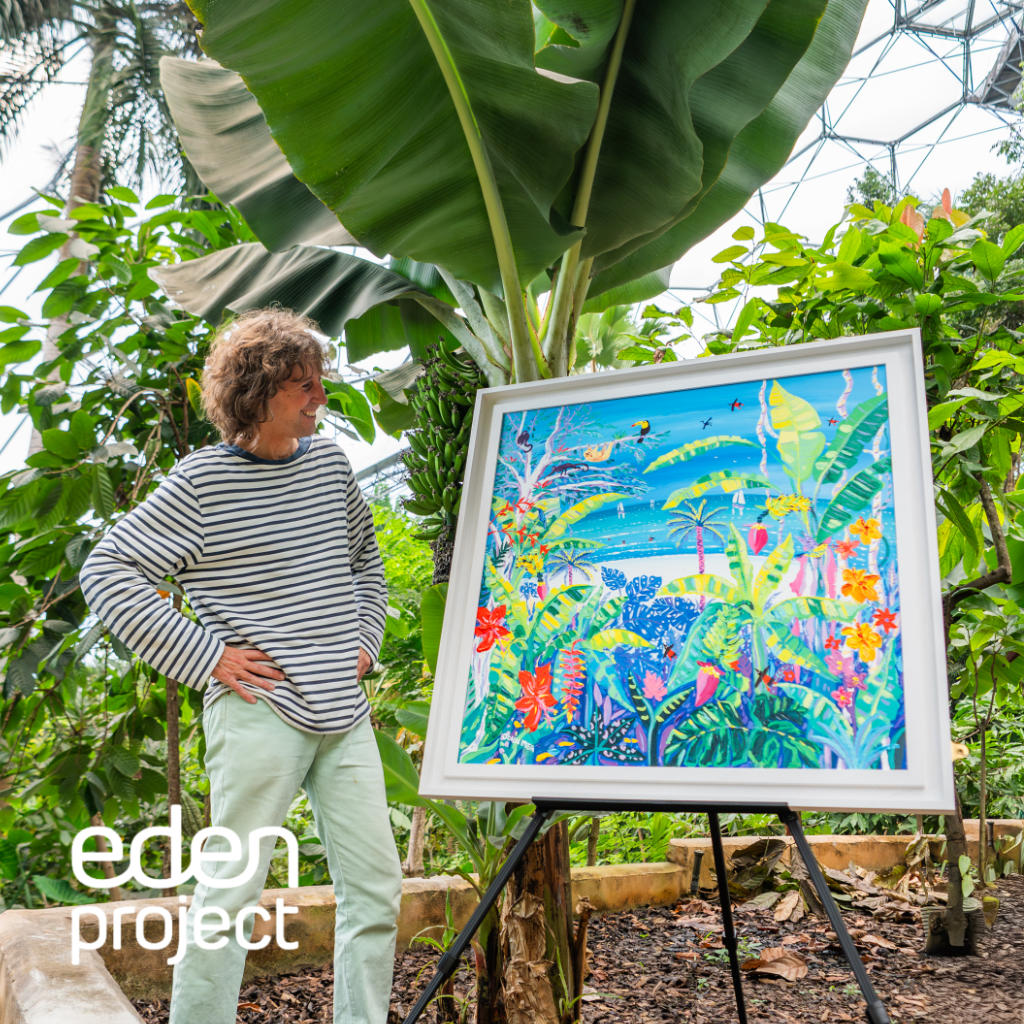
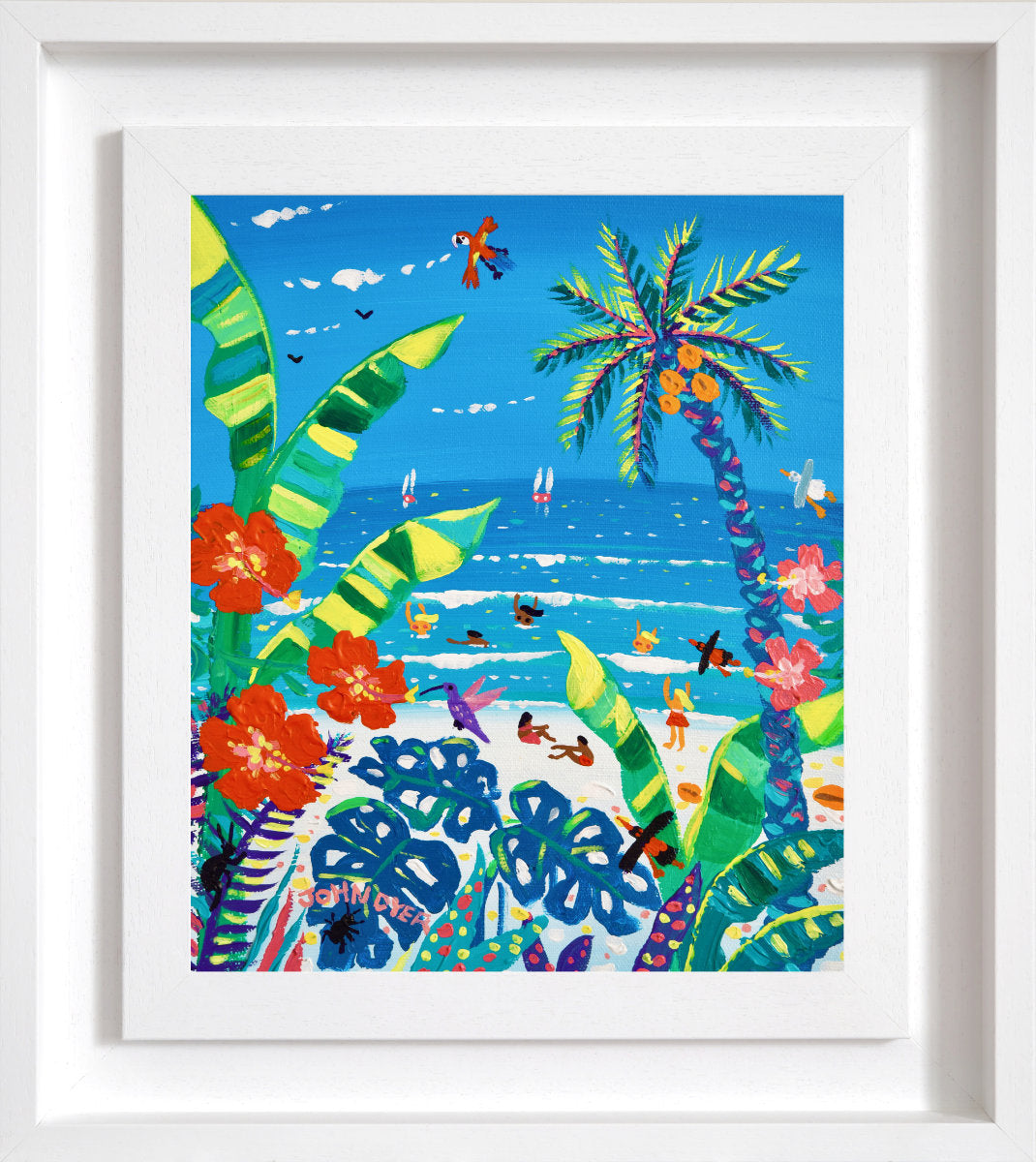
appear in the paintings next to the rainforest biome if you look carefully
Costa Rica taught me about biodiversity,
about the beauty and intelligence
of smallholder farming,
and about just how generous farmers can be
even when they suspect you’re completely mad!
And after that…
of course I wanted another adventure.
3. THE PHILIPPINES – RICE, DUST AND DUCKS
The next chapter was the Philippines,
for the 2004 United Nations International Year of Rice.
I was invited to IRRI,
the International Rice Research Institute,
located in Los Baños —
in a region that also happened to be
a stronghold of a guerrilla movement.
So it seemed like the ideal place
to paint rice!
My friend Tim Varlow, a BAFTA-winning video graphic designer from London —
and the very same person who first dared to explore the Amazon rainforest with me back in 1989,
when we managed to make our translator very ill with malaria and abandoned her in Manaus, survived three car accidents,
bartered cash on the black market, and were even threatened at gunpoint —
yes, that Tim,
who clearly has a terrible memory —
offered to carry my bags this time.
Outside of the IRRI campus in the Philippines
we always had two bodyguards —
and if they said “we’re leaving”,
we left.
No questions.
Just bundled into an official IRRI vehicle.
Meanwhile,
I was blissfully captivated
by the harvest itself:
the gathering of rice straw,
the winnowing of grain into the hot, dusty air,
workers wrapped in scarves and masks
against the intensity of the day and the backdrop of volcanoes
Tim, on the other hand,
became slightly restless
and wandered off to sketch
lone water buffalo
at extraordinarily close range.
These enormous animals stood there
considering all the efficient ways
they might remove him from the planet
with a single nudge.
One evening we slipped away from our bodyguards
and left the IRRI campus to explore the area on foot.
We walked down roads lined with ditches,
past barking dogs,
looking for “downtown” Los Baños.
Instead, we found pitch darkness,
rubbish heaps, barking vicious dogs
and a group of far-too-curious locals.
Nobody noticed Tim —
he blended in perfectly
with his scruffy beard and slight build.
I, however,
in my pale expeditionary long trousers, long sleeved shirt, and clean shaven pale face
looked like a lost British geography teacher.
In the end, to get us out of a fix, and away from the vividly imagined possibility of being taken as hostages by the local guerrilla army,
Tim did the obvious thing.
he hailed a passing motorcycle and sidecar.
We climbed in —
full Wallace and Gromit style —
with Tim fitting beautifully
and my head repeatedly hitting the roof.
We hit a speed bump at speed,
my head made one last major impact
and the roof politely detached itself.
We made a very rapid retreat
back to the IRRI gates on foot.
I was waved straight in.
Tim, now indistinguishable from a local,
was stopped by security
and I had to vouch for him.
The rice harvest offers countless details:
in some places the rice is dried on the road,
and cars, lorries and the brilliantly decorated jeepneys
drive over it all day.
So — do wash your rice.
Not all the grains are collected,
so after the harvest
families and farmers release thousands of ducks
into the fields
to hoover up the leftovers.
Children do the same,
picking up grains one by one
for another bowl of rice at home.
And at the weekends
those ducks become racing ducks
in towns full of cheering and betting.
It is culture, economy and ecology
woven together with extraordinary elegance.
Rice is also grown and harvested in many countries,
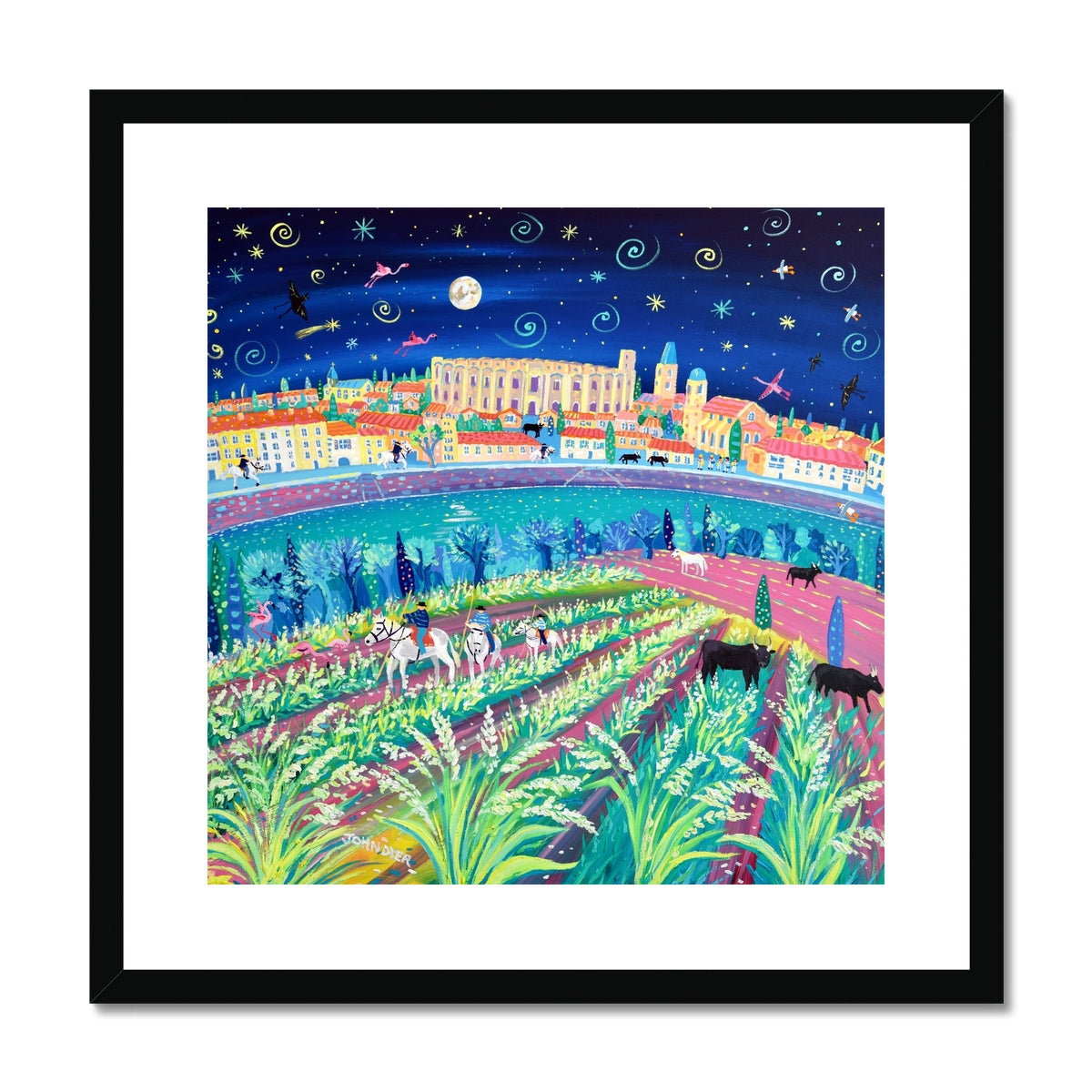
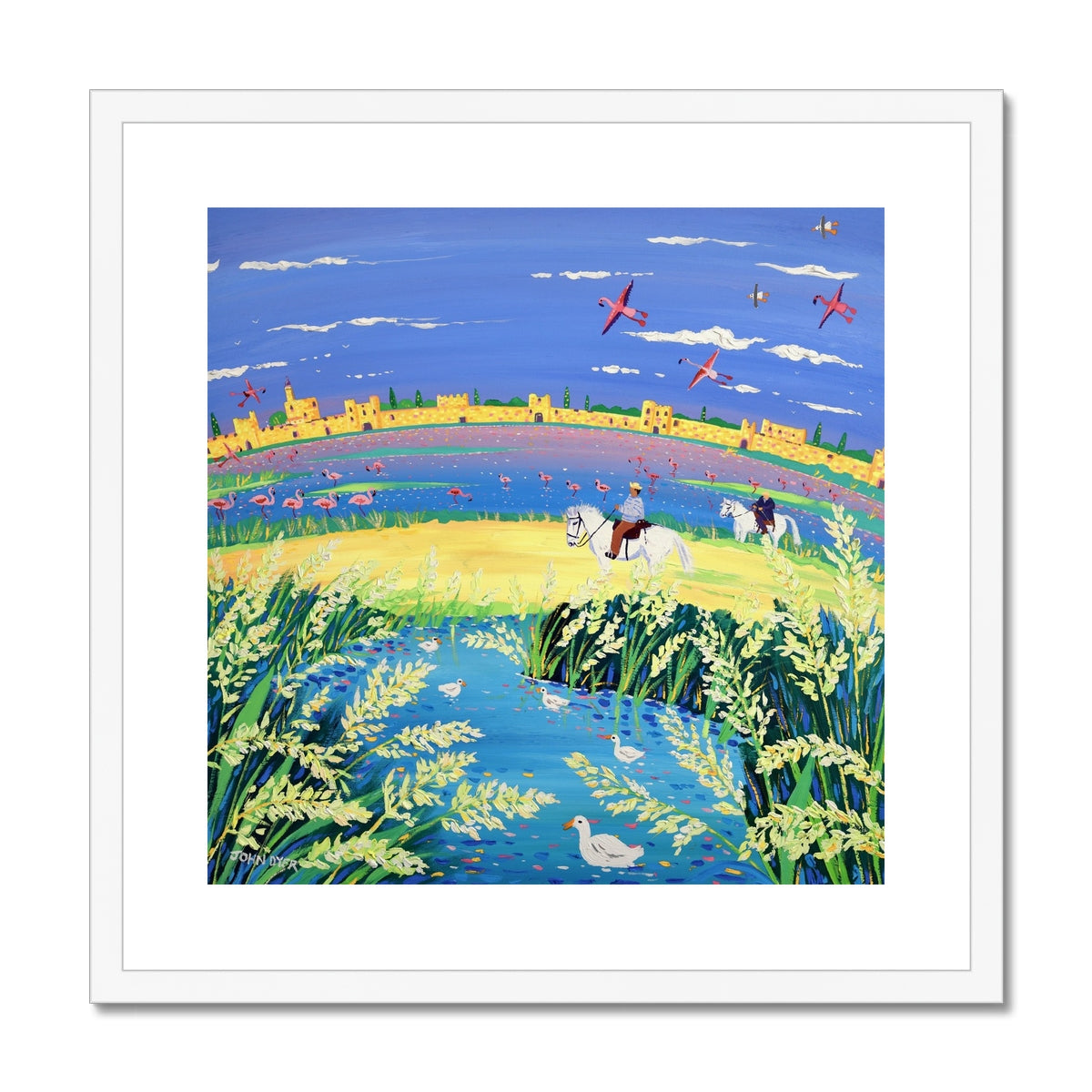
and close to home in Provence —
a landscape I love,
a place I lived for three years,
and one filled with fond memories of the grape harvest
and of my honeymoon with Jo.
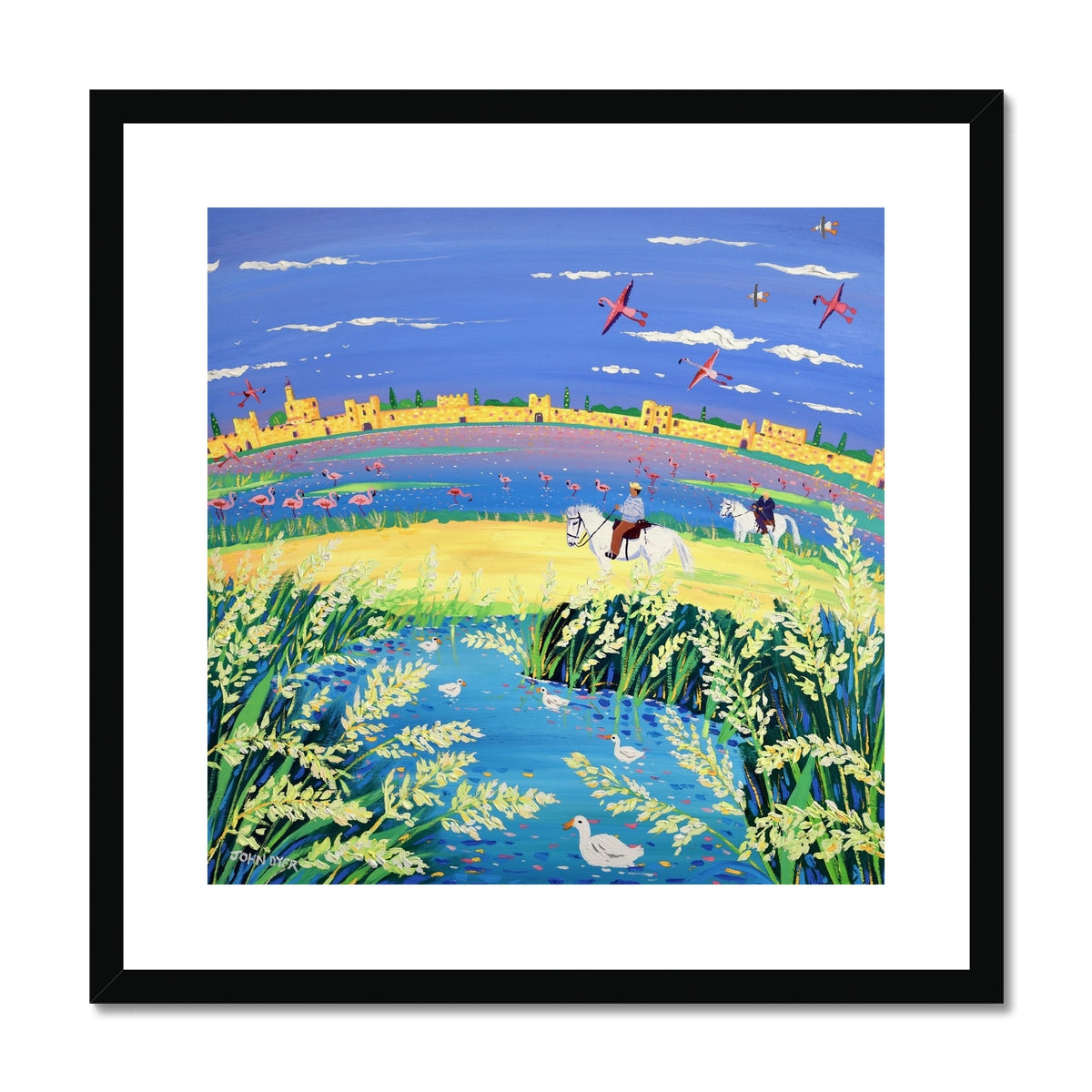
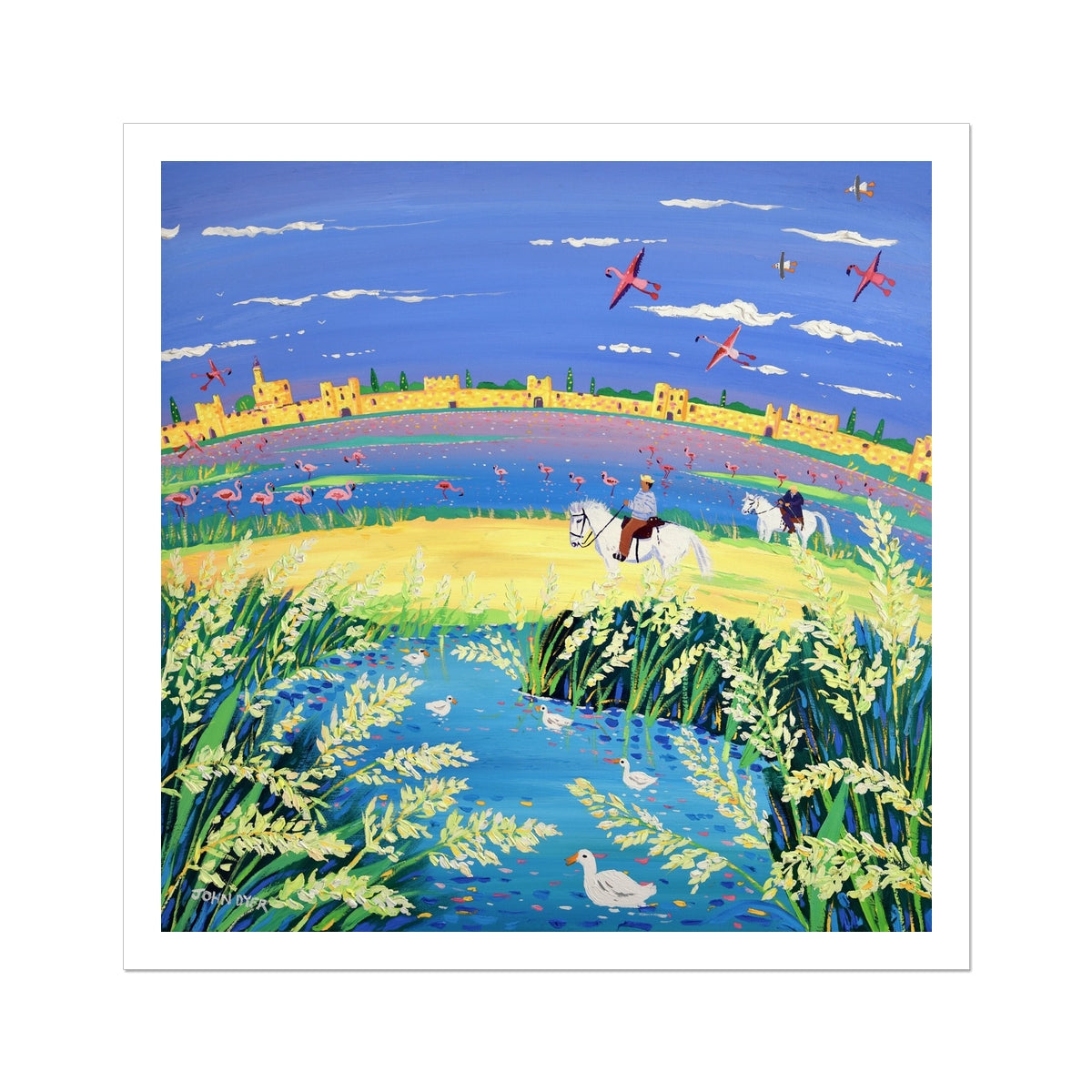
With the Camargue’s white horses, black bulls
and flocks of flamingos,
it is another landscape shaped by a crop,
and one that even holds its own rice festival in Arles,
a place steeped in culture, colour
and centuries-old festivities.
And as for my mosquito stories from the Camargue,
well… those will have to wait for another day.
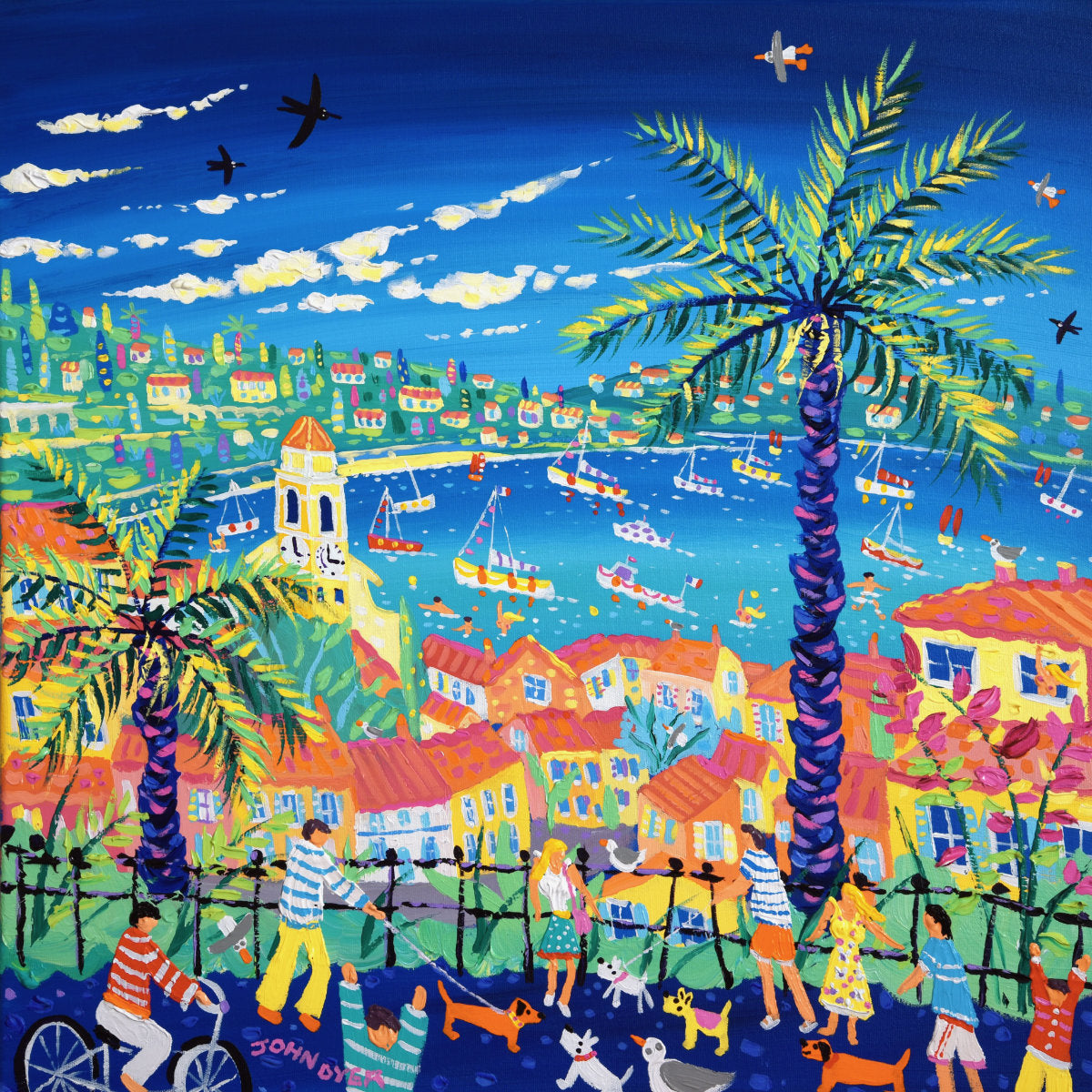
But I hope you will enjoy my two new French rice paintings in the link building just outside this biome
4. PERU – POTATOES, PACHAMAMA AND A NEARLY ADOPTED CHILD
During our years living in the south of France
in 2009 another invitation arrived —
this time from CIP,
the International Potato Centre in Lima, Peru,
for the United Nations Year of the Potato.
The idea of flying to the Andes to paint potatoes
seemed laughable to our French friends,
but I was captivated.
Having realised that bag carriers
tend to come with questionable clothing
and transport choices,
I travelled to Peru alone.
Languages have never been my strong point.
I have an A-star in doing them terribly.
I proved this in France
by accidentally informing the police
that twelve people were on fire in my Land Rover,
when I had simply meant to report
that my headlights had failed on the motorway
In preparation for Peru I brushed up on some Spanish
only to arrive in a village at 4,500 metres (nearly 15,000 feet up or about 2.8 miles high,
where everyone only spoke the Inca language Cuzco Quechua
There I was,
far up in the Andes,
with very little oxygen,
and absolutely no shared vocabulary.
I was handed a scythe
and immediately put to work
harvesting broad beans as dusk fell in what must be one of the remotest villages in the Andes.
I smiled,
laughed in the wrong places,
and befriended a silent, slightly judgemental donkey.
Afterwards,
my painting bag — now with rucksack straps
because I do sometimes learn things —
was lifted and carried off
through narrow mud paths
to meet my host family.
We shook hands and smiled a lot.
Temperatures plummeted
and I did begin to wonder
where my bed might be.
Then a group of people arrived,
my bag moved again,
and it became clear
that there had been some sort of dispute
about who should host the visiting artist.
At what felt like midnight
I was being led through utter darkness
to another mud brick house.
Note to self:
always pack an expedition torch.
My eventual bed
was above the cattle,
with a window with no glass,
a little plastic pot as a bathroom,
and thick llama blankets.
Buy the next morning I was a block of ice but
the Andes revealed themselves
in an electric, iridescent light.
My host family were wonderful.
The father led me for two hours up the mountains
to find a potato harvest in progress.
He strolled
I puffed.
He carried the canvas.
I carried my bag.
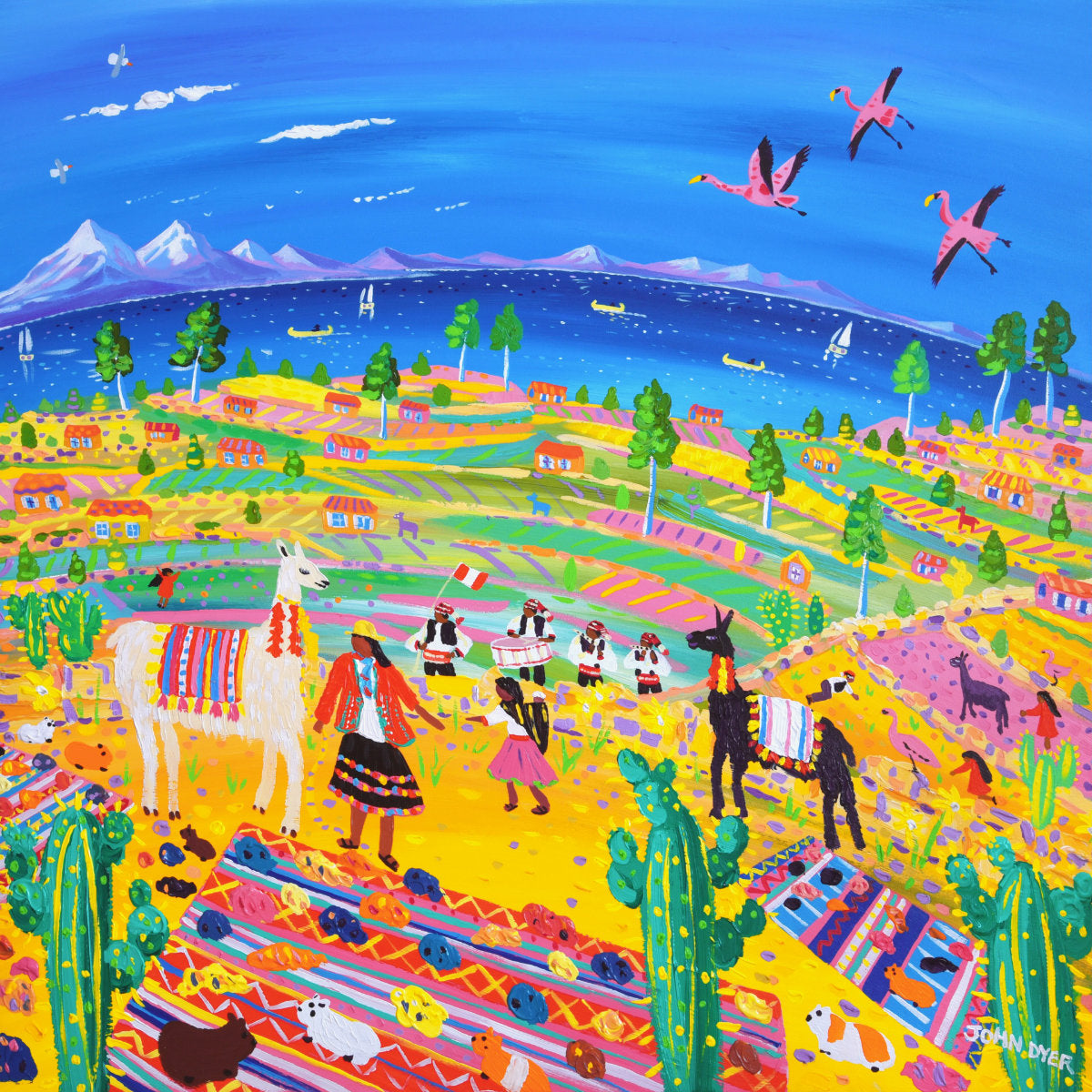
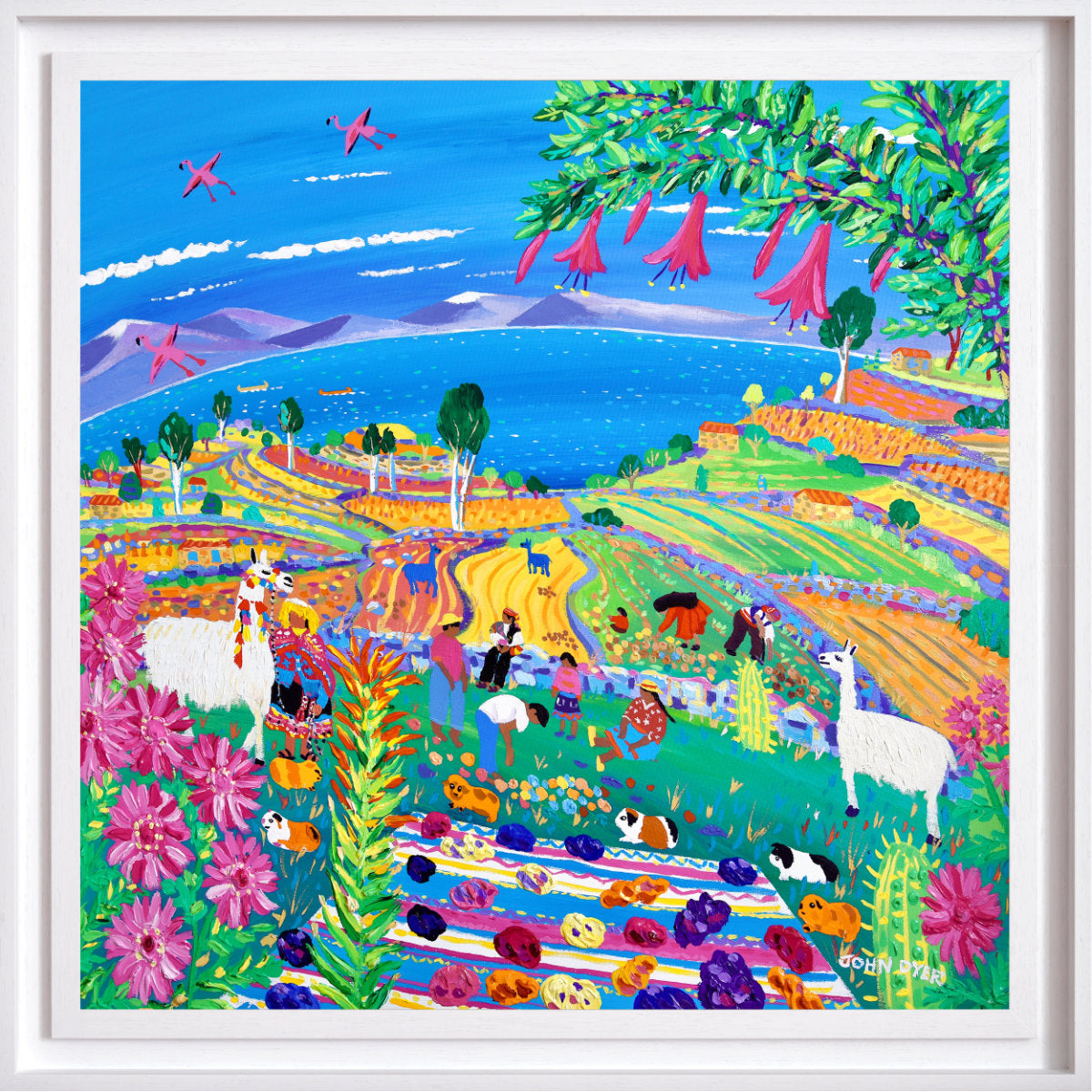
The harvest was magical —
tubers in every colour
lifted from the soil
onto bright Peruvian rugs
Women in bowler hats spinning wool
as they walked the paths.
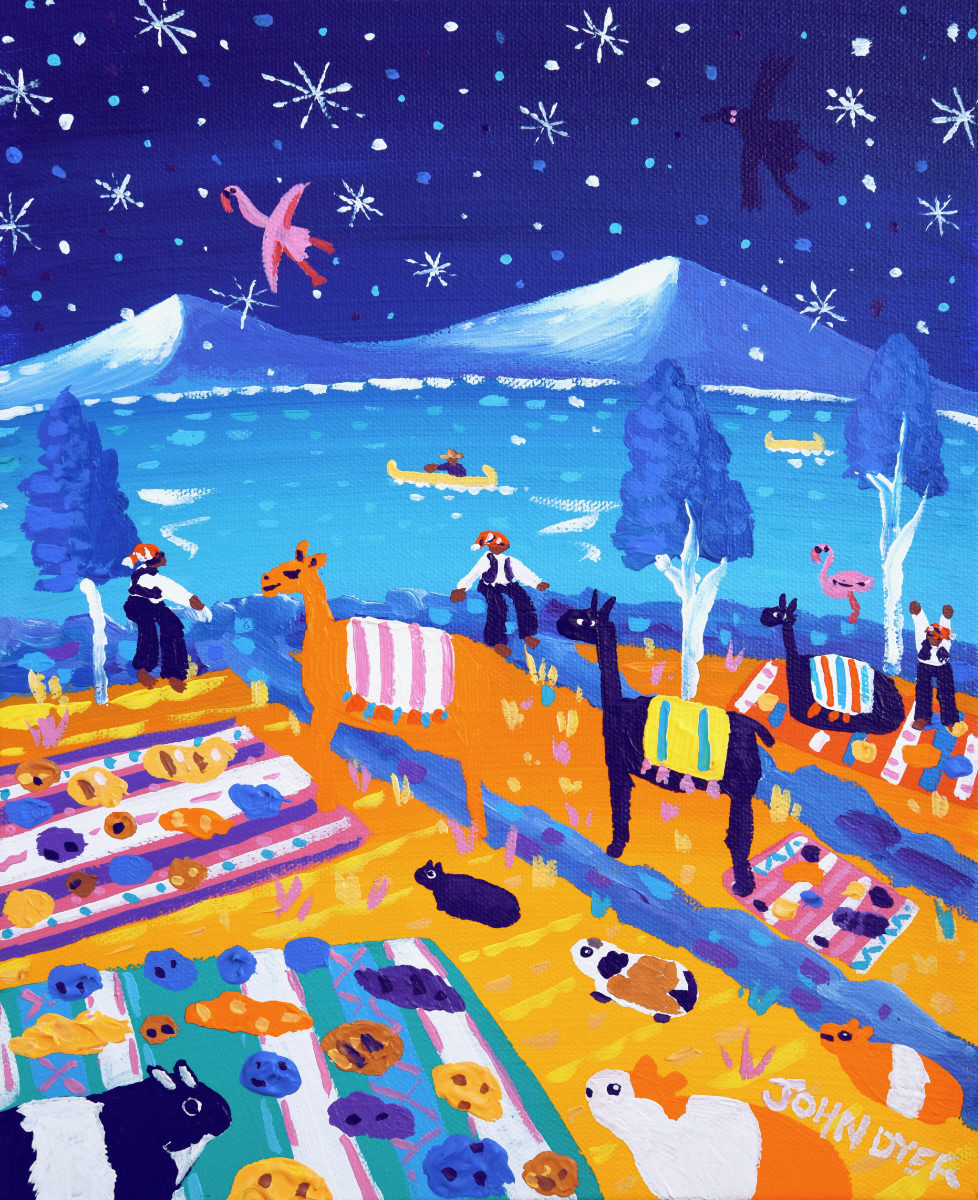
Two pigs wandering through the landscape gently the rearranging the potatoes for me and creating a lot of animated people rushing after them
These are the things that enter my work —
not just scenery,
but life - I capture the narrative.
In the evenings I painted inside the house
by the light of the open cooking fire,
with two children watching every brushstroke.
My language consisted mainly of smiles and pointing,
which worked remarkably well
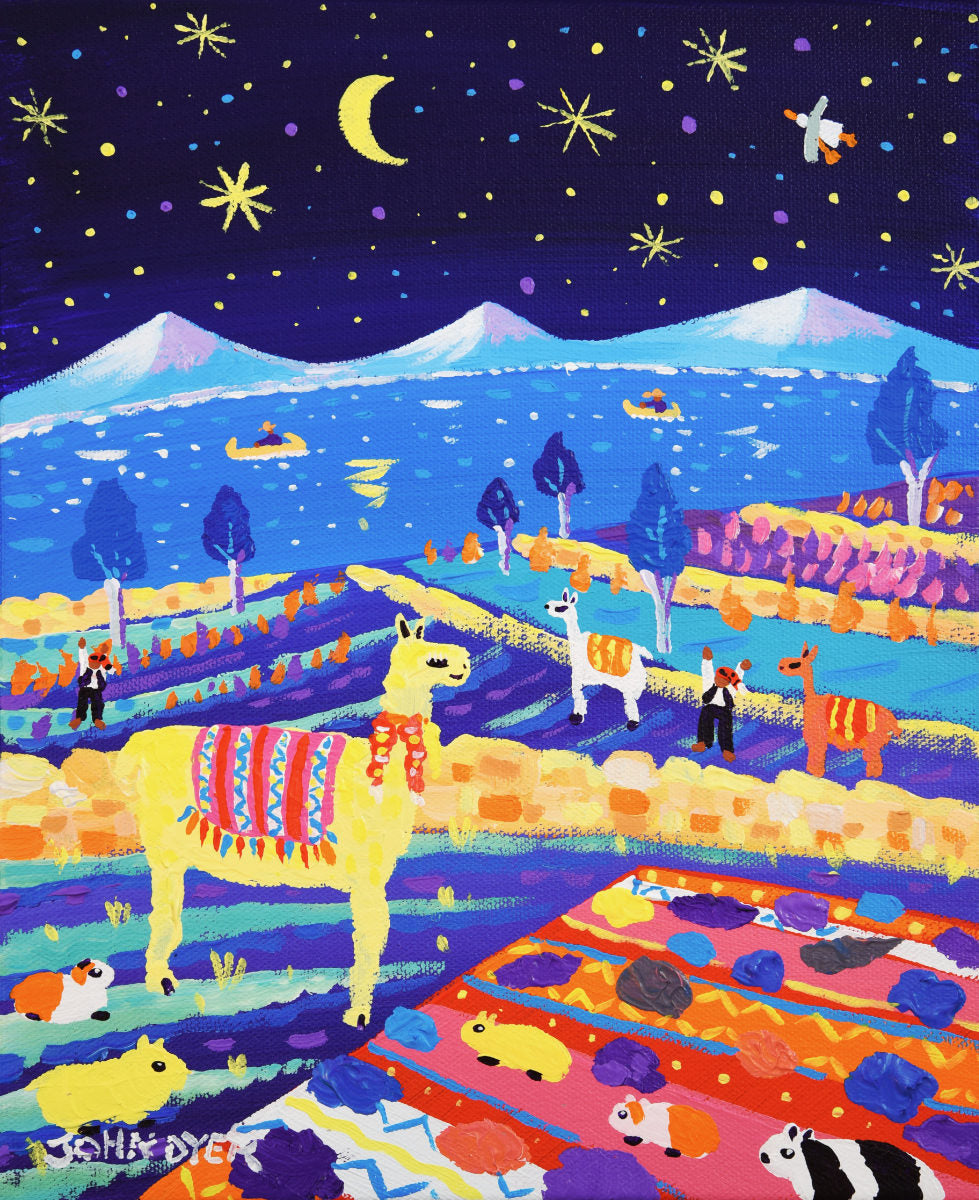
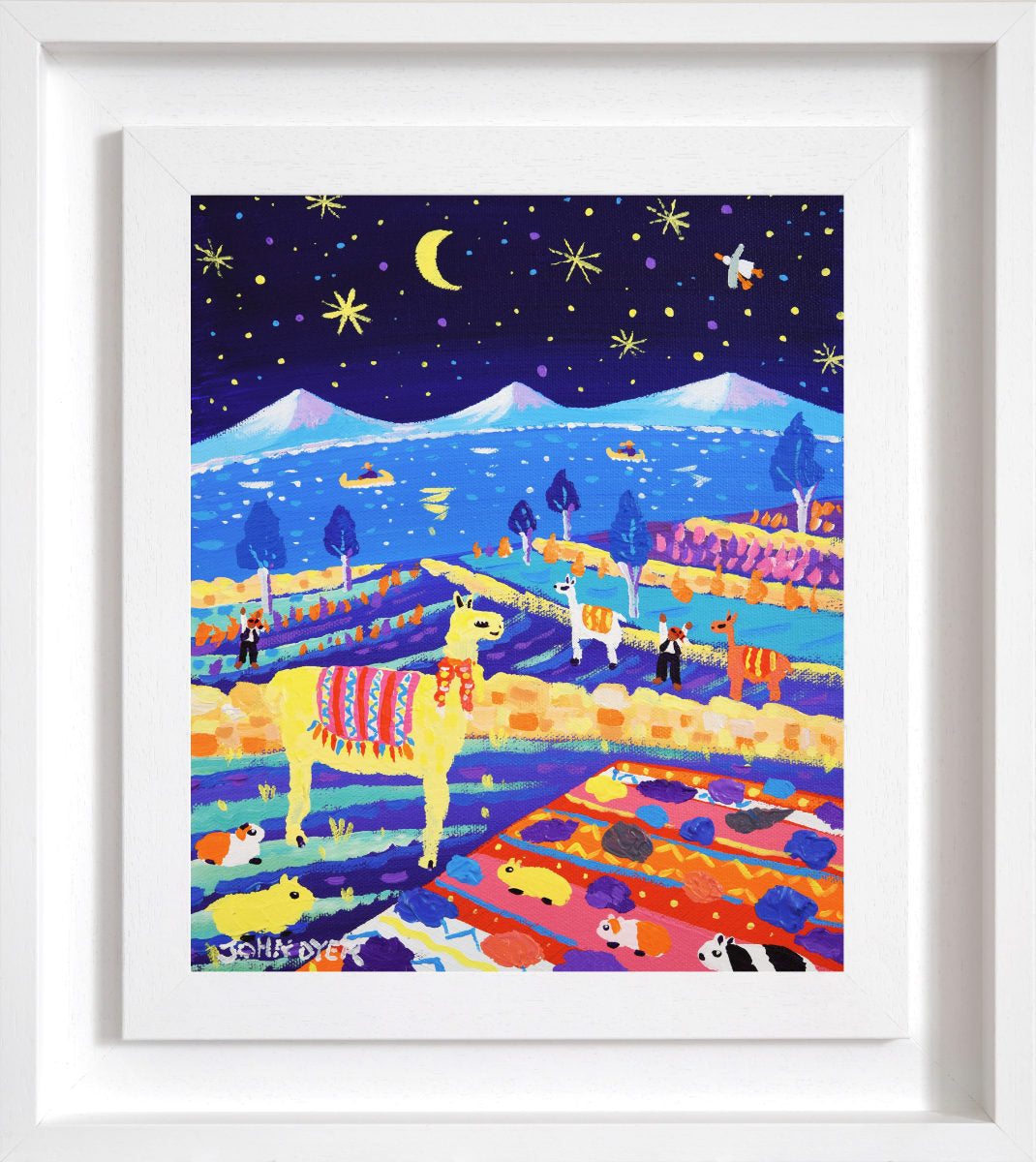
until I admired a particularly cute guinea pig.
They kept them in a guinea pig condominium
and during the day they roamed freely,
tidying up scraps of food from the earth floor.
I pointed and smiled at an especially handsome ginger and white one.
The family were delighted
and immediately carried it into the kitchen.
I am vegetarian.
There followed a burst of frantic facial signals
which were thankfully understood
and the guinea pig was returned unharmed to live another day in the condo.
Later, on Taquile Island,
I was invited to join a ritual to bless Pachamama,
Mother Earth —
involving shared beer
and the straightest line of beer
thrown across the soil you can manage.
Apparently my line was acceptable
because the farmer was delighted
and then presented his youngest daughter
in beautiful traditional dress.
He then offered me a pair of scissors!
At that very moment
my guide leaned in and whispered:
“Do not, under any circumstances, cut that child’s hair.
If you do, the family will expect you to adopt her
and pay for her childhood.”
We resolved it diplomatically
with more coca leaves - the local currency for cooperation,
I left without accidentally adopting a Peruvian child, which I am sure Jo is very thankful for.
What stays with me from Peru
is the wisdom in their biodiversity.
Farmers may plant dozens of potato varieties in one field
so that whatever the climate does,
something will survive.
It is resilience,
written into the landscape.
5. WHAT IT ALL MEANS
These journeys,
from Provence to Costa Rica,
from the Philippines to Peru,
have shown me again and again
how deeply plants and people
are intertwined.
There are over a thousand species of bananas and plantains,
yet we rely almost entirely on the Cavendish —
a single variety now vulnerable to disease.
High in the Andes there are more than four thousand potato varieties —
blue potatoes, orange potatoes, long ones, tiny ones —
often planted together in one field
so that whatever the climate does,
something will survive, there will be food.
And at IRRI they have worked with over one hundred thousand rice varieties,
breeding grains that can withstand - storms, flooding and drought,
and that have helped to feed countless millions of people.
Without biodiversity in our plants and crops
we are less able to withstand climate change.
Without biodiversity in our farming
we risk losing the insects, birds and animals
that bring our landscapes to life and sustain the web of life.
If we fail to protect and connect with Indigenous and tribal peoples
and learn from them,
we choose ignorance
at precisely the moment
we most need wisdom.
And if we forget
that we all live in one vast, interconnected biome called planet Earth
with so much we share as human beings
and differences that enrich us and that deserve to be celebrated —
then we lose sight of the best of ourselves.
And without art, literature and music
to celebrate our world,
to remind us of its wonder
and to show us what we stand to protect and lose
we risk becoming blind and deaf to its beauty.
And without hope,
we lose the very thing that carries us forward.
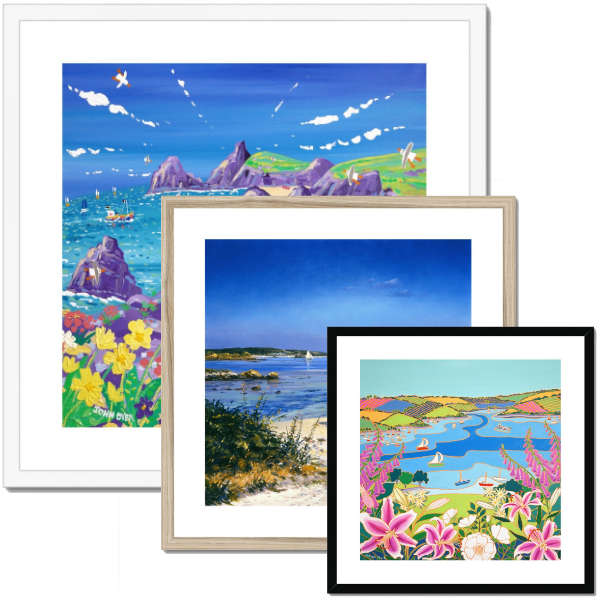
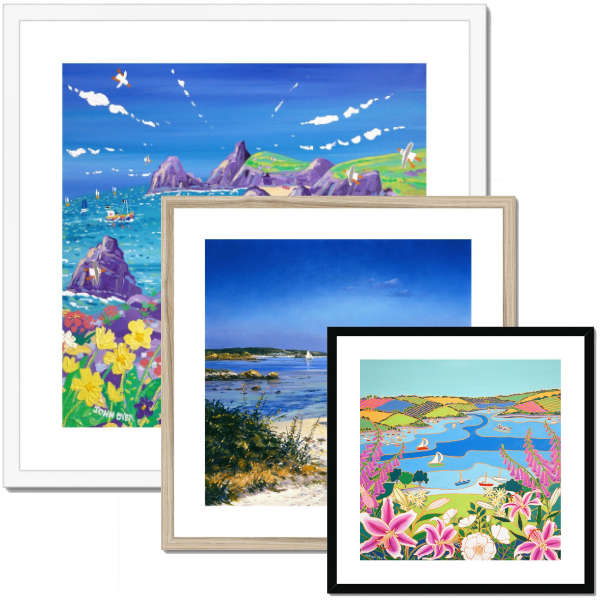
So, I hope my ethnobotanical paintings
will fill you with
joy,
colour,
and with love,
and with a warm optimism for our future
a sense that through
knowledge,
connection,
creativity
and the work of places like Eden,
we truly can shape a better world together.
Because with the calibre of people here at Eden
this world-class destination
doing such important work
to educate and inspire —
I truly believe
we can all leave here tonight
knowing we are adapting and building a better future for us all.
In a moment
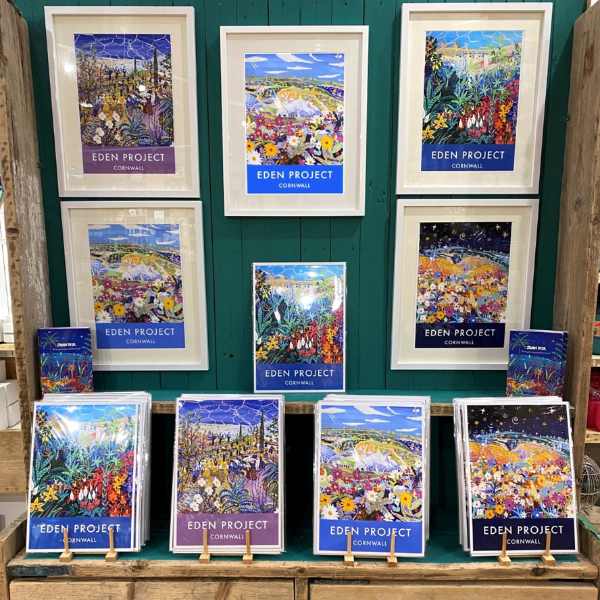
I would love you to take your time to view
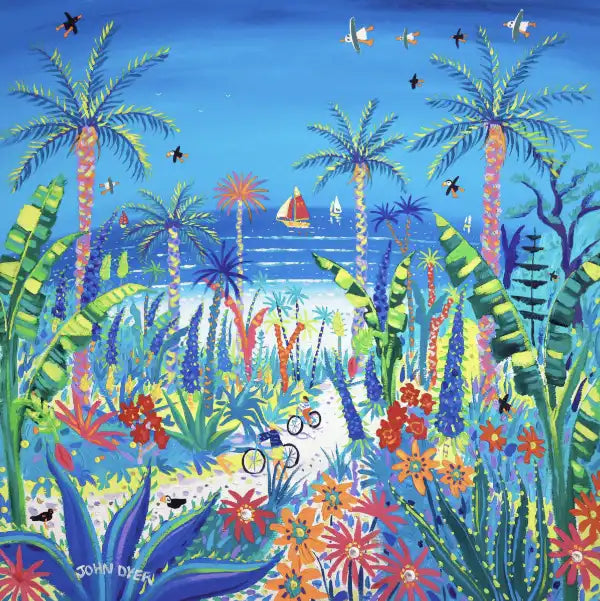
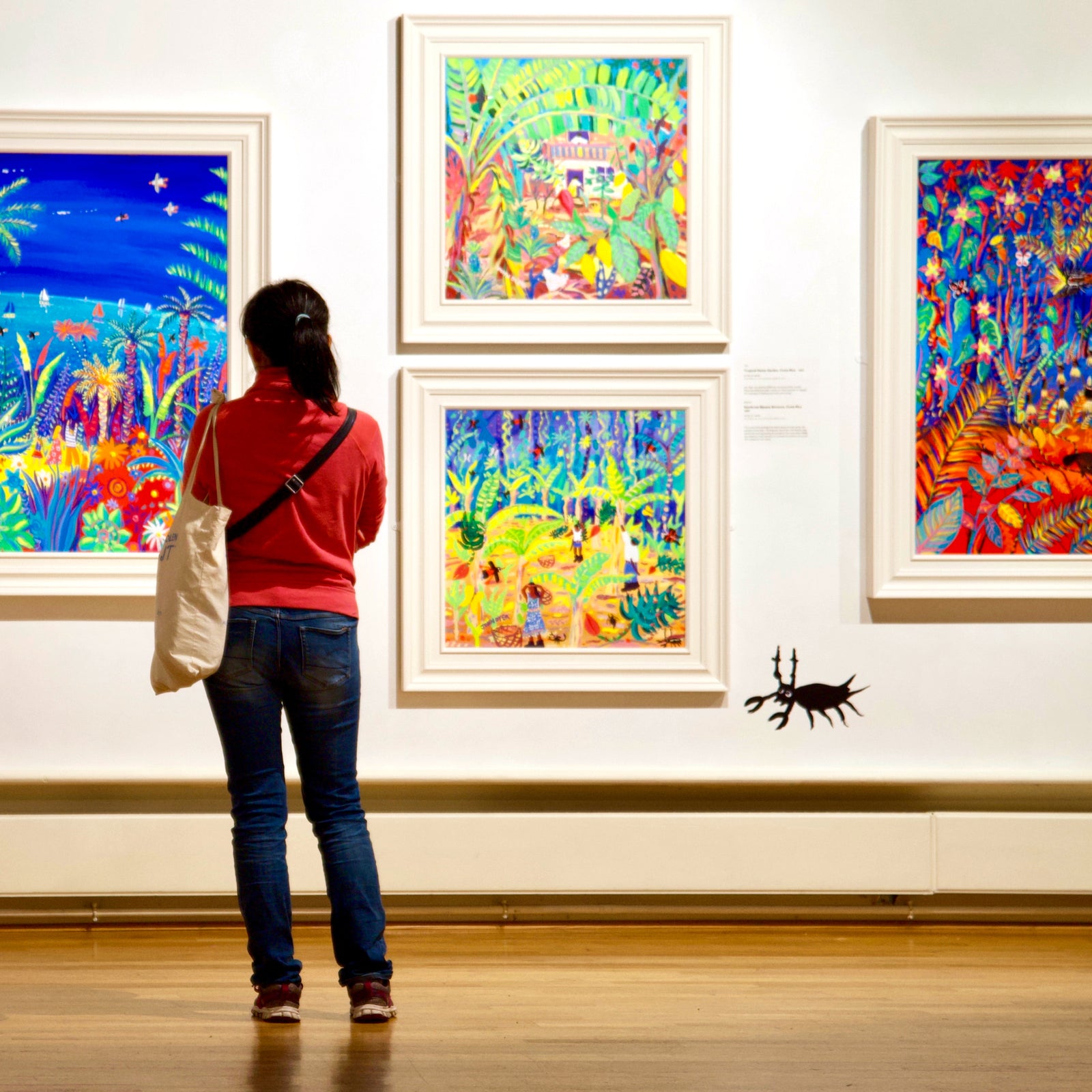
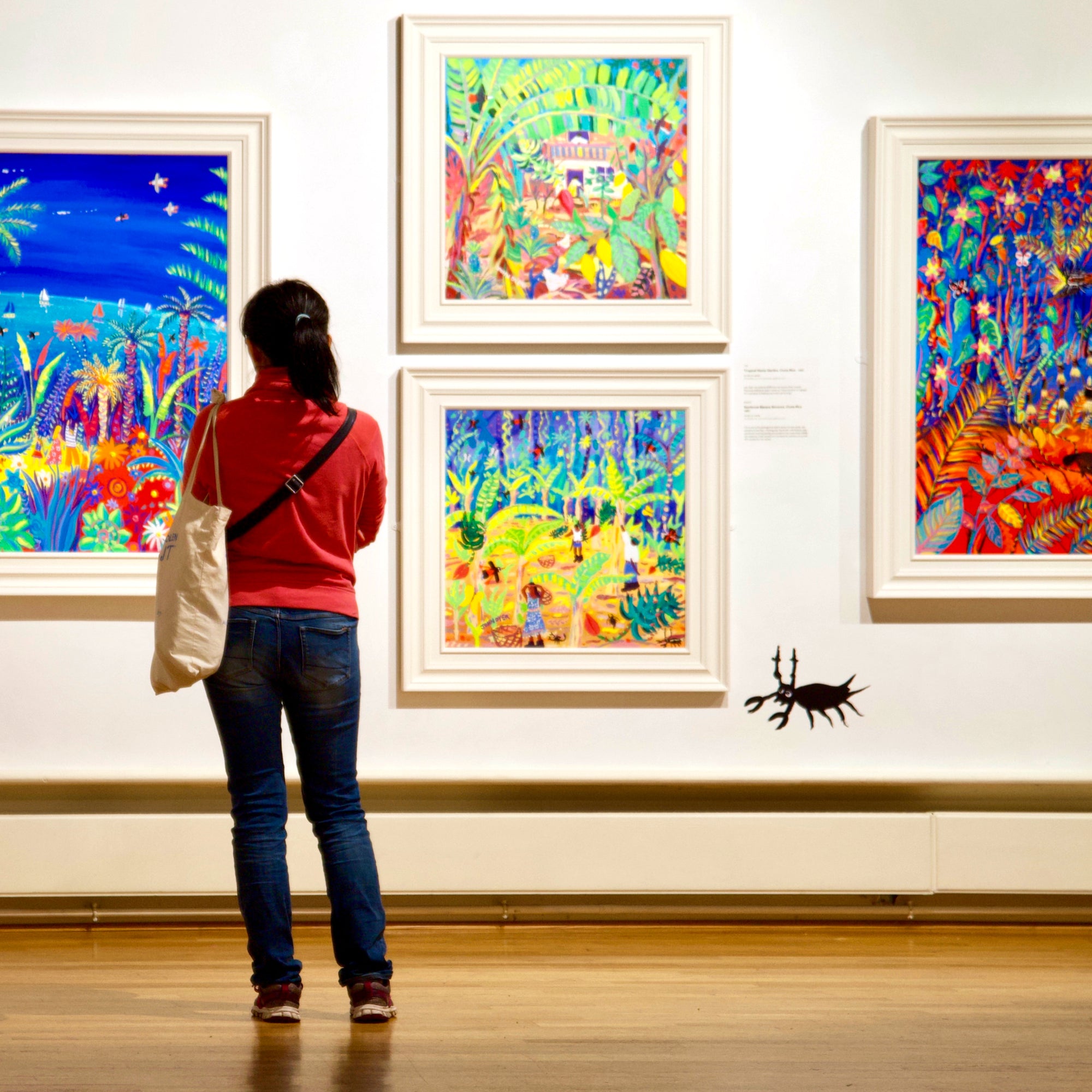
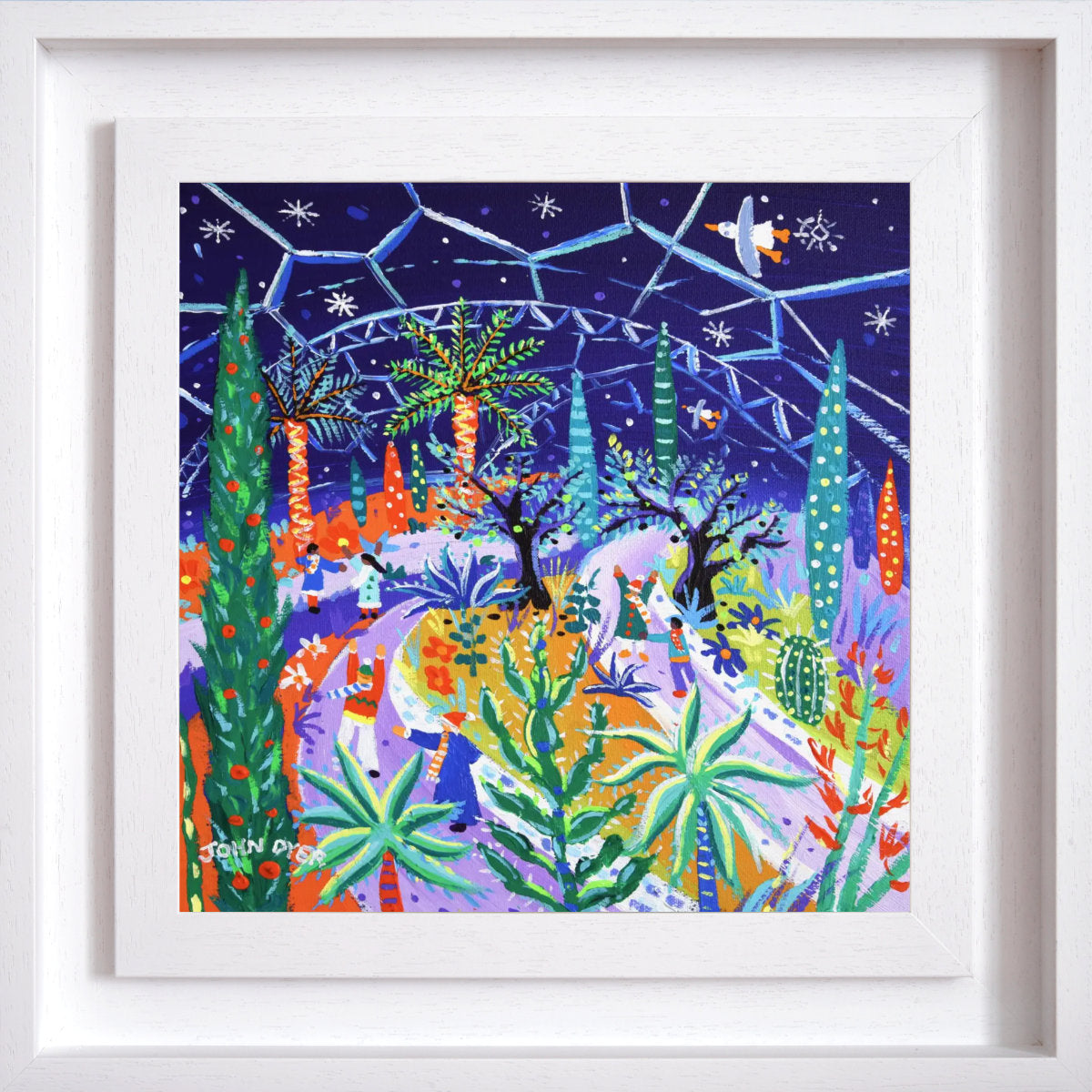
the paintings in here that are perfectly set in the Mediterranean biome
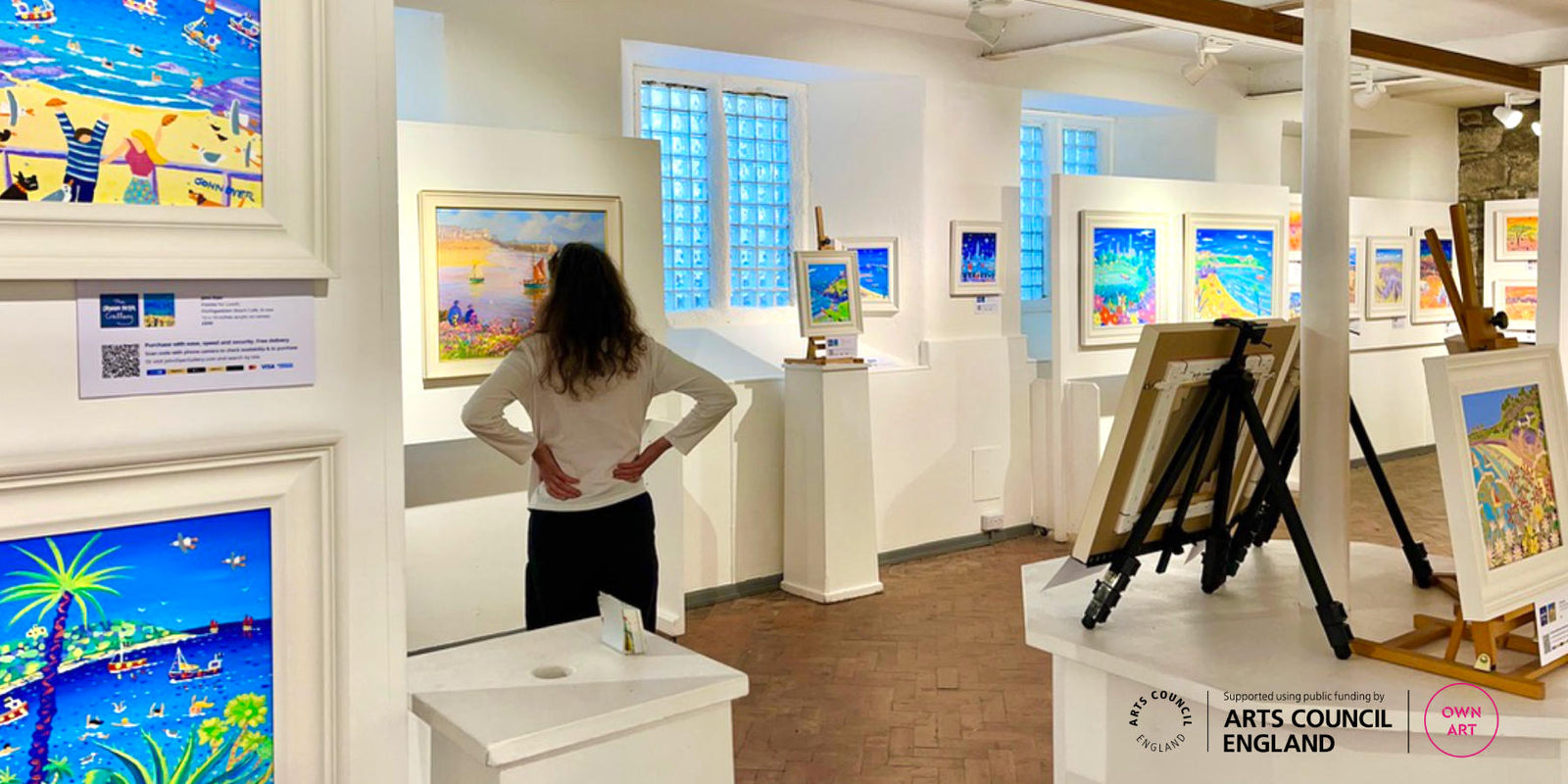
and the main ‘Spirit of the Harvest’ exhibition along the link corridor.
Scan the QR codes on the paintings in the link building
to read more of the stories behind them.
Enjoy the extraordinary biomes
and look at the plants with fresh eyes
knowing we have a deep connection to them.
And please do come and talk to me —
I’m very happy to answer questions
about my art,
the expeditions,
or indeed guinea pigs and how to avoid getting them cooked!
7. THANK YOU
I would like to thank the entire Eden Project team
for their hard work
and generosity in bringing this exhibition to life,
and for the visionary leadership
support and trust
of Eden’s Chief Executive,
Andy Jasper.
And to all of you,
a very happy Christmas,
and my heartfelt thanks for being here this evening —
for taking the time to see my paintings and to view the world through my eyes,
to celebrate our natural world
and our connection to it,
and for supporting the Eden Project
as it begins it’s next amazing 25 years.
Thank you.