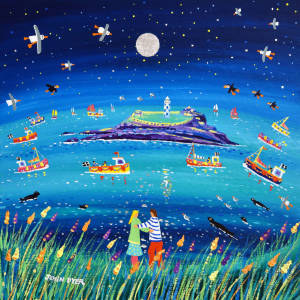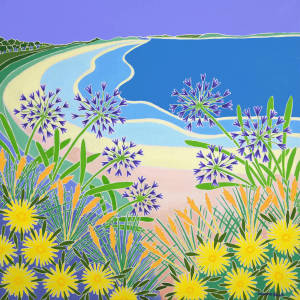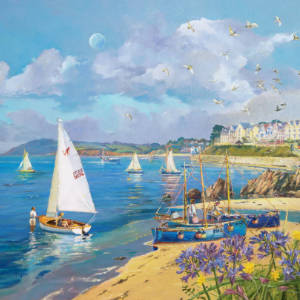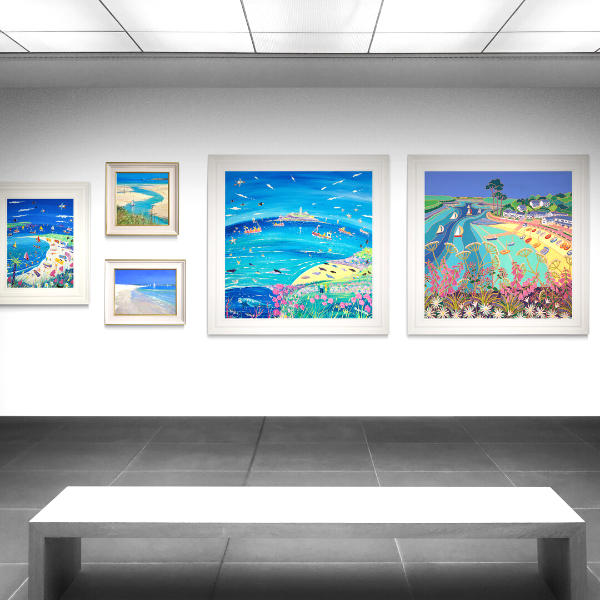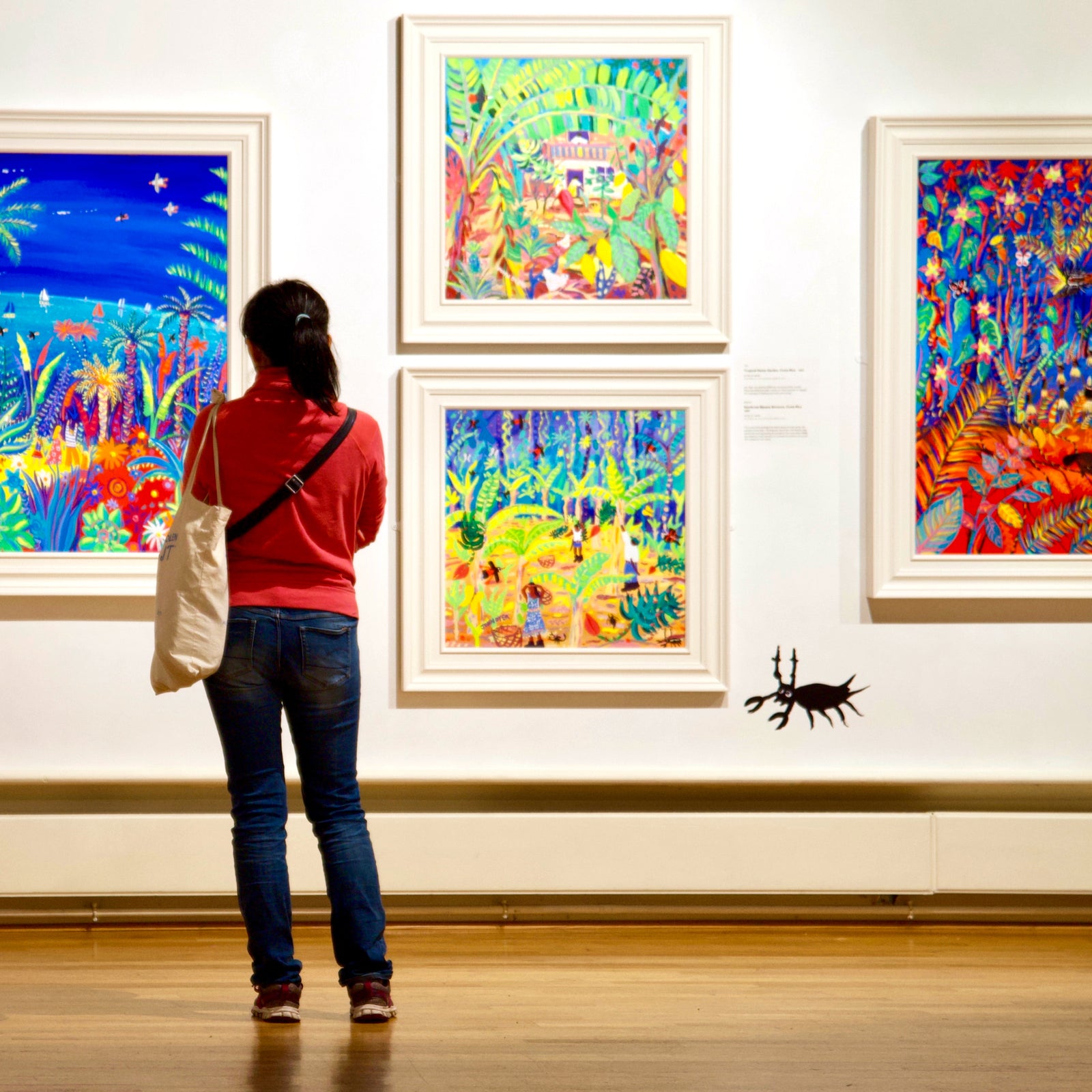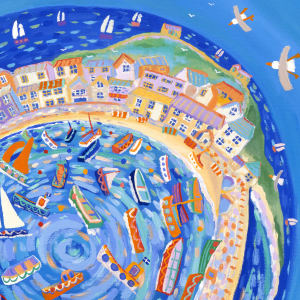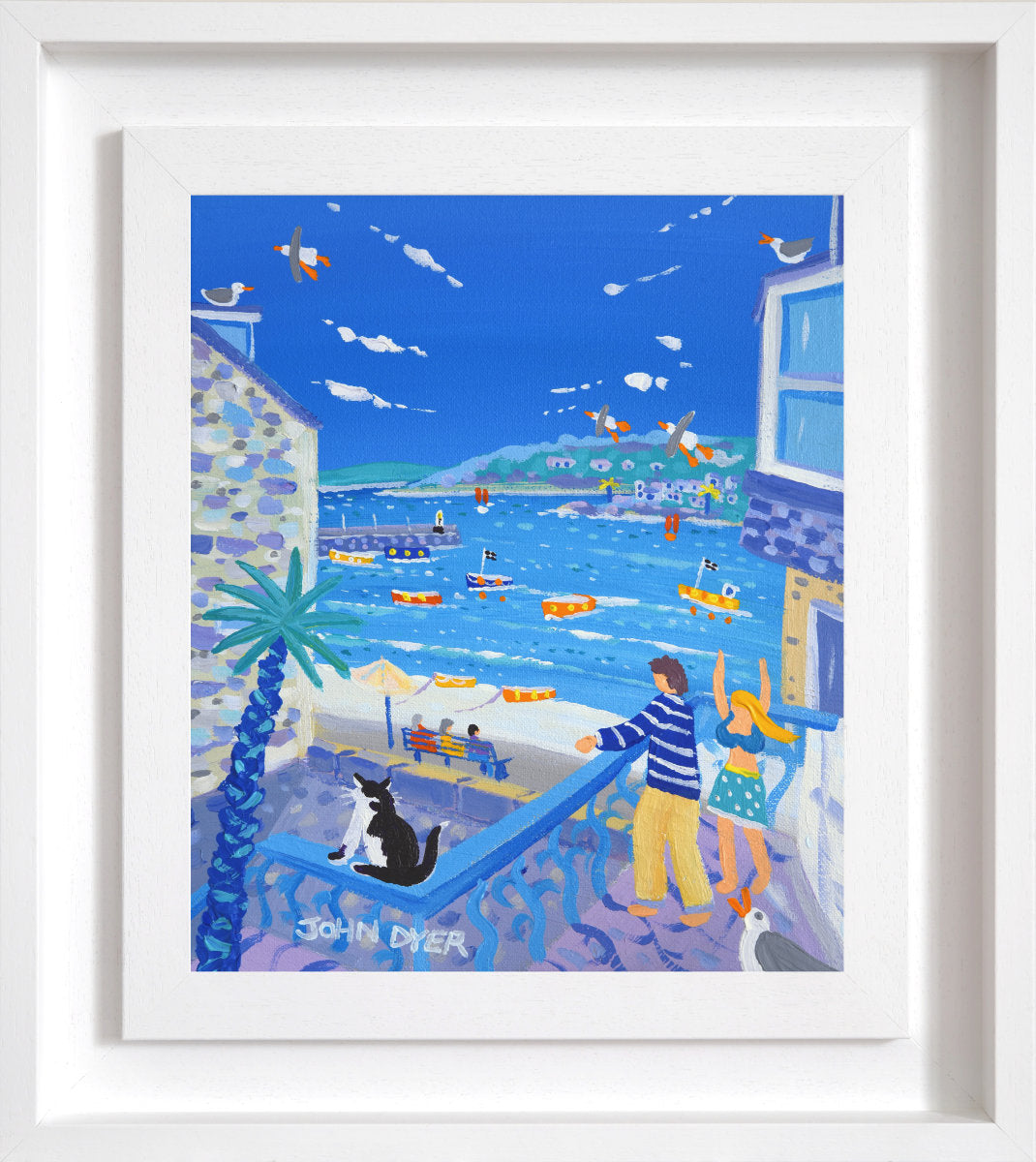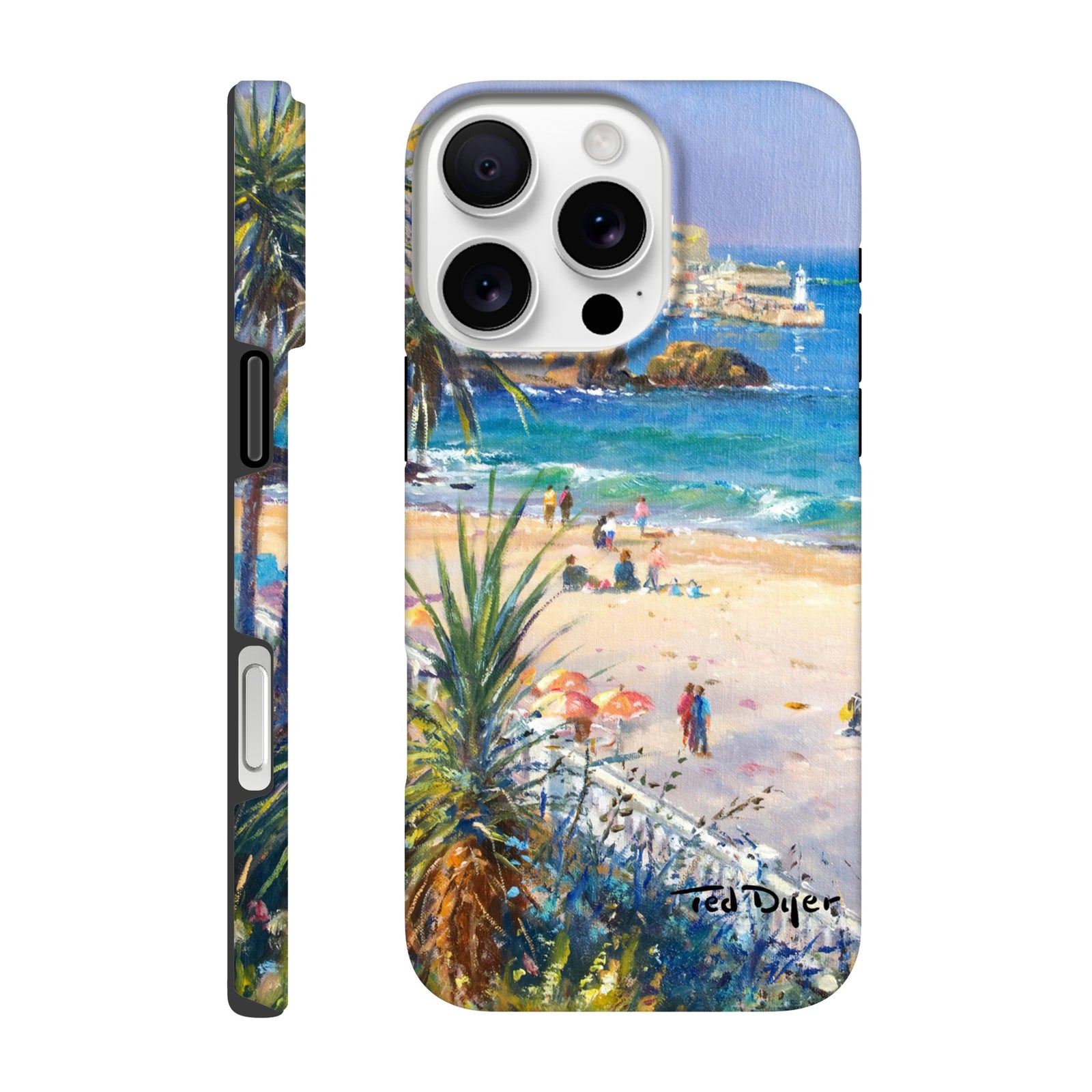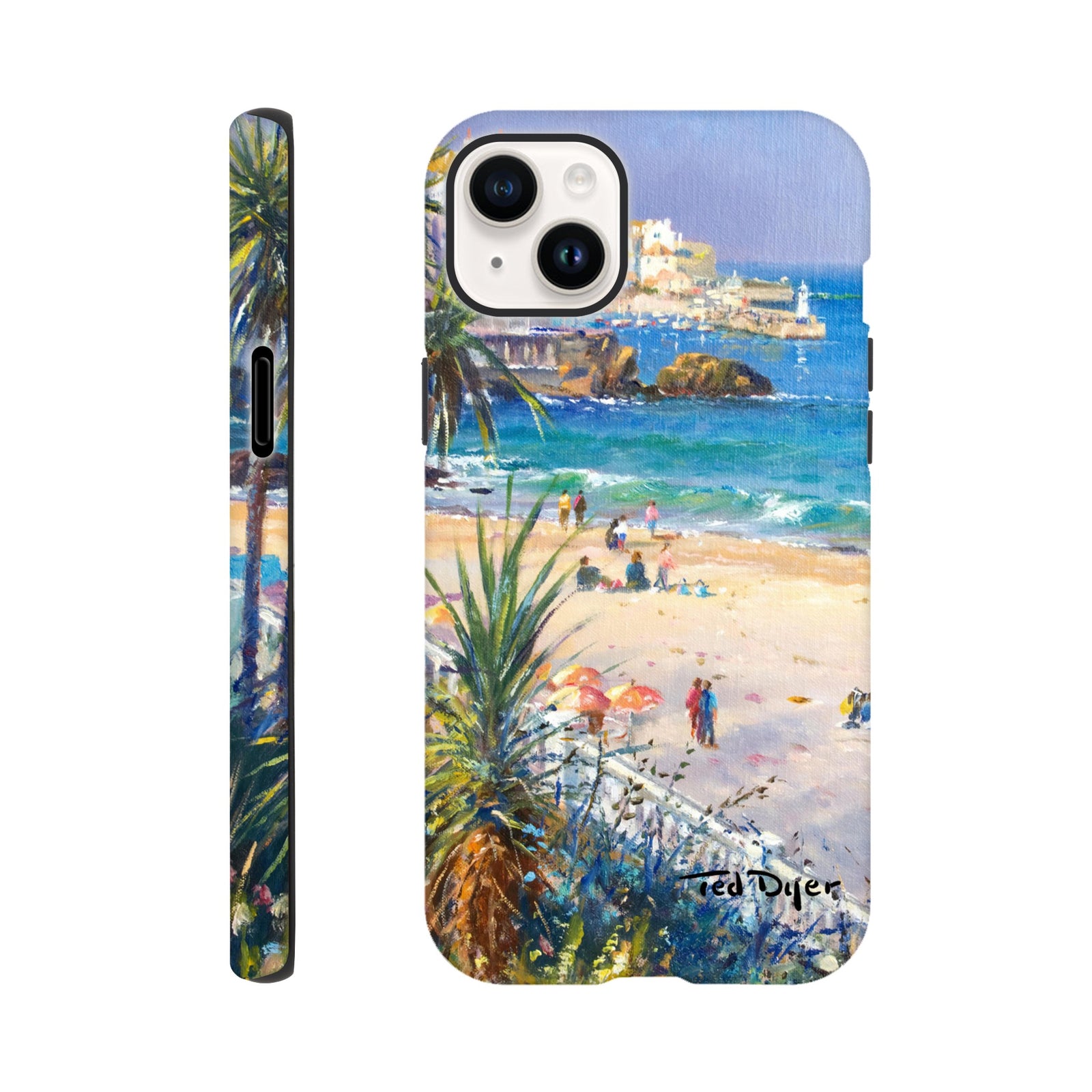

















St Ives has been popular with artists since the late 19th century when a number of leading British and European artists came to the town to escape the formal confines of the art establishment. The unique light and wild landscapes of Cornwall proved to be an irresistible draw, and St Ives soon became known as an important centre for painting and sculpture. Today, the town continues to attract artists from all over the world, including famous contemporary Cornish artists John Dyer, Joanne Short and Ted Dyer who are drawn by its unique atmosphere and creative vibrancy.

One key factor is the quality of light. The town is located on Cornwall’s north coast on a peninsula almost surrounded by the sea, making it the perfect place to capture the ever-changing play of light on the sea and landscapes.
Another factor is the variety of landscapes within easy reach of the town. Within a few miles, you can find rugged cliffs, secluded coves, wind-swept moors and rolling farmland. This diversity provides ample inspiration for painters and sculptors alike.
Finally, St Ives has a long tradition of supporting creativity and the arts. The town was home to a number of influential artists in the early 20th century, including Barbara Hepworth, Patrick Heron and Ben Nicholson. These artists helped put St Ives on the map as a centre for modern art, and their legacy can still be seen today in the town’s many galleries and studios.
St Ives has been popular with artists for over a century, thanks to its unique light, diverse landscapes and rich artistic heritage. If you’re looking for inspiration, there’s no better place to be than this idyllic Cornish seaside town.
Since the early 1800s, St Ives’ unique light has been attracting painters. But in 1877, when the Great Western Railway made it easier to reach the town, even more artists were drawn to its shores.
In 1928, artists Ben Nicholson and Christopher Wood visited St Ives. There they met Alfred Wallis, a naïve artist whose work left a deep impression on Nicholson and confirmed his own modern direction. When the Second World War broke out in 1939, Nicholson and his wife Barbara Hepworth decided to move near St Ives. They were soon joined by Russian constructivist sculptor Naum Gabo. After the war ended, St Ives became a hub for modern and abstract art thanks to leadership from Hepworth and Nicholson.
The St Ives School is a group of artists active in the 1950s, particularly associated with Hepworth and Nicholson. In addition to their shared interest in abstraction, the St Ives artists were inspired by the landscapes of west Cornwall. They extracted colours, shapes, and forms from these landscapes to use as sources for much of their artwork.
Karl Weschke, Bryan Wynter, Peter Lanyon, Patrick Heron, Paul Feiler, Robert Hilton and Bernard Leach are all major figures of the St Ives School. Wilhelmina Barns-Graham was a prominent figurehead.
The St Ives School was most popular in the 1950s and 1960s. In 1993, a new gallery called Tate St Ives emerged on Porthmeor Beach, exhibiting the work of these artists and giving the town a renewed appreciation for arts and culture.

Barbara Hepworth was drawn to St Ives by a combination of factors: the outbreak of World War II, the influence of her husband Ben Nicholson, and the promise of a close-knit community of like-minded artists. It was here that Hepworth truly found her voice as an artist.
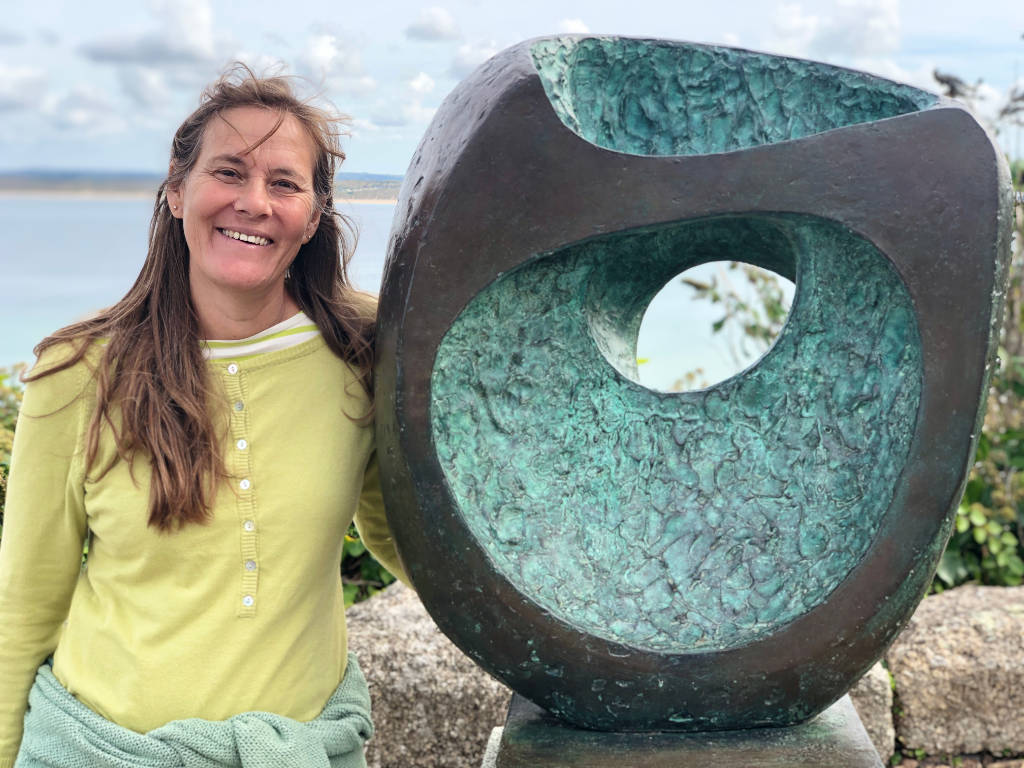
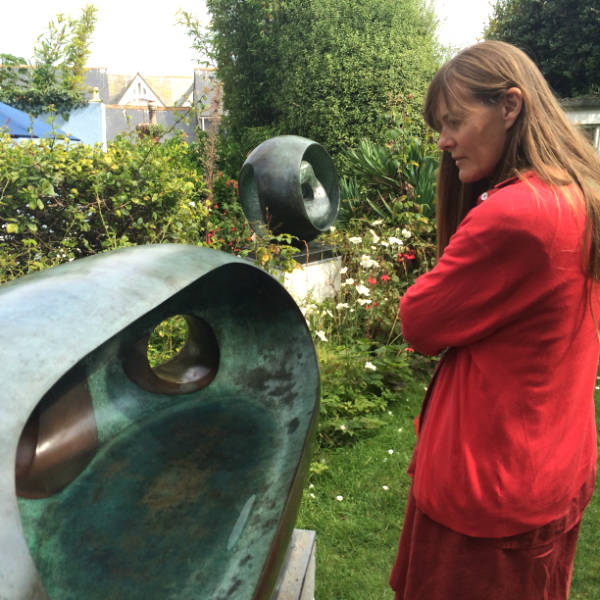
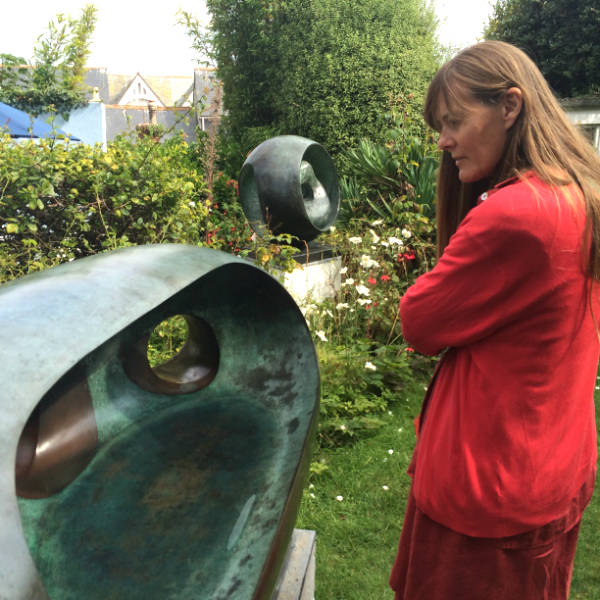
The Barbara Hepworth Museum and Sculpture Garden in St Ives offers visitors a fascinating insight into her life and work. Housed in her former studio, the museum preserves her workspace and displays her carving tools, smaller sculptures and maquettes. The adjoining garden showcases her monumental bronze works against the backdrop of the Cornish coastline.

Whether you’re an art lover or simply looking for somewhere scenic to spend an afternoon, the Barbara Hepworth Museum and Sculpture Garden are well worth a visit. Overlooking Porthmeor Beach, it’s a memorable experience that captures both art and place beautifully.
The Tate St Ives is one of the four Tate galleries in the UK, alongside Tate Britain, Tate Liverpool and Tate Modern. Opened in 1993, it houses one of the largest collections of modern and contemporary art in the country.
The gallery celebrates the legacy of artists such as Ben Nicholson and Barbara Hepworth, whose presence established St Ives as a hub of British modernism. Since opening, Tate St Ives has welcomed millions of visitors and played a key role in the town’s cultural and economic revival.
However, some critics note that its focus has been largely historical, overlooking many of Cornwall’s thriving contemporary artists. Many feel that the Tate’s presence in St Ives sometimes represents an external influence rather than fully reflecting the local art community that continues to flourish there today.
For over a century, St Ives has been home to some of the world’s most celebrated artists. Many attribute this to the exceptional light, while others point to the town’s artistic heritage and landscape. In the 1950s, St Ives stood at the centre of global contemporary art.
The Newlyn School of Art was a British painting movement active from 1895 to 1914, centred in the fishing village of Newlyn, Cornwall. Led by Stanhope Forbes and Frank Bramley, the group captured the realities of rural and coastal life with honesty and warmth.
Other members included Walter Langley, Elizabeth Forbes and Norman Garstin. Their naturalistic depictions of working people and everyday life stood in contrast to the romanticised portrayals of the countryside common at the time. Their sensitive use of light and colour remains influential to this day.
St Ives sits on a peninsula surrounded by the sea, and its beaches are rich in quartz sand, which reflects the sunlight to create a mesmerising brilliance even on misty days. The result is a luminous quality of light that transforms the colours of sea and sky into vivid blues and silvers that artists find irresistible.

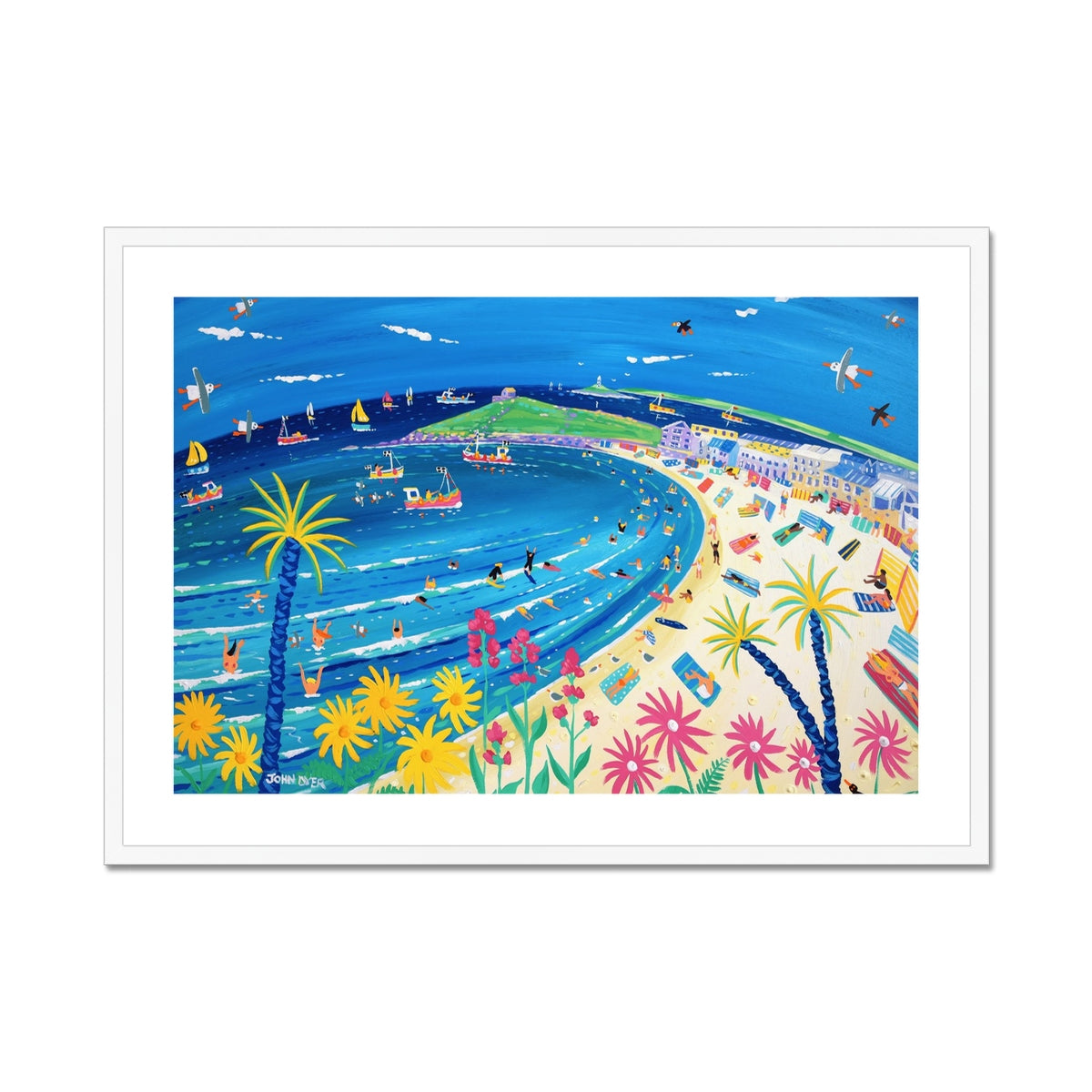
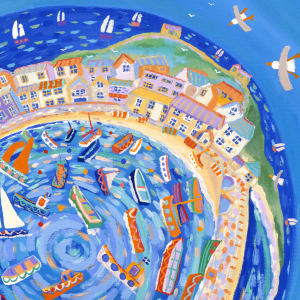
It would be hard not to be inspired by St Ives. The colours, old fishing cottages, yellow lichen-encrusted roofs, boats, seagulls and aqua-blue sea are simply breathtaking. Younger artists are still drawn to the town, which remains a vibrant hub of creativity in Cornwall today. From Alfred Wallis to John Dyer, naïve and expressive art continues to define the town’s artistic spirit.
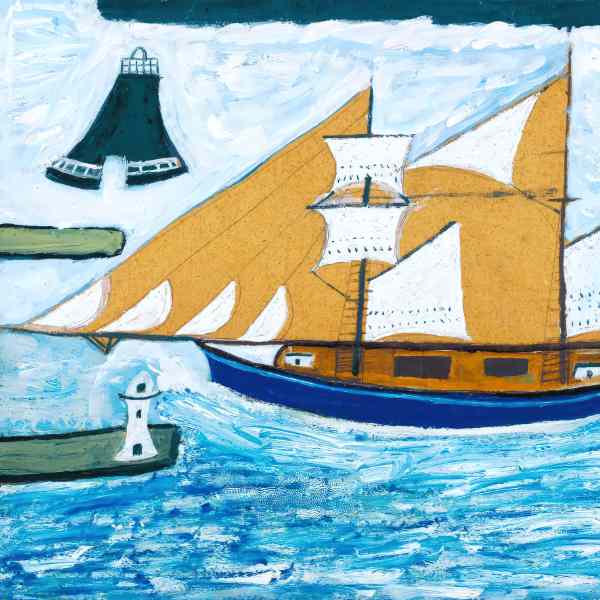
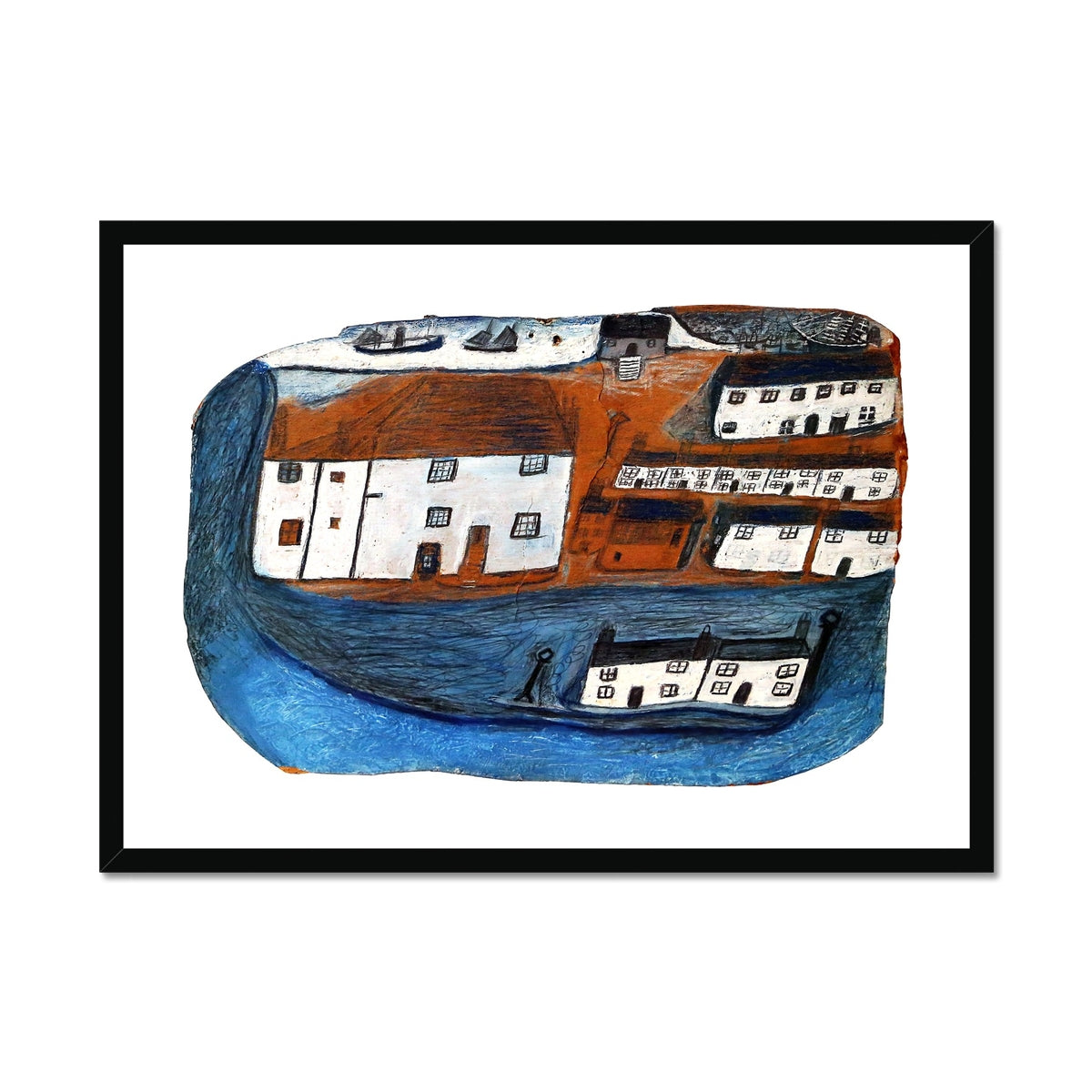
Alfred Wallis (1855–1942) was a self-taught painter best known for his direct and instinctive depictions of Cornish fishing villages and boats. Though celebrated today, during his lifetime he lived in poverty and obscurity.
Wallis began painting after his wife’s death in 1922. Using boat paint on scraps of cardboard, he recreated from memory the world of sail that was disappearing around him.
In 1928, Ben Nicholson and Christopher Wood discovered Wallis in St Ives and were captivated by his authenticity. Nicholson wrote, “To Wallis, his paintings were never ‘paintings’ but actual events.”

Wallis lived and worked at 3 Back Road West, St Ives – now a holiday cottage. From this humble space, his creativity helped shape modern British art and inspired generations of artists who followed.
Today, the term “St Ives School” is often used more broadly to describe artists working in Cornwall who draw inspiration from the light, colour and landscape of St Ives. From abstraction to naïve and figurative art, its influence endures.
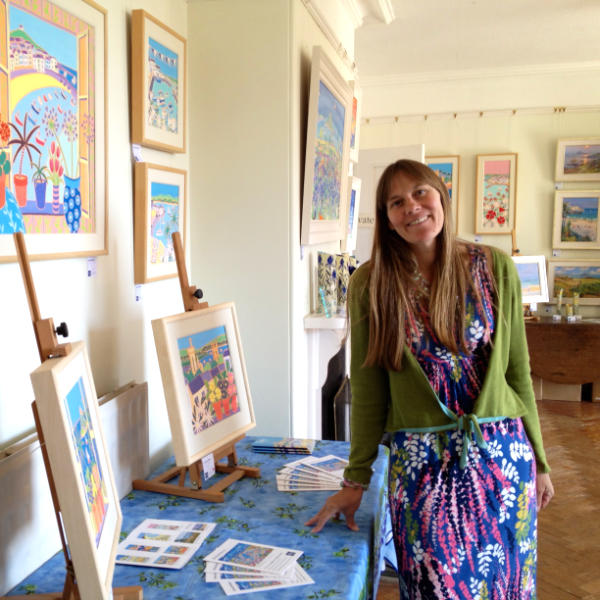
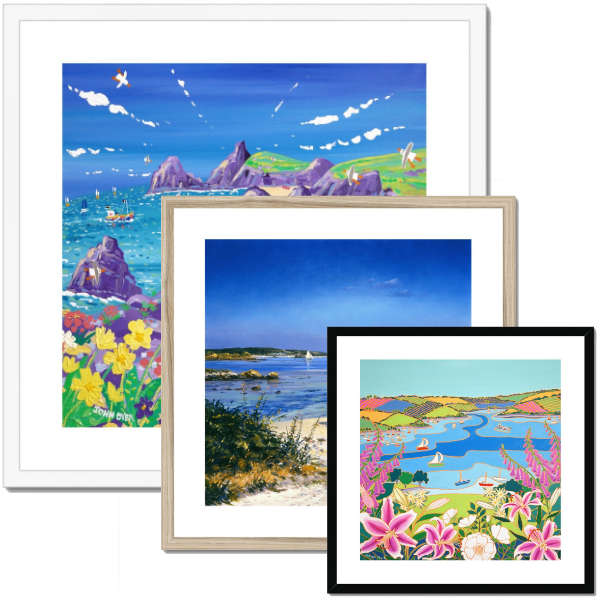
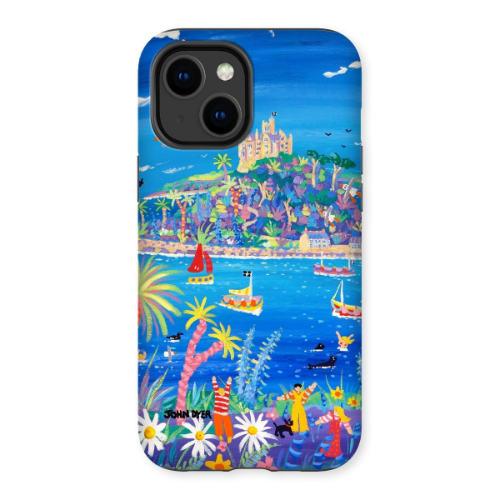
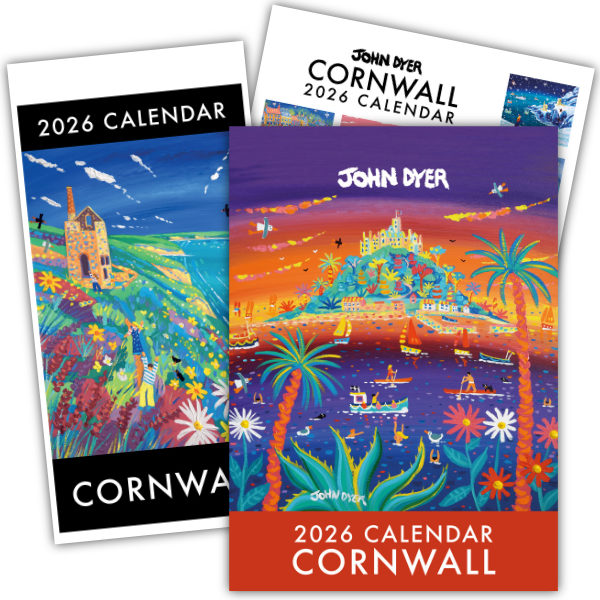
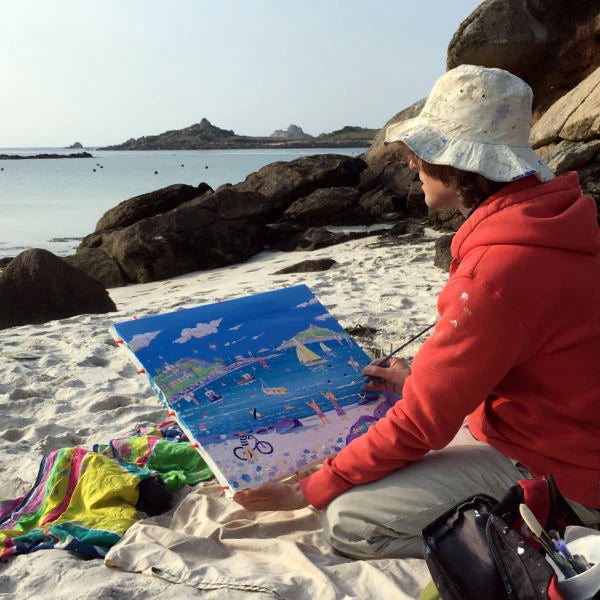
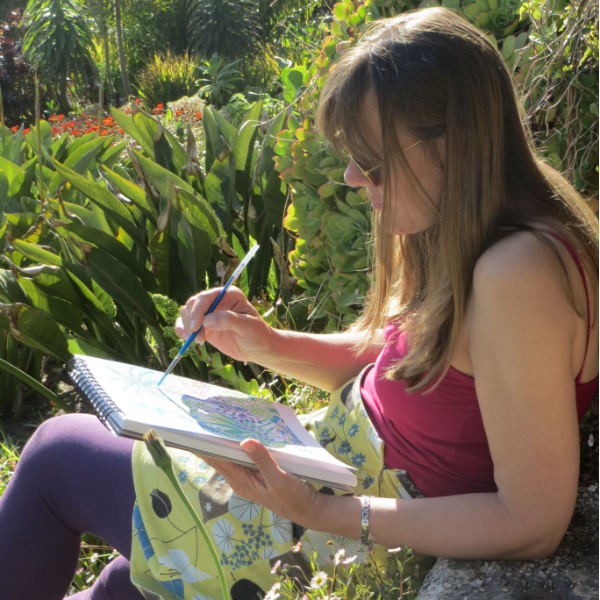
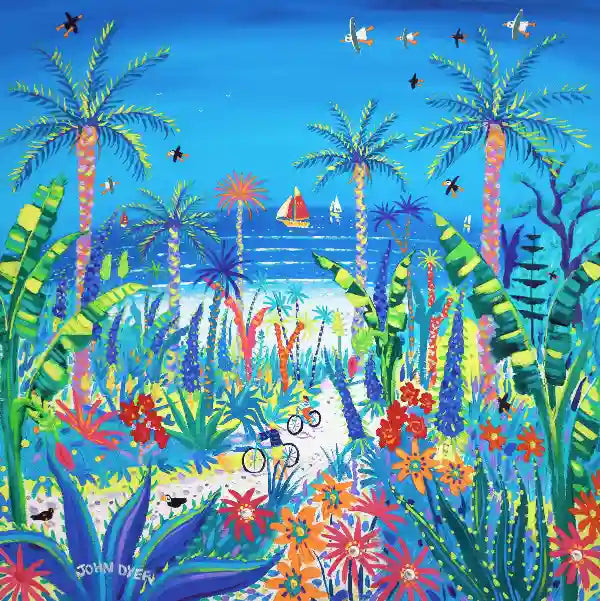
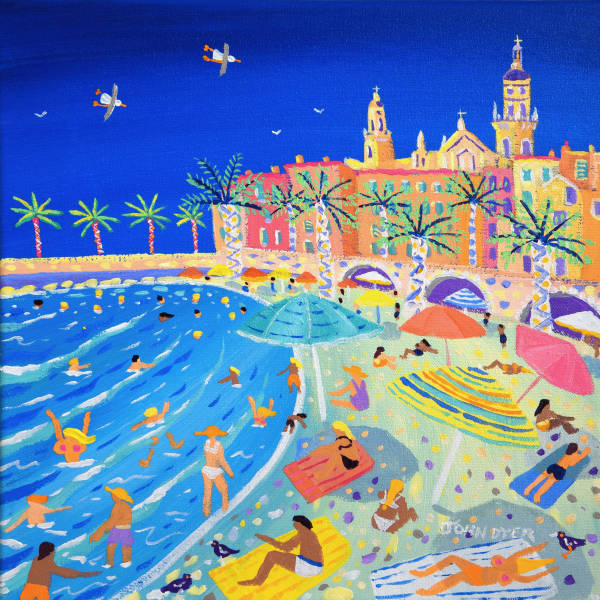
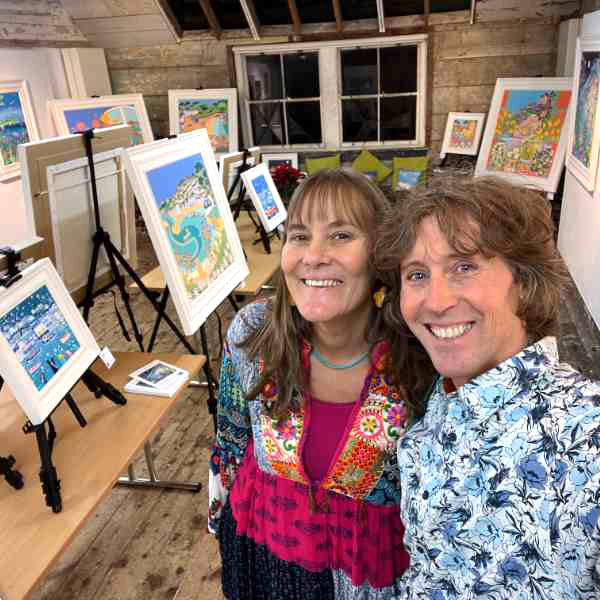
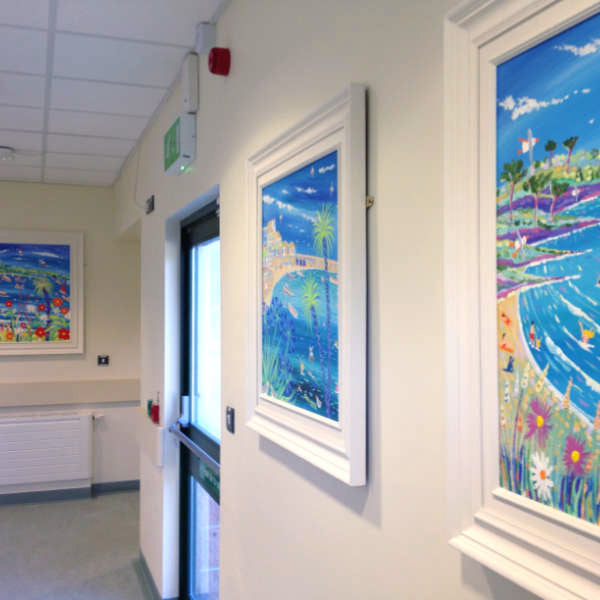
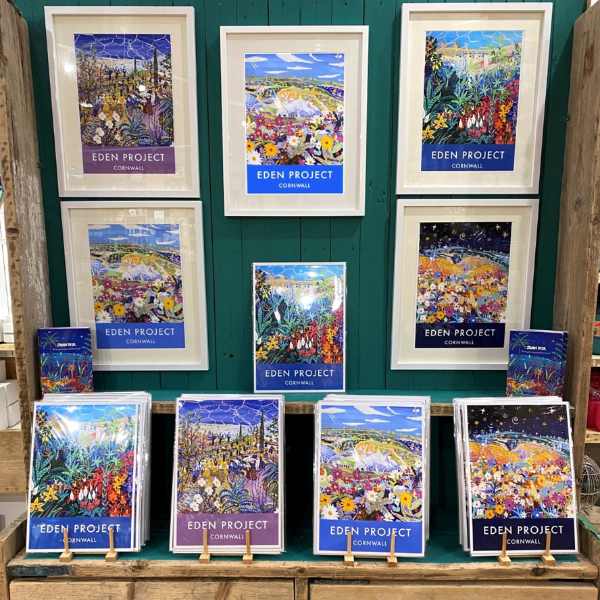
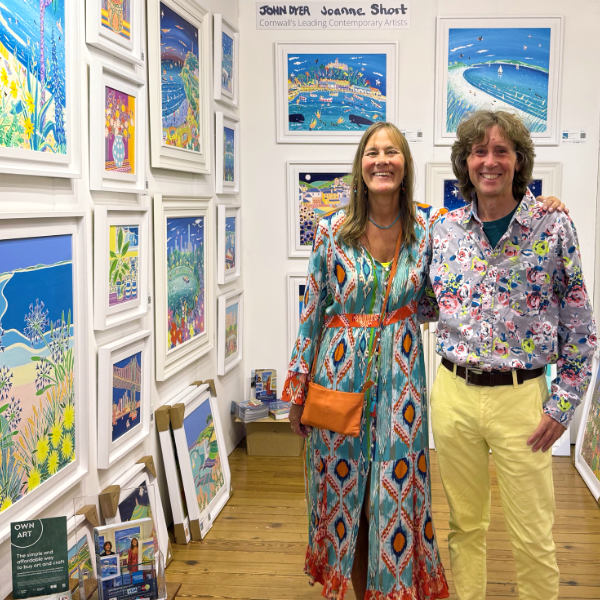
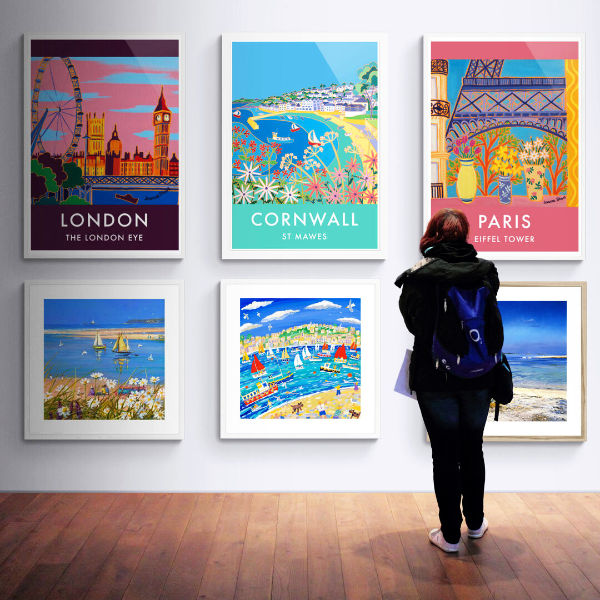
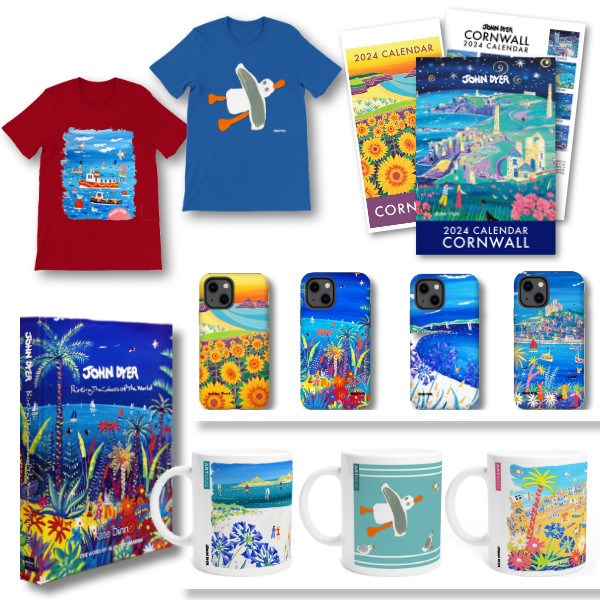
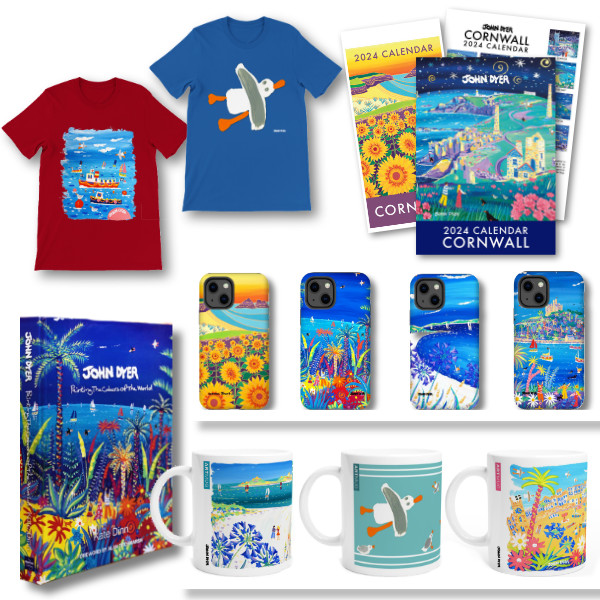
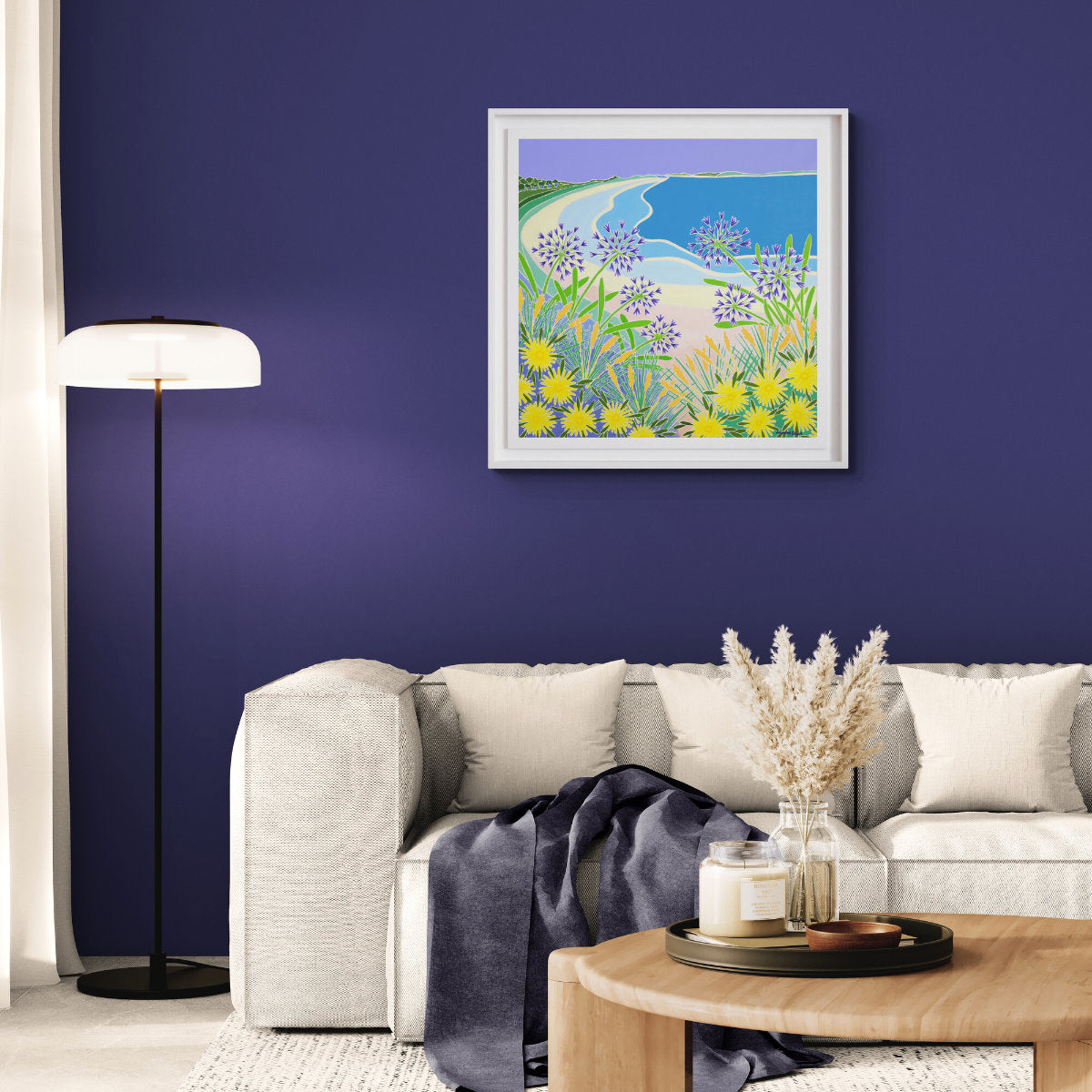
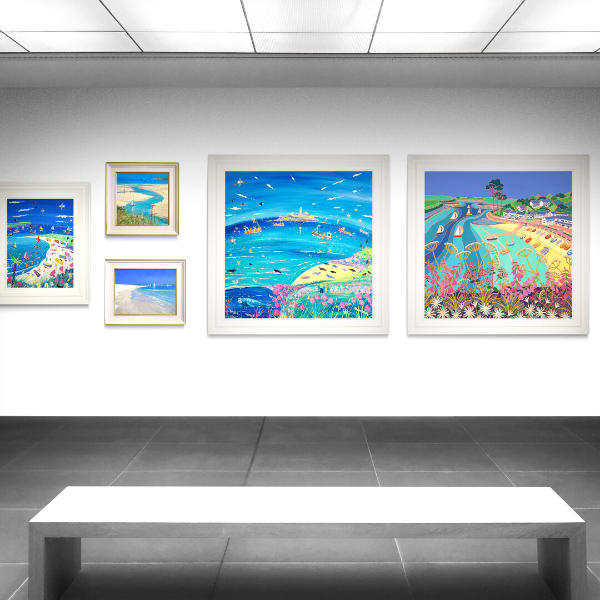
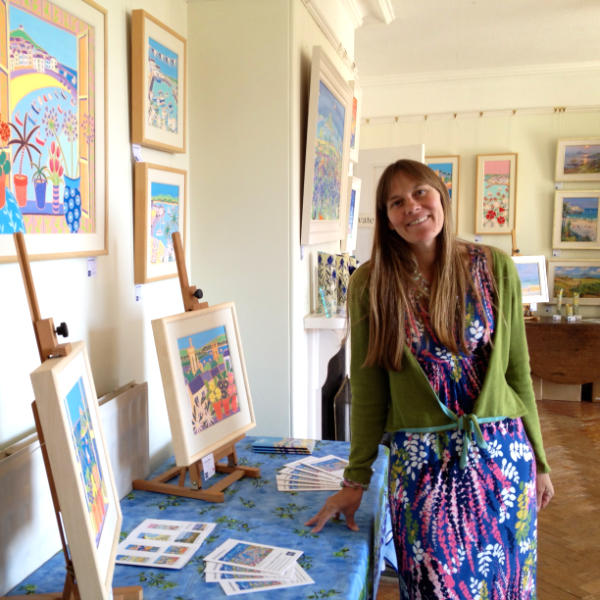
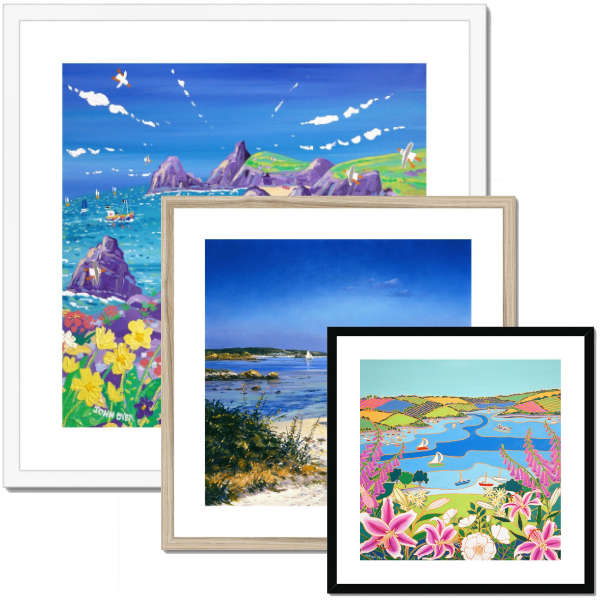
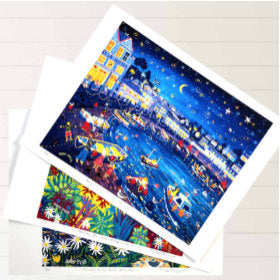
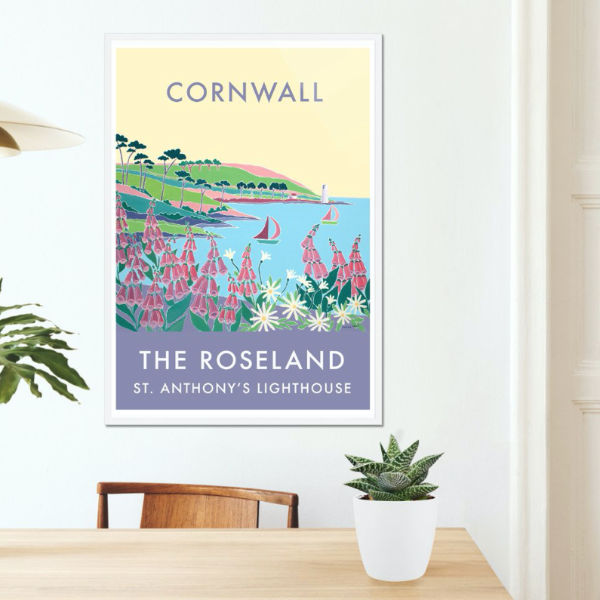
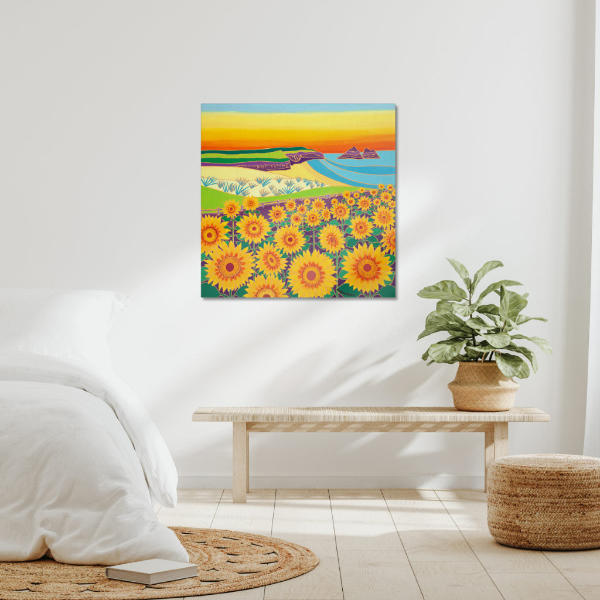
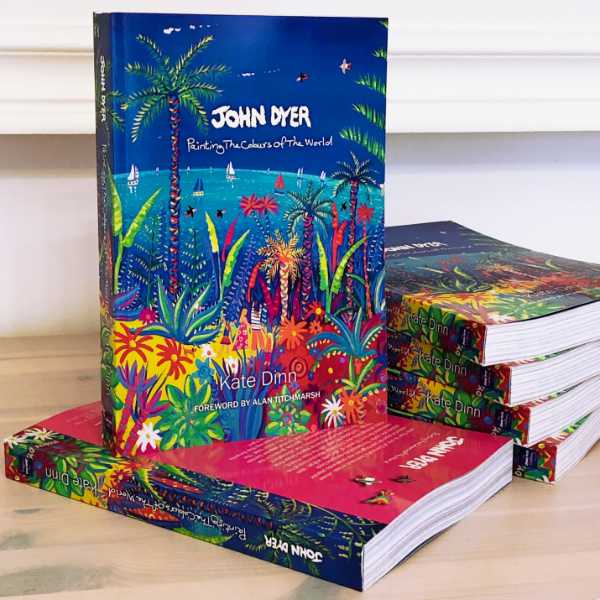
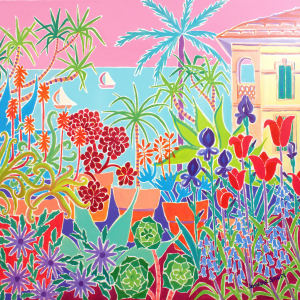
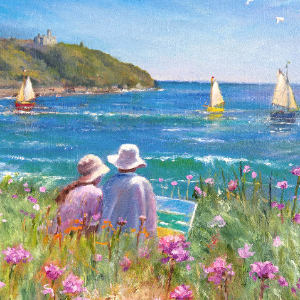
Our gallery artists – John Dyer, Joanne Short and Ted Dyer – all have strong connections to St Ives and continue its legacy. Their paintings capture the Cornish coast, fishing boats, and brilliant light that define this remarkable town.
Discover all the St Ives inspired artwork available at The John Dyer Gallery.
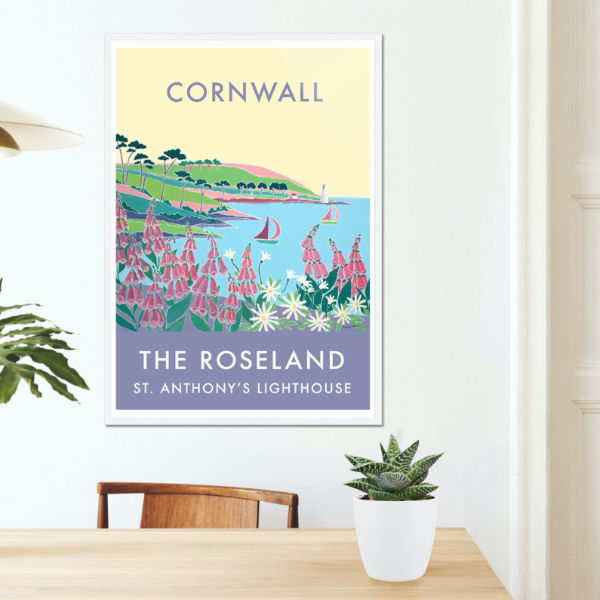
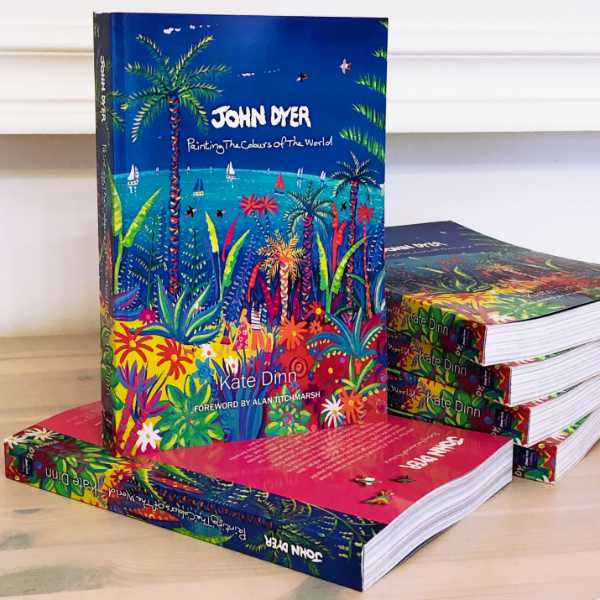
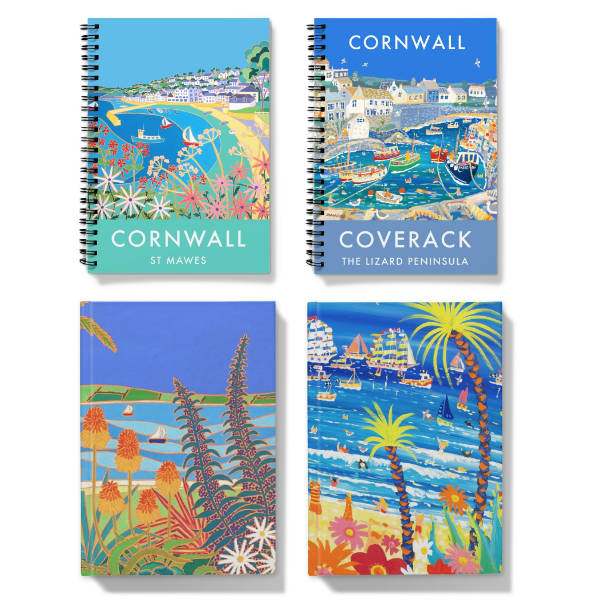
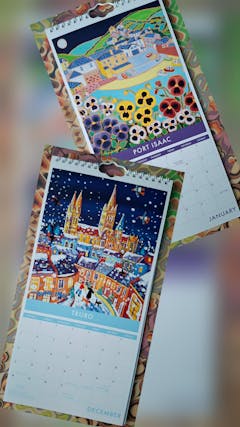
Explore our main art collections to find perfect original paintings, limited edition signed prints, open-edition prints, wall art prints and posters & artist designed gifts.

Exclusive access to exhibitions, new art, and collector news.
N.B. Please confirm your sign-up – check your email (or junk) and add sales@johndyergallery.com